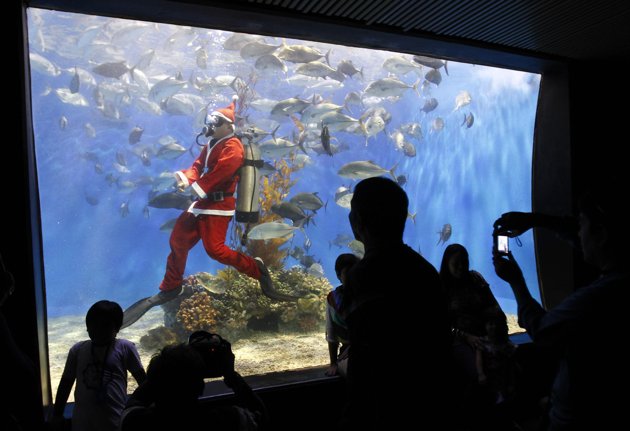
Although it may attract lot of people especially kids, I was wishing Ocean Park spared the marine world from holiday commercialism. After all, the Santa is not an authentic symbol for Christmas!

"Now more than ever do I realize that I will never be content of a sedentary life on the surface, I will always be haunted by thoughts of being drenched elsewhere"….
Although it may attract lot of people especially kids, I was wishing Ocean Park spared the marine world from holiday commercialism. After all, the Santa is not an authentic symbol for Christmas!
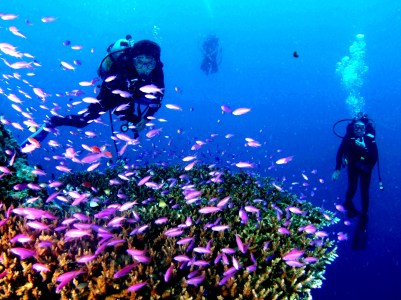
In everything we do, there are always good practices that we must consistently uphold – whether in business, work or even practicing one’s profession. Ethics is even important in Diving, this is a good piece to reflect on if I am a good dive buddy every time I’m in the depths. I am sharing this article written by DM Dennis Jacobson.
While there are some divers who have trained and are certified to dive alone, we have all been taught that safe diving means diving with a buddy. Not only is it safer than diving alone, but sharing a dive with a partner multiplies the pleasure of the dive by having someone to share the experiences and verify the exciting encounters and sightings. I am lucky to have my wife Debbie as my dive buddy. She and I know each other’s dive habits, we work well together as a team, and we have become very adept at not only staying close together, but also being aware of each other’s position, activity, and, should they arise, issues throughout the dive.
Some people seem to think that getting in the water about the same time as your buddy, and staying in the same ocean as they are, constitutes buddy diving. They are wrong. To be a good dive buddy, someone with who other people enjoy diving and look for to diving with in the future, you should take being a buddy a bit more seriously.
A good dive buddy stays close to his or her dive partner all the time. Just how close varies with conditions like visibility, current, how well you know your buddy, whether you have dove together in the past, and other relevant factors. But on every dive, your should be close enough you can respond to your dive buddy in the event of any emergency or need for assistance arising. Emergencies are not limited to air depletion. They can include entanglement, equipment malfunction, injury, or even coming under attack from an aggressive sea creature. Stay close enough to help a buddy out.
A good dive buddy not only stays in close proximity to their dive partner, they are aware of their buddy’s location and activity, direction of travel if moving, and can perceive any problems, confusion, unease, or distress a buddy may exhibit as it occurs or just moments after. It doesn’t take long for buddies to become separated if they are not focused on and have an awareness of where each other is and what the other is doing and how they are moving. Buddy diving is kind of like going on a date. If you take a date to a dance, it is bad manners to lose them on the dance floor. Good manners require that you pay attention to them. If you don’t, you might look up to find they are no where around. It’s the same in buddy diving. Pay attention to your buddy. Look around and mark your buddy’s’ location and activity regularly, in fact, often, and better still, constantly.
Part of being a good dive buddy is being sensitive to your dive buddy’s feelings, including how he or she feels physically and whether they are feeling stressed or anxious about doing a dive. Don’t pressure your buddy to do a dive that they don’t want to do. Sometimes a diver is not comfortable doing a dive. Let it go. Similarly, if a problem arises during a dive that leads to one buddy wanting to terminate, or “thumb” the dive, a good dive buddy will go with them. Never leave a distressed, injured, confused, stressed out, or tired buddy to fend for themselves, even if they are surfacing and returning the boast or shore.
A good dive buddy will get acquainted with his diving partner before the dive. Sometimes we get paired up with a stranger, what some call an “insta-buddy.” When that happens, you need to get to know each other as divers. Talk to each other. Learn about each other’s experience level and last dive. Clarify the communications you will use and agree as to proximity and other buddy coordination. Discuss your objectives for the dive. Are you going to swim around like crazy people or focus on looking at the animals and their behaviors? If one or both are going to take pictures or video, discuss expectations you each have for staying close. When diving with a new buddy (or any buddy for that matter) a good dive buddy will be sure to sure to do a pre-dive safety check, familiarizing the team with each other’s equipment. Just like you learned to do in your basic scuba certification class. There is no need to dive with a stranger if you take a few minutes to plan together, learn bout each other and communicate about the dive.
Too often, divers who are paired up by the divemaster or boat captain, or even those who may have selected each other as buddies, will introduce themselves to each other, and then be oblivious to each other throughout the dive. That is not a good idea. A dive buddy who appreciates the importance of that role will stay close, be aware of what is going on, never have a problem with buddy separation, and be there to share air, help his buddy get untangled from the kelp, notice symptoms of narcosis, and otherwise assist as needed. If you want to have a good dive buddy, be a good dive buddy. You can do it. I know you can.
NB.
Dennis Jacobson is a full-time lawyer and part-time divemaster who lives in Colorado but escapes to the tropics for diving whenever he can. He and his wife Debbie, who has been diving for ten years herself, are the authors of The Scuba Snobs Guide to Diving Etiquette, and The Scuba Snobs Guide to Diving Etiquette BOOK 2. Both are available in paperback or as an e-book on amazon.com and many other on-line book sellers. DM Dennis is a popular blogger on scubaboard.com, and has written articles for several scuba publications in addition to the two books he and his wife have published.

Malapascua Island is almost synonymous to thresher sharks, not to mention the pristine white beaches, generally this pelagic drives the local dive and tourism industries, fuelling 80% of the regional economy. Myself included was first drawn to this southernmost tip island of Cebu province almost three years now, aiming to catch glimpse of the phenomenal presence of the shark in shallow waters.
This pelagic thresher Shark (Alopias Pelagicus) is an oceanic species whose biology and behavioral ecology are largely unknown due to study limitations. Fisheries and by-catch data indicate that it is found in warm and temperate offshore waters, matures late, has low fecundity and is vulnerable to over-exploitation. International conventions have recognized almost all shark species to be threatened, promoting nations to implement protection policies. These listed species comprise those which have received comprehensive scientific investigation, and whose biology and behavioral ecology are well understood. The fact that thresher sharks regularly visit a sea mount in the Philippines presents a unique opportunity to study this rarely observed oceanic shark. Preliminary investigations of the site identified significant relationships between shark presence and cleaning activity conducted by resident Cleaner and Moon wrasses (Labriodes Dinidiatus and Thalassoma Lunare). Cleaning activity relating to sharks has never been investigated in the wild before, but this observable interactions seen at this site explained why these mainly oceanic sharks venture into shallow coastal waters, where they are vulnerable to fishing and disturbance from dive tourism. Understanding their behavioral ecology will provide important information to support the protection plan for the specie.
Monad Shoal is located within the Visayan Sea, 8.16 km due east from the southern beach of Malapascua Island. The sea mount is an open water site rising 250 meters from the sea floor to 15=25 meter depths. Early morning presence of thresher sharks on the shoal attracted local dive and tourism industries to Malapascua Island.
It is with these facts and reasons that the Thresher Shark Research Conservation Project initiated, it started in 2009. The project aimed to investigate the behavior of thresher sharks in response to resident cleaner fishes, the correlations between parasite presence, to improve established methods of observing the specie, to assess also the population dynamics of visit frequency, and to provide relevant information to conservation initiatives in relation to managing impacts of fishery and dive tourism. The project is developing a model for managing Monad Shoal as a protected area for the thresher sharks.
Please visit www.threshersharkproject.org for more details. You could be part of this research conservation project.
Diving in Siargao had been in my list for some time, I guess the return would be soon. Discovering this thriving private mini-sanctuary of Siargao Divers Club is an inspiration, without doubt this will become the house reef of the dive shop. The marine life in the area is truly diverse, this will become a haven of many migrating species in a span of time.
Opportunity loss costs more than just financials, the rare opportunity to explore and discover something substantial maybe at stake!

The alarm clock went off at 3am, with my backpack ready before I doze off few hours back, I slowly drag myself from bed. But reminded myself not to miss the 4am aircon bus for Butuan. The long weekend prompted this homecoming trip to Siargao for some reasons – rediscover GL, long weekends is seldom, a break sans leave… I need an early departure hoping to catch up the 12:00 noon RoRo boat to Dapa but the road stops slowed down the rides. Arriving Surigao City bus terminal quarter of 12 noon, I was crossing my fingers I will catch the trip.
The weather was perfectly sunny despite the storm just the other day, my host gladly message back that boat trips to the island had been cleared by coast guards that day. Just watching the blue waters with gentle breeze blowing was comforting enough for the four hour-boat sail to Dapa. The sight of the pier with the docked boats gave me a warm welcome, it’s been four years since I last visited main island Siargao.
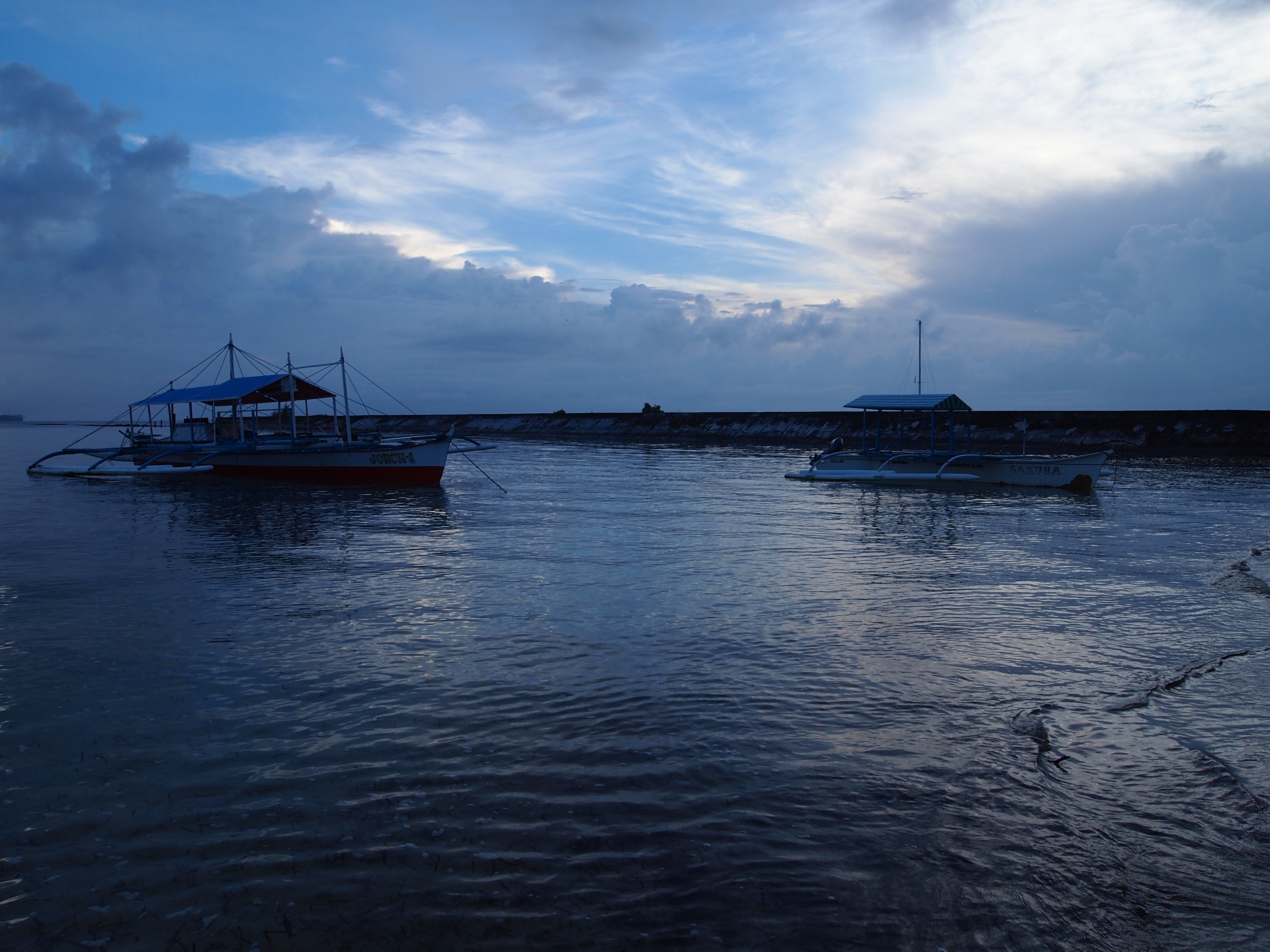
It was already dark when I got to my lodgings at General Luna, I almost forgotten the way to Jade Star Lodge but the friendly locals were helpful enough. My host was already at the gate to welcome me, nothing much was changed. This resort under the coco grove is like home to me.
Surprises & Chances
I wanted to linger on my bed but need to start early for my appointment with Alex, the owner of the next property from my lodge, a Deutsch national who operated Siargao Divers Club. Just out of curiosity, my host joined me after dinner to inquire of any dive schedule from him, there was none. But to my surprise, he invited me if would like to join while he do some works in his mini-sanctuary project off the coast of his property, halfway to Daku Island. It was interesting, I don’t want to miss the chance not only for a dive but also to learn from his project!

We made the initial discussion – marine protection, his project and the dive. The dive has to be in the afternoon to wait for the high tide. Having more than enough time, I decided to have a quick detour to Pilar for the Magpupungko Pool rushing to catch the low tide. Undaunted of the looming dark skies I went for the long ride, the rain caught us up before we could reach the next town. But the jade green infinity pool was there almost to succumb to the high tide, a nature’s wonder worth for a revisit despite the distance.
Waters & Inspiration
DM Alex explained to me the plan drawing sketches on the white sand and reviewed hand signals, before we got to the small boat. The area was only 10-12 meters deep on sloping sand and with the afternoon sun shining again, I was in high spirits as we sailed on. The surrounding waters and the smell of the gears gave me that kick for the descent, my last dive was yet in August with Angel. No doubt my gills and fins were aching for the dive. Rolling back for my entry, the DM was

already ahead for the preliminaries of his works. Slowly descending until we got to the sandy area with lot of sea grasses. There were three improvised artificial reefs out of recycled materials, simple creation out of passion for marine life, the only objective is to provide shelter for the fishes as they grew in number. Alex is right, lot of fishes have stayed in the area claiming as their abode. Lot of species were attracted to the shelter, obviously for protection from predators. A herd of striped ell fish, banner, emperor, sergeants, anthias, the lone batfish, puffer, and more decorated the space. There was also a leopard sea cucumber, sea stars, juvenile sweet lips, nudi, corals also abound the area. In my own observation the site has great potential, hopefully soon it could become a rich house reef for Siargao Divers Club.
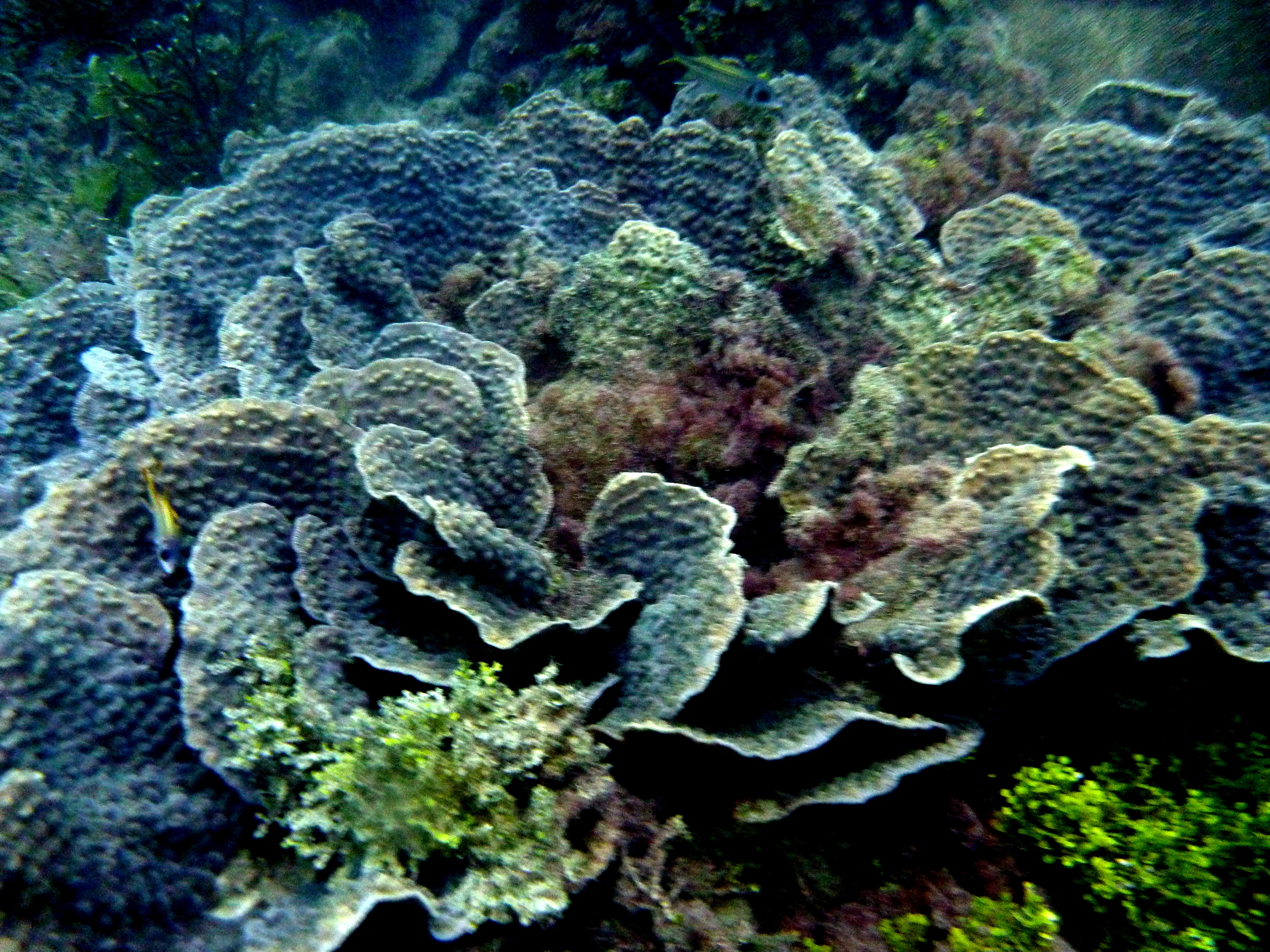
I did the roaming around while Alex worked with the big stones we carried from the shore, arranging for more fish shelters at the site. I simply immersed my self with the brief visit of the water world, communing again quietly with the friendly creatures as I swam around as if dancing in joy! Alex showed around briefly before we had our ascent, spotted the big coral and passed by a wide coral area until he signaled that he is low on air. In one brief look, my mind tried to photograph the scene – the lowly thriving mini-sanctuary with the multiplying marine species. In deep thought, my three-minute- safety stop gave few more moments to feel the serenity and calmness of the GL waters, which can be rough and fierce any time.

Just one descent, it was brief and shallow but it sure did freshen up my gills. It was a dive in a flash!
Hidden Wonders
The brief visit to this lowly coastal town was indeed taking chances and discovering new things, the brief encounter with my DM was another learning experience and an uplifting gesture for the protection and preservation of marine world. There are more than ten diving sites in the area which include the interesting Blue Cathedral off the coast of Surigao Deep near Cloud Nine surfing area. He briefly described the site and explained that the shallower cave is safe for non-tech diver like me, with twinkling eyes I promised for a return to explore Siargao depths (in my mind – with Angel, of course!).
Diving in Siargao had been in my list for some time, now the return would be soon for this. The Blue Cathedral is waiting and without doubt there are other hidden wonders of the island in store for me. The itch for the tunnel is kicking me now!
Travel notes
My route for this trip:
Cagayan de Oro to Butuan City – 5 hours aircon bus at PhP 337.00 (BEI tour bus is now with wi-fi)
Butuan City to Surigao City – 2.5 hours airon bus at PhP 196.00
Surigao City to Dapa Pier – 4 hours cruise thru Montenegro RoRo Boat at PhP 173.00
Dapa Pier to General Luna – 30 minutes tricycle ride at PhP 30.00
GL to Dapa Pier – 20 minutes van at PhP 100.00
Dapa Pier to Surigao Pier – 3 hours cruise thru LQP lines at PhP 250.00
Suirgao City to Butuan City – 2.5 hours aircon bus at PhP 196.00
Butuan City to Cagayan de Oro – 5 hours aircon bus at PhP 337.00
 Life in the Great Beyond
You must be logged in to post a comment.