"Now more than ever do I realize that I will never be content of a sedentary life on the surface, I will always be haunted by thoughts of being drenched elsewhere"….
Many of us may not have heard of this remote coastal community in Palawan and if one mention about San Vicente, what comes to mind are Port Barton, Long Beach, Bato ni Ningning, so on. But for me, San Vicente is where Barangay Sto. Niño is, a gem with a productive marine environment rich in diversity.
Here are my few favorite photos from this beautiful paradise!
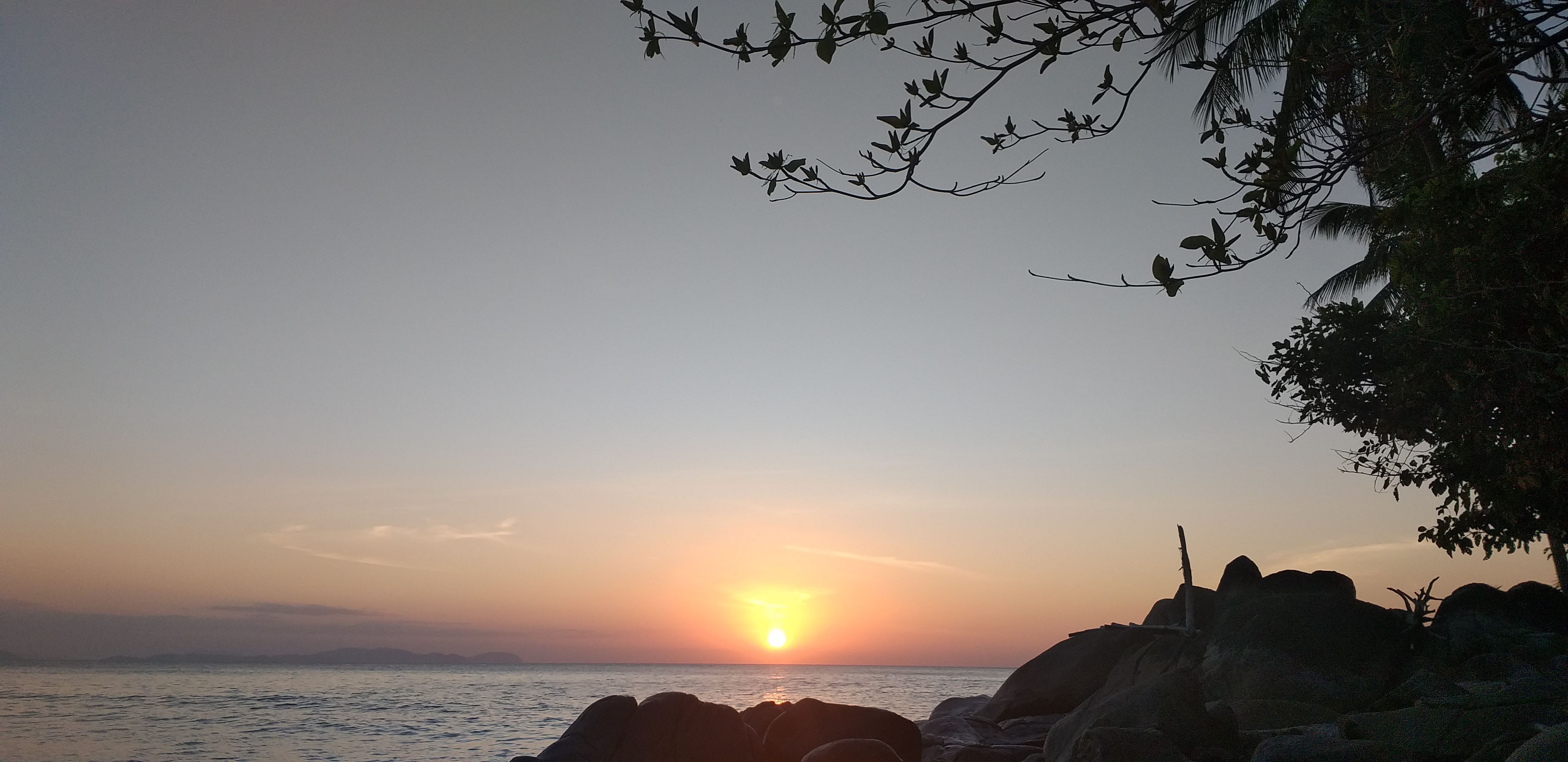
Sunset at the end of each day
Voleyball at dusk
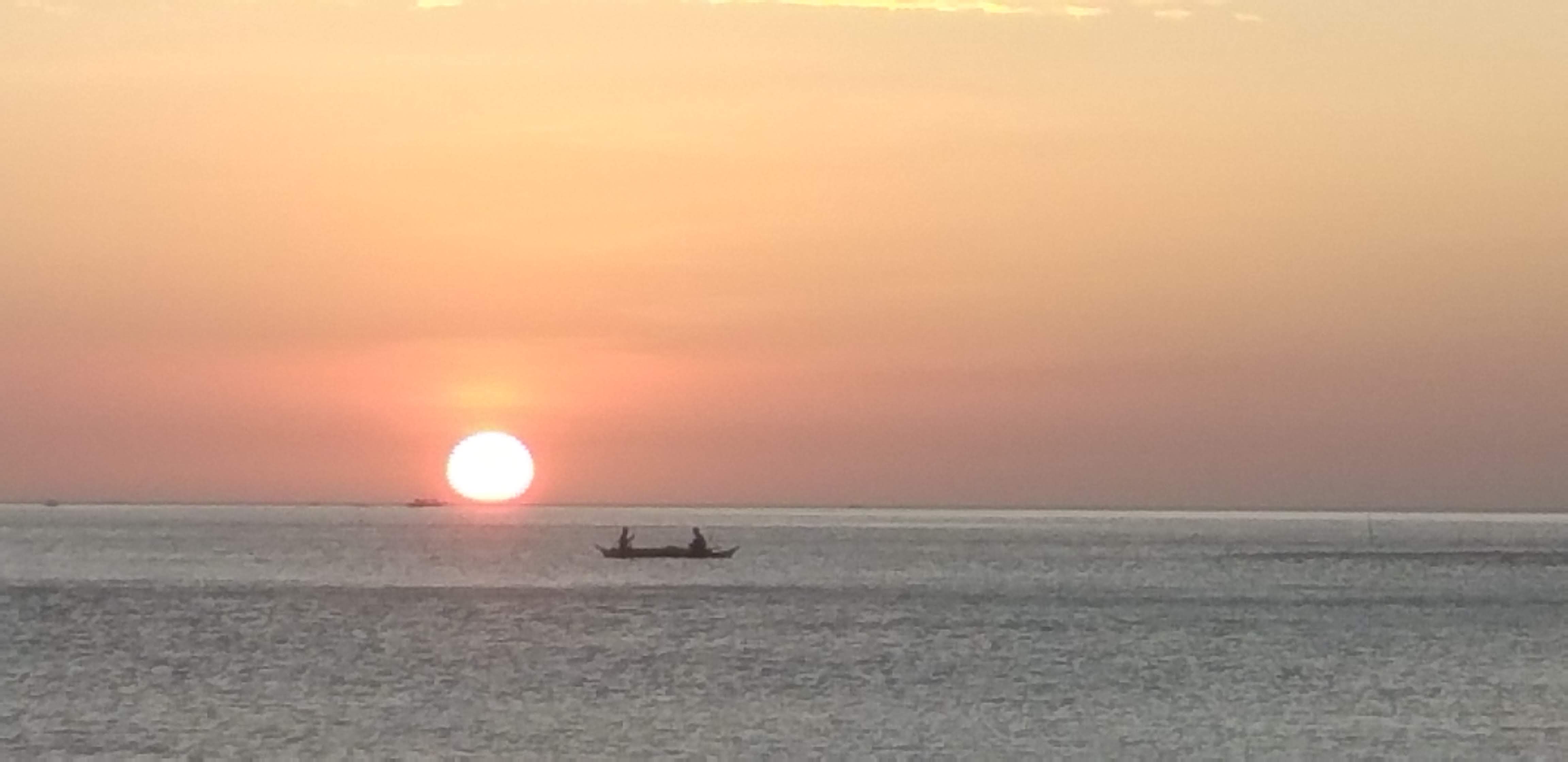
Fishers left for the night
Walk ends at the Bukana
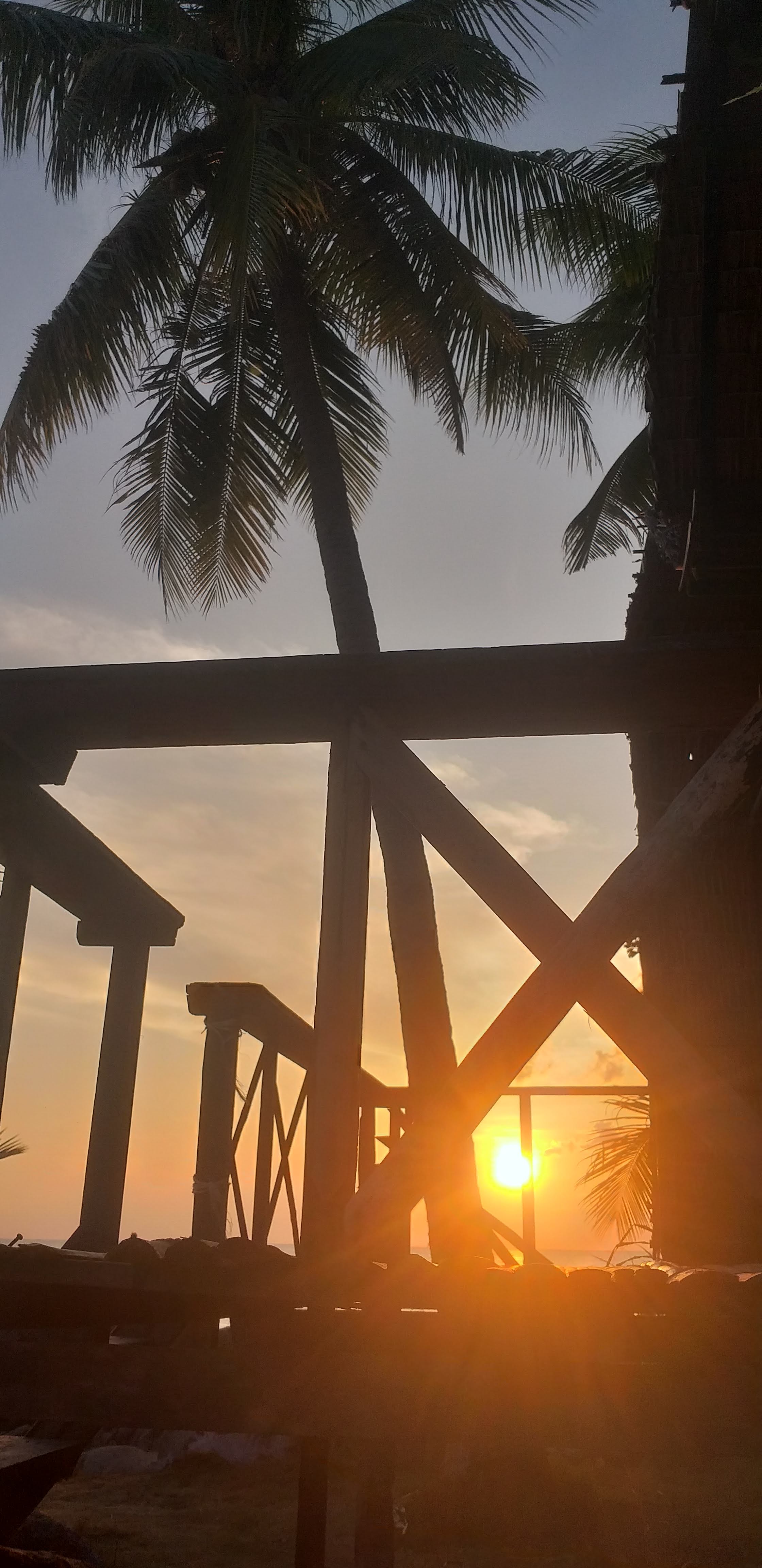
That afternoon glow!
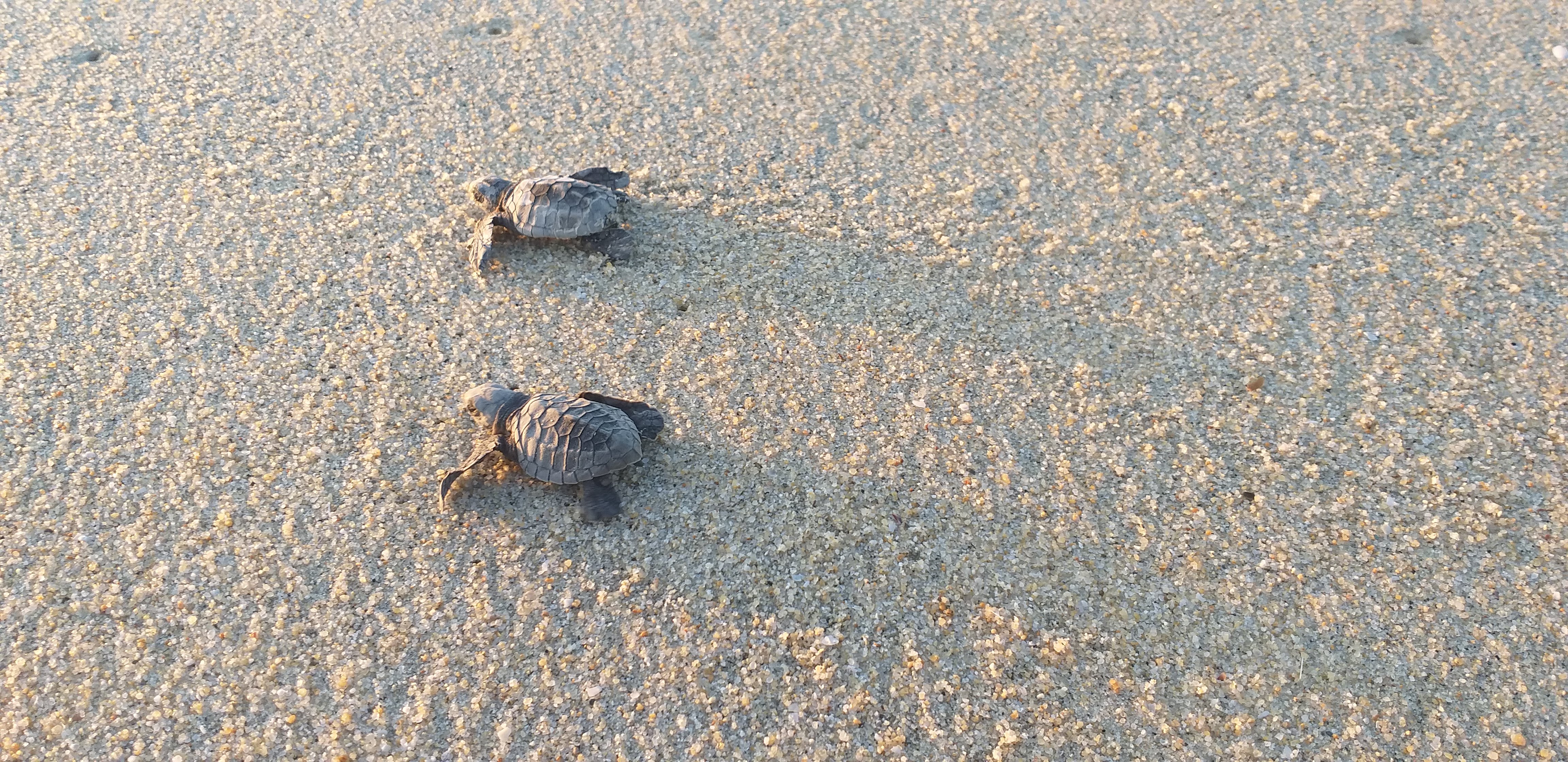
Hatchlings unto the long journey
Peaking at Peak View Resort
Blue skies that meet the blue seas
Imuruan Island
Fiery sunset!
The horizon from Bato ni Ningning
At the end of each day, one can always expect the changing hues in the horizon making it a huge canvas before our very eyes. So lovely, which brings to my mind how wondrous and magnificent the handiworks of the Creator!
My photos were too limited and insufficient to depict the beauty, serenity and splendor of this hidden coastal community and it would be unjust if I wont admit how I love the slow and simple life in Sto. Nino. The place to be if you love to swim in clear waters and watch sunsets at the end of each day!
Engaging with volunteer works especially for the marine environment was one of my greatest desires, which was too disturbing to ignore. I did one five years ago relative to data research for marine sanctuary establishment in Southern Leyte and it was a rewarding one. I learned many new things far from what I was doing and I was a changed person. Indeed, the marine world is an invaluable resource when the Earth is more than 70% water, obviously all forms of life is dependent in our oceans and water ways. We are all aware that its protection and conservation is not just necessary but mandatory to sustain all of us and the generations to come.
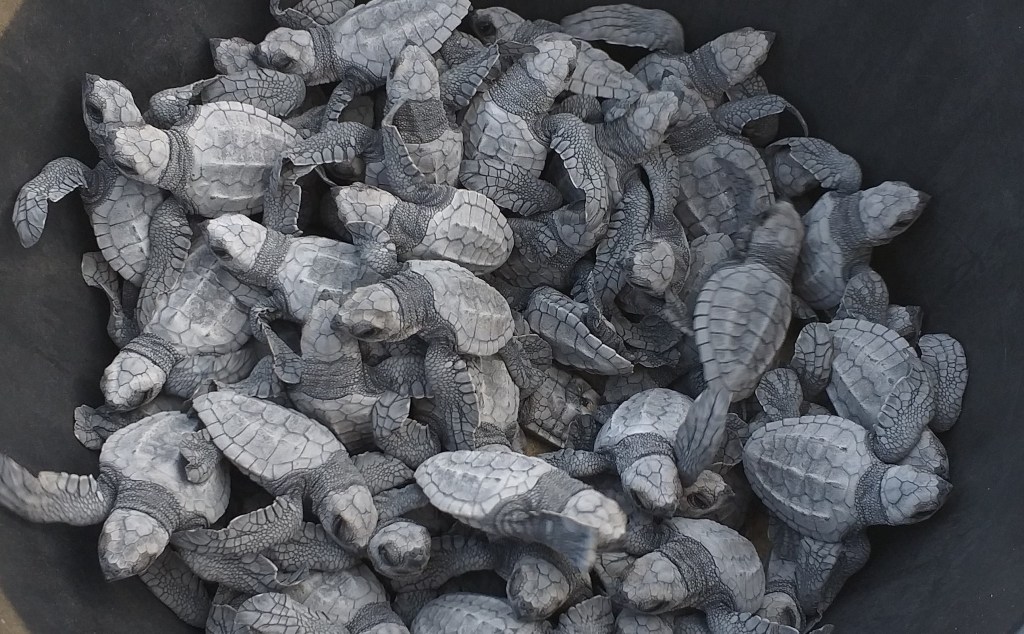
Hatchlings ready for release !
For two years I planned and searched to find one within the country, considering schedules to match applicable season with my work timelines. Randomly, inquired from LAMAVE and evaluate their requirements and was grateful that they don’t limit their volunteers to foreigners. I aimed for the Marine Turtle Conservation, confident that I can meet sufficiently the field work requirements – walk approximately eight (8) kilometers for beach patrol! Turtles are remarkable and just one of my favorite specie, my encounters with them in the depths always brings the soft-hearted in me, and I was just enamoured with this graceful and humble critter. Knowing this animal deeply would be interesting and most importantly contributing in its protection and conservation I believe has far-reaching results in the long run.
My two-month stay in the project site was full, each day had important tasks supporting the project staff and other volunteers. I joined the team in March, the turtles were still nesting though not as extensive in the previous months of December, January and February. Beach patrols, data encoding, hatchery checks, excavations, samples processing, as well as information and education campaign collaborating with LGUs and public schools. We had household chores schedules too, the challenging part was cooking for everyone considering food restrictions and limited sources – there is no supermarket in the barangay! It was a test of endurance and embracing the limitations and simplicity of rural life.
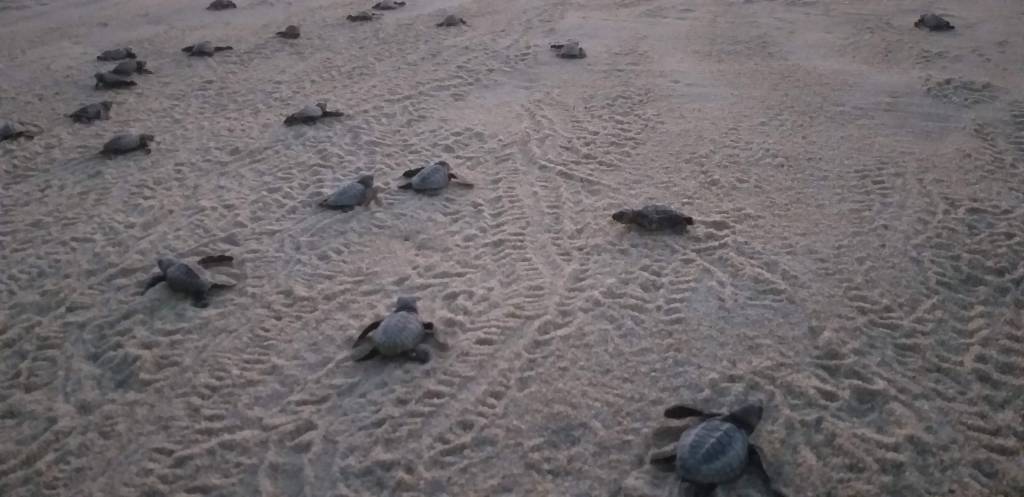
Hatchlings unto the long journey!
My encounter with marine turtles on the surface during the works was life changing, and realizing the importance for its protection. I learned that hatchlings had a very slim survival as they went for the long journey, so that every turtle existing underwater is a miracle! My favorite part was the hatchling releases which either done early mornings or in nightfall. One morning check I had more than hundred hatchlings for release, I was alone and few dogs were in the side lines. I can’t wait until later when the sun is up very hot but I feared the dogs would attack when I release them! Watching the little creatures crawling towards the clear waters was just lovely. Dusks release was even more charming, while waiting for all of them to get the waters we watched the glorious sunset feeling relaxed after the day’s task. Actually, watching sunset is my favorite part of the day! 😊
My tremendous respect for the environment influenced this desire to engage and share my time and resources for the gargantuan task in the preservation of the environment and our common home in general. I am hoping that in my little way this will encourage locals to support and actively involved in many ways to support this mission. We are all interconnected and what you do to environment ultimately you do to yourself.
I came home with a grateful heart filled with new learnings, gained new friends with similar passion for the environment and a strengthened desire to continue to support for the mission.
NB.
LAMAVE or Large Marine Vertebrate Research Institute of the Philippines is a Filipino non-government organization dedicated to the conservation of marine megafauna. To date, has worked with governments and communities in over 9 provinces in the Philippines.
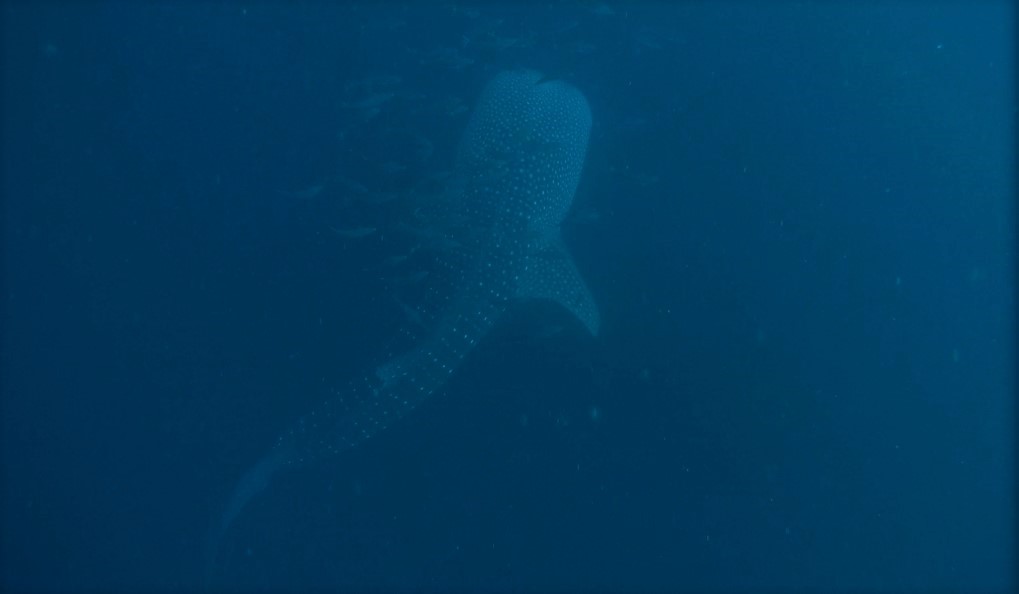
Whale shark abound the area and we were lucky during our hunt before leaving the Expedition!
The CCC Expedition required me to stay for a whole month in the base camp located in one of the most diverse coast along Sogod Bay. Napantao is one of the 22 barangays of San Francisco, a lowly coastal town in Southern Leyte. Remote and unheard of, out of the tourism radar even for diving.
My stay was brief but long enough to observe and experience the diverse marine life on its front waters. It was however, for my eyes only since photo shoots were not allowed or never part during the training and survey dives. In some way, it was a good opportunity to focus on the existing marine life in the surrounding reefs. Actually, a volunteer should be mindful and must stay focused, accuracy is necessary. In many instances, I was too engrossed on the lessons and actual exams underwater and so unconsciously ignored species in one way or another. Like, if the agenda was Invertebrates & Impacts I will easily ignore the fishes and other marine life; or if our aim was for the Substrates, my eyes will search for the corals, sponges, rocks, mud, so on. My eyes were out for the day’s mission – no more, no less.
Yet, I could not undermine the richness of the surrounding waters which has been my training ground and the scenery at the end of each day. I caught glimpse of them every time after our second dive for the day. If we have more time, we swam back slowly over the reefs, wiggled among the big boulders and watch the colorful corals and variety of fishes. The surgeons, a group of damsels over there, a pair of trumpet fish darting from behind, brown and yellow box fish, a swarm of blue fusiliers and the different chromis in colors. Then I encountered a goliath grouper, it was unbelievably huge, it was roaming around perhaps looking for prey. I was just watching at a distance, it’s unethical to go near and disturb them. Indeed, one should have a tremendous respect even for the marine animals. Those giant spadefish that swam coyly every exit or approach in the channel, reminding me to relax and to take easy on a daily basis.
One morning, we woke up wondering that a luxury boat anchored in the front waters, only to find out it was a dive cruise spending whole day for the dives. And regularly, dive boats from Padre Burgos cruised to Napantao for diving bringing their guests, which for me brought home that surrounding waters is tremendously rich with marine life.
I will always think and believe that this coastal barangay is a legendary dive site and marine habitat. The soft waves riveting the blue waters and the golden hues of sunset at the end of each day were great reminders of God’s wondrous works. And there was much beyond the surface, the fish sanctuary and surrounding reef were filled with colorful marine life keeping in balance its marine ecosystem and sustaining the valuable resources of its community.
This is exactly similar to what we found in the reef. Photo courtesy of http://www.oceana.org
My dives during the CCC expedition led me to surprising encounters with marine critters, especially that their field base is nestled within Sogod Bay which is just one of the richest marine environment in the Philippines. We were having our second survey dive of the day doing outward for the fish survey, it was in pretty normal conditions, no current and animals were contentedly calm. I was scouring my side for the target species and unexpectedly this large shell came into view, I tried to come near but getting conscious that invertebrates was not our aim for the descent, time is always precious during survey dives! But the sighting was too rare to ignore, I tried to get Manon’s (our Project Scientist) attention – she was too absorbed as she was leading our mission. I pointed it out and she was surprised too! The intricate pattern of the its shell was just beautiful. We both came nearer and she signaled to record the sighting. That was my first encounter of a giant Triton in its habitat surrounded with other animals and I was wondering of its contribution to the marine ecosystem.
Here are are few facts I found at www.oceana.org about the specie:
This invertebrate is an active predator and is known to aggressively chase its prey, which it detects through its excellent sense of smell.
The giant Triton is known for relatively high speeds, especially for a snail.
They feed on other snails and sea stars, most notably the crown of thorns starfish (COTS), Triton isthe only natural predators of this destructive starfish.
The specie was considered extremely important to reef health and is given legal protection particularly in Australia.
The giant Triton reproduces through internal fertilization, and the female lays her sticky eggs on the sand, where they quickly become covered with sand and other material, protecting them from potential predators.
Unfortunately, because of its valuable and attractive shell it is collected at many places around the world, they are often sold in shops or markets in popular tourism destinations in the tropics such here in Philippines. Gladly, that night during dinner as we were discussing the day’s activities, the giant Triton was nominated as critter of the day and was voted by majority!
NB. The giant Triton was sighted in Nueva Estrella Norte, a fishing community in Pintuyan, Southern Leyte where a marine protected area (MPA) was just established.
Check out dive at CCC house reef with my roommate Jemimah who hailed from Queensland, Australia.
Coral Cay Conservation is an internationally renowned and accredited conservation specialist dedicated to providing the resources to help protect coral reefs and tropical rainforests throughout the developing world.
Since 1986 CCC have run over 20 successful conservation projects in more than 10 different countries around the world involving more than 10,000 volunteers, training several hundred scholars and publishing more than 300 key scientific research papers.
Across the world, CCC have had several internationally notable accomplishments such as the introduction of several Marine Protected Areas including the creation of the UNESCO World Heritage Site in Belize; The Danjugan Marine Reserve and Wildlife Sanctuary for Negros, Philippines in 2000; The Limasawa Community Managed Marine Protected Area for Southern Leyte, Philippines in 2008.
Marine conservation and protection is undoubtedly becomes a passion for many, everyone is becoming conscious of the environment and for people who loves the ocean, always believe that it needs necessary care not only for the present but more importantly for the future generation. Inside me, I felt and thought that my effort for these issues was only a minuscule of what was necessary of the vast waters around us. The seventy percent water that comprises the Earth is unimaginable and sustaining this important resource from all forms of risks including global climate change is very challenging and gargantuan for that matter. The Earth is in dire need right now of human intervention.
It was in September 2017 that I stumbled from the internet after curiously searching on marine volunteer works, about Coral Cay Conservation (CCC) based in London, UK with a field base in San Francisco, Southern Leyte. So, I carefully browse the information from their website believing that their target participants were foreign nationals only, consequently inquired if they accept local residents for the programme. The reply was good news, scholarships are offered to local residents with matching screening and qualified divers were very welcome. The rest was history. I was accepted as a CCC Expedition scholar in October 2017!
It was only in November 2018 that I finally traveled to Southern Leyte for my engagement, the year was filled with challenging tasks and I was only available in the last few weeks of the year. Such a long wait, yet the excitement was coupled with apprehension as I would be working with total strangers in an obscure remote town I was not familiar with. I chose the long trip by land which was an adventure by itself, cruising to Visayas through Lipata and San Ricardo route was one of the routes I was searching on and wanted to do, long before.
I found it an advantage choosing the last batch team for the year, it was lean period and so it wasn’t crowded. The pace was fitting for me as I need to absorb the lessons deeply, the follow-up exams were not easy, both underwater and on computer. The lessons were to prepare the volunteers for the survey works, identifying the substrates, invertebrates and target fish species correctly so that only accurate data were provided for the study in establishment of marine protected area. The community were involved also and participated in gathering data and raising awareness for marine conservation understanding.
The four-week stay in Barangay Napantao was full – household chores, lessons, exams, dives – Sundays however, serves as off-gassing day as a rule. Our meals were venues for stories, accusations, confessions, jokes, or the critter for the day’s dive nomination, and laughter… 🙂 Seriously, it was hard work and definitely not for the faint-hearted, diving have standards and protocols, whether boat or shore dives. I gained thirty five (35) dives during the expedition including one night shore dive at the house reef, again I would say it was hard work. Yet, I was grateful I was given the chance to work for a cause for the marine world. Perhaps my contribution was too trivial, yet I learned so much more about marine life and environment, most importantly gained scientific skills. The encounters were memorable and truly enriching. Indeed, we can only protect what we love. Obviously, the CCC team and other volunteers made my stint possible and a rewarding one.
The bruises, stings, scratches and scars I got during the expedition will soon disappear and forgotten but the memories and gained insights will surely linger on. Surely, we can only have good intentions for what we love and for what we need to protect. It was a once in a lifetime experience and I am one proud CCC scholar!
NB.Photo credits to Mr. Gareth Turner, Field Base Manager during the period. The expedition base is located in Napantao, San Francisco, Southern Leyte within Sogod Bay.











 Life in the Great Beyond
You must be logged in to post a comment.