"Now more than ever do I realize that I will never be content of a sedentary life on the surface, I will always be haunted by thoughts of being drenched elsewhere"….
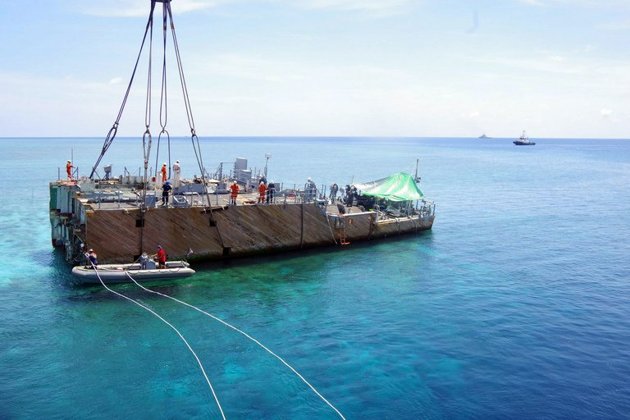
The above photo released by Philippine Coast Guard (PCG) shows the stern of the USS Guardian before being lifted by a boat crane during its salvage operation at Tubbataha reef, in Palawan island, western Philippines. The commanding officer and three crew have been relieved of their duties, the US Navy said Thursday (04 April 2013).
Finally, this paradise is cleared from this big trash!
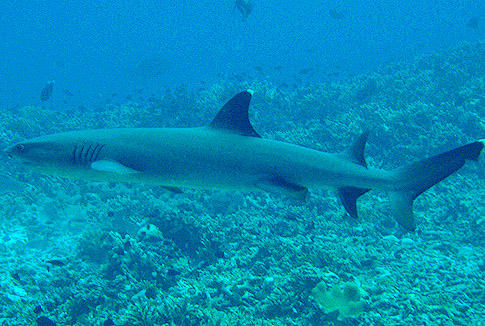
The Whitetip Reef Shark (Triaenodon Obesusis ) is one of the most frequent sharks in the Indo-Pacific. This species is easily spotted due to its curious, irregular, and waving swimming style and of course, the white tip on its dorsal fins. Sharks are not a common sight as you go down the depths, their dwellings are likely in reefs remote and undisturbed. My sightings were few and I feel blessed I had the opportunity for such encounters with them.
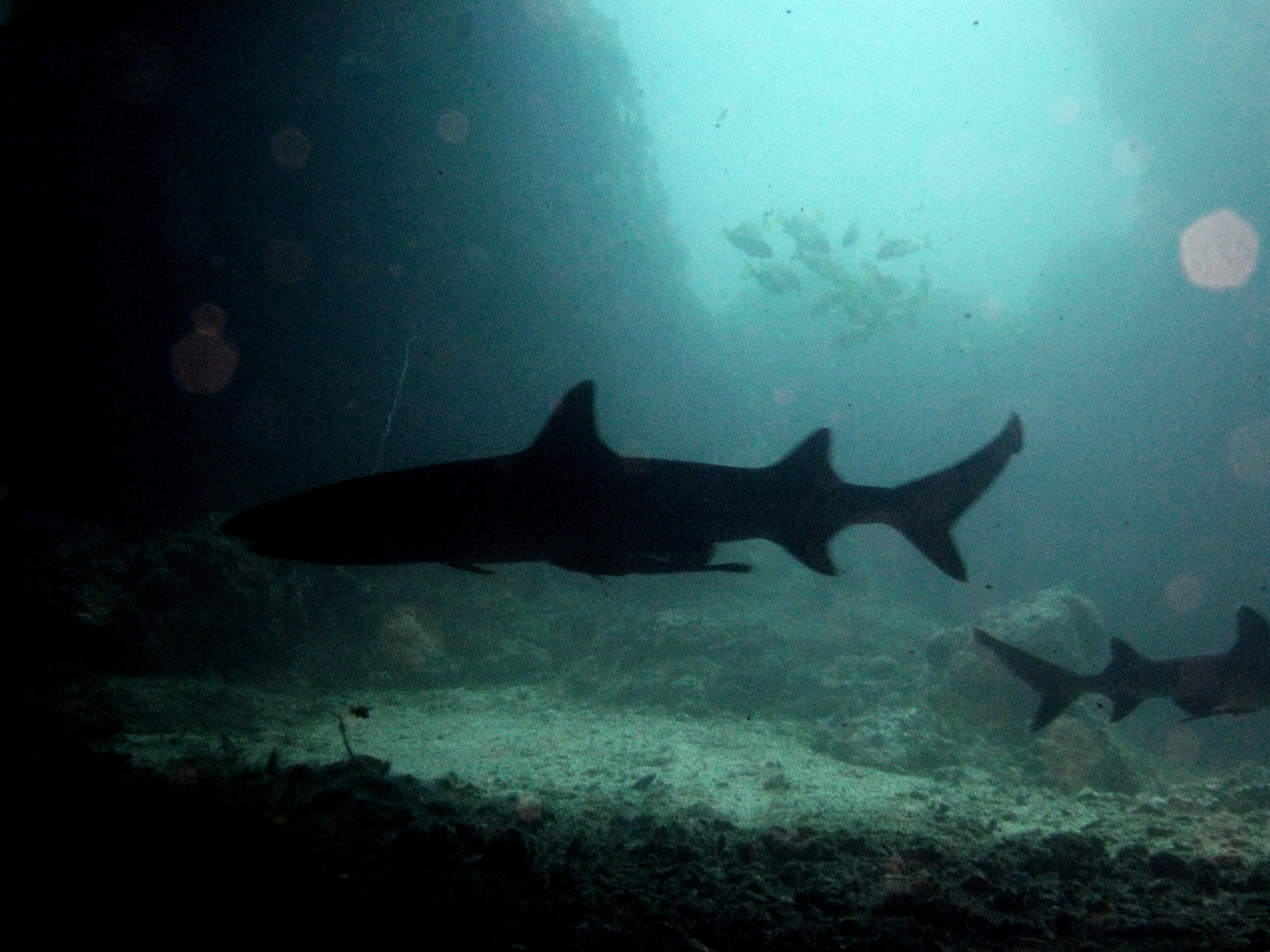
I found bunch of juvenile white tips in Apo Reefs in the shallows, astounding as it was. Actually, it was magical! And when we explored Tubbataha, we had a dose of it everyday. It felt like it was ordinary tropical fishes wading everywhere, but still we kept our distance from them. Lately, we had wonderful sighting of the species in a cave at Gato Island, Malapascua. It was incredible, we do not expect such wonderful scene. But they were all there, swimming coyly all five of them in the dark, unsuspecting that five earthlings were watching them in the corners of the cave! It was mesmerizing…
White tips swimming coyly in a cave at Gato Island
Many people would cringe at mere mention of sharks being perceived as harmful. Yet sharks including white tips are interesting creatures which hardly would harm human beings unless threatened. Here are few interesting facts about Whitetips:
This amazing fish is a very slim species. At most, it grows to about 2.5 meters (8 feet) and weighs up to 20 kilograms (44 pounds). With its slender shape, grey complexion and pronounced gills, this creature of the sea is hard to miss.
This species is found all across the Indo-Pacific region. It is found almost exclusively in coral reef habitats along the coral heads and ledges. Sometimes they can be seen near sandy flats, in lagoons, or near deep drop offs. The preferred depth is 8 to 40 meters (26 to 130ft) making this a shallow swimmer.
Since this is a slow species compared to others, they prefer to hunt at night when most sea animals are sleeping. They prefer eels, crustaceans, octopus, lobsters, and crabs.
The Whitetip Reef is a very social fish. They often lay on the ground in large groups. Many divers who see this phenomenon say it looks like a bunch of logs lined up side by side. This generally is not a territorial species, although they often spend many months in the same area.
Since they are Viviparous, eggs are held in the placenta of the female fish until birth. Females are usually pursued by males for an extended period of time, at which point, the males will initiate contact by grasping the pectoral fin and maneuvering the two of them into proper position. Females give birth to 1 to 6 pups at a time and pregnancy lasts for 10 to 13 months.
The Whitetip Reef Shark population has decreased over the years, even though they are toxic for human consumption. Due to their slow reproduction rate, late age maturity, and limited habitat, any human interference has large effects. So even though low levels of Whitetip Reef fishing are occurring, it is enough to dwindle the population and rate them as “Near Threatened”.
Their threat to humans is minimal. This is a relatively harmless species but can spook swimmers and divers. They frequently swim close by to inspect swimmers but rarely pose any problems. Most bites occur from spear fishers getting bitten when the Whitetip Shark goes after their bait.
It was a face to face encounter with Thresher Sharks (Alopiidae) early morning one Saturday at none other than the Monad Shoal, Malapascua Island north of Cebu province. After almost three years I finally had a close encounter of this interesting pelagic.
Some of us may never know how trash can devastate the marine world and if we chose to remain indifferent and irresponsible in managing solid waste, we are all in great peril. Despite all the advocacy efforts in the communities still many atrocities are happening causing more damage to the environment on surface or in the depths.
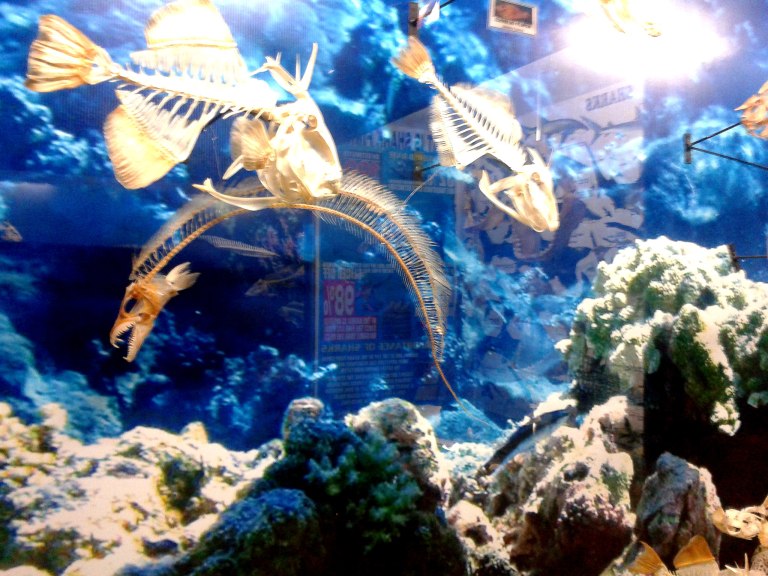
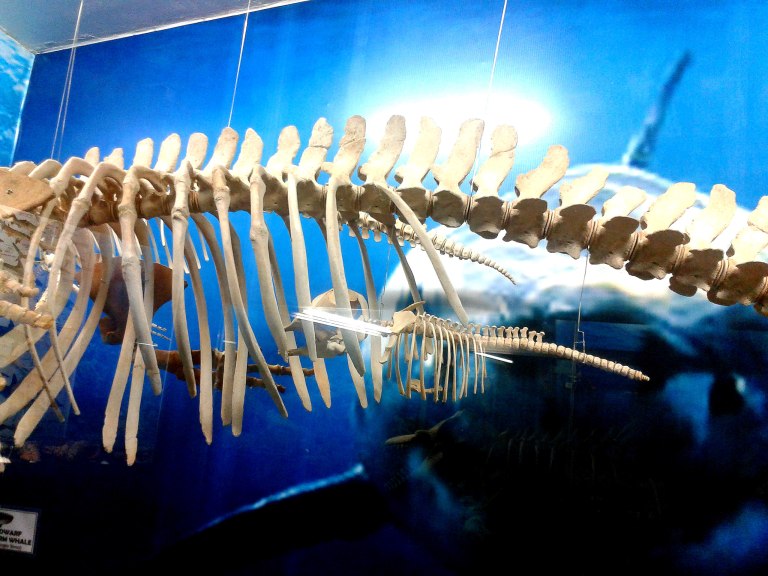
My recent visit to The Bone Collector Museum revealed disheartening discoveries on the fate of marine creatures – death of harmless creatures, the culprit may not even knew the consequence of his or her one big mistake which he or she might not even remember.
This whale has a baby inside when she died…
The skeletons of various marine life were good educational showcase for everyone, but taking a closer look of the causes of their death especially the bigger species, in my opinion was too ridiculous. One of the collection is a sperm whale skeleton, its dead body was found in Davao Oriental waters, inside her belly were collection of trashes – a jackstone ball, hair clip, sachet wrapper, pentel pen cap, plastic bottle cap and more – it died slowly due to debris in its digestive system.
Remains of a Dugong found at Samal island
A Pygmy Sperm Whale which they called Orbit – happy and content with abundant food in the waters but someone somewhere threw an orbit chewing gum bottle on ground or in the ocean, which the whale mistakenly thought as food. It went into its intestines blocking it causing him to starve to death combined with dehydration. Or Alcoholic – a False Killer Whale – it was an alcohol plastic bottle that killed her. Someone Carelessly discarded the top of an alcohol bottle, it made its way to the ocean where it was eaten with the rest of her food. He starved to death slowly with the plastic blocking her intestines.
Green sea turtle bones
These were just few of terrible stories that are happening in our communities, real stories that made me cringe when I heard from a witness while seeing the real trash salvaged from the dead specie. I suspect that those species we always hear from news that came ashore or float up were sick for these same reasons. Though I want to believe we are not hopeless yet, we just all need to be conscious of the impacts of our actions and decisions affecting the environment. We all have the responsibility to preserve and save this planet!
I have been silent about the devastation of this paradise called Tubbataha Reefs, I just can’t believe this is happening with all the modern navigational equipments a watercraft must have, much less a US navy ship! And what are they doing in the Sulu Seas?
I dove in Tubbataha Reefs almost two years ago – a dream I fulfilled, thirteen dives in underwater paradise not everyone had the opportunity to experience. I can’t believe such destruction. Needless to say, they can not put back again what was destroyed. How disheartening!
It’s hurting every minute to resist not to howl my loudest yelp about the sad circumstance that has hit Tubbataha Reef. As of this writing, the damage to the national marine park, a UNESCO World Heritage Site and nominee for the New 7 Wonders of Nature — is at 1,000 square meters. That’s almost a fourth of an acre of Mother Nature’s work of art — all a hundred years in the making — gone to smithereens. All the king’s men and horses can never put those brittle reefs together again!
Nobody wants this thing to happen, yes, but everybody wants to know what’s the business of the USS Guardian out there in that part of the Sulu Sea and how could a state-of-the-art minesweeper gets to be so blind as to scrubbing fragile reefs! Whatever, all eyes now on the extrication. Man and machine. The longer this tonnage…



 Life in the Great Beyond
You must be logged in to post a comment.