Exploring the Deep Seas of Tubbataha Reef

Tubb15

Last month of May was the fifth year of our Tubbataha 2011, but until now it still bring a lot of fond memories. Reminiscing and scribbling once more those wonderful moments…..

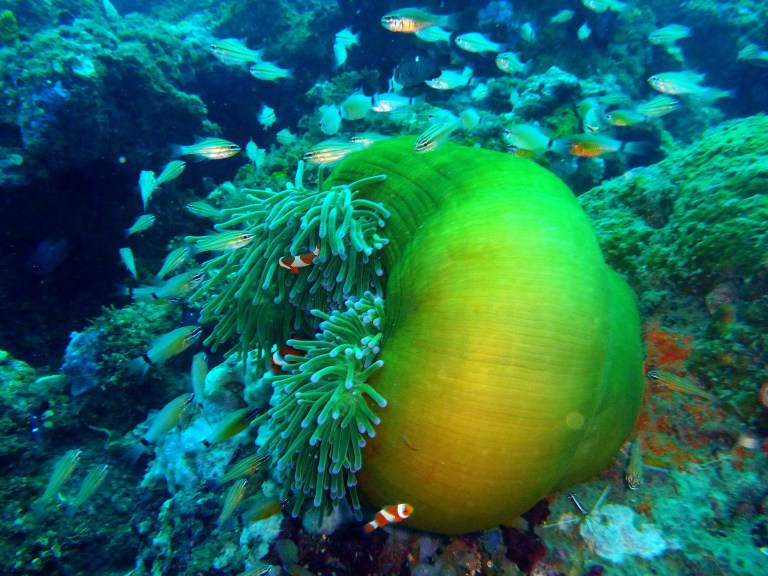
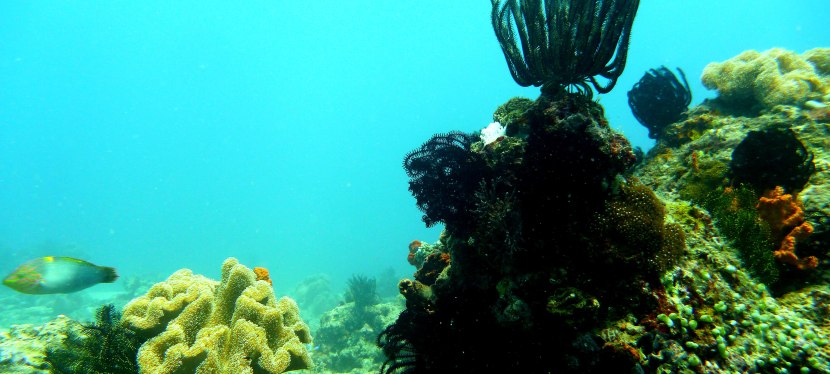
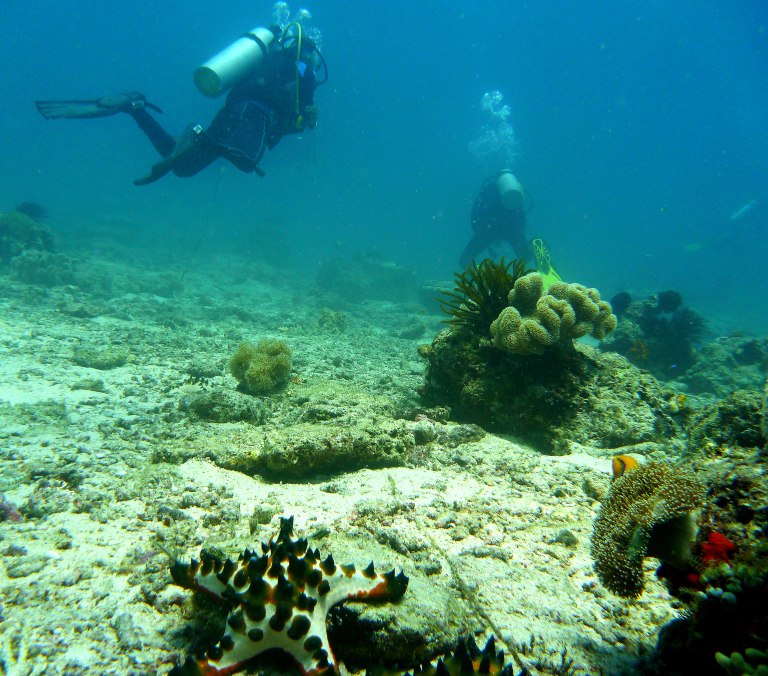
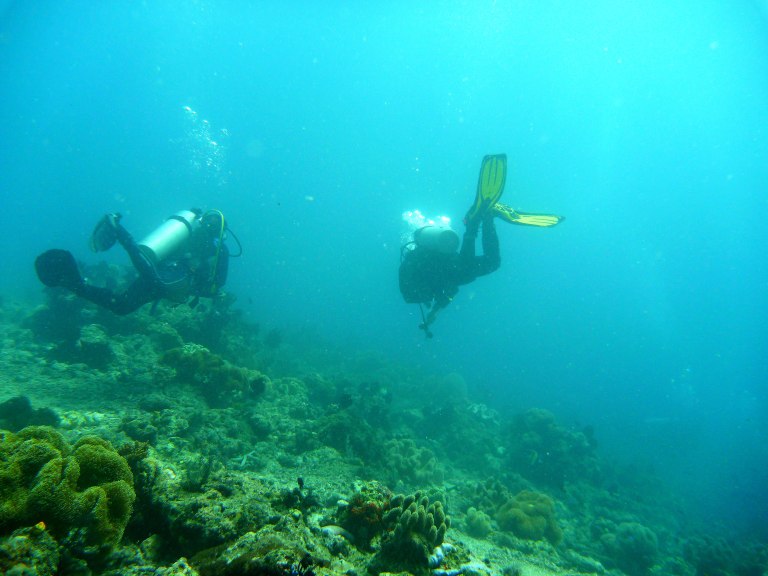
If you are a Filipino diver, chances are you have cruised to Sulu seas towards Cagayancillo, Palawan for the only UNESCO marine heritage site in Asia – the Tubbataha Reef National Park. If you love the marine world, this is your place and you will never get disappointed. Most often, works and beauty of nature are beyond the surface and it can only be revealed to curious spirits who choose to tread afar for a paradise quest.

Diving in the Tubbataha Reefs was a dream come true, the four-day expedition was total immersion in this hidden paradise. What about having four dives in a day? It was really wet! The richness and diversity of the park is hard to equal – from bobbies to sharks! Not to mention turquoise waters, azure skies and vast open horizons decorated with sunrise and sunsets. There was stillness and serenity.

My thirteen dives were filled with great sightings and here is my account for what I encounter in different spots in the park.

Malayan Wreck

A wall dive decorated with active fish life, then with a sandy slope to the wreck. It is the home of white tips and gray reef and giant trevallies. We sighted two white tips perching on white sand as if sleeping, so with gray reef in different locations. There were triggers, large snappers, groupers, sweetlips, napoleon wrasses and breams. There was a turtle, a school of barracuda, moray eel with a remora, fusiliers and emperors and there was lot more I couldn’t name them all. Of course, I didn’t miss the large gorgonians in lavender, yellow and green.

The small shipwreck here was also an attraction, I love wrecks and my last of the three dives here had a safety stop going around searching every corner of the wreck!

Wall Street

It is another wall dive with filled with white tip & gray reef sharks, variety of tropical fish
variety of colorful sea fans and soft corals. You must be careful not to bump with the sharks!

Amos Rock

This is located in the southwest of the North Atoll with a breathtaking wall decorated with large gorgonians and variety of colorful corals. Sharks are again often seen here, we found more than ten swimming coyly. Other species are sweet lips, groupers, trigger fish, large parrots, giant moray eel, boxfish and puffers.

Ranger Station

It was already late afternoon almost a night dive when we descend here. Large groupers, sweet lips, snappers were the common residents. Variety of sea cucumbers like ananas and leopards were sighted here.

Seafan Alley

I found more fish life here than the seafans.Like snappers, triggers, wrasses, parrots surgeons, emperors, angels and pufferfish. Sighted here at least two turtles swimming coyly before us.

Shark Airport

This dive site is also located in North Atoll, is one of the best places for spotting a variety of marine life. Perhaps, it is a playground of white-tips, gray reefs and silver tip sharks as they abundantly swam in the area. We encountered a giant manta ray here! Or was it a devil ray? It was a real surprise!

Delsan Wreck

I could still vividly remember having a relaxed dive here waiting for some little surprise that day. Indeed, a whale shark about 5 meters trooping with white tips & gray reef sharks, giant tunas and trevally parading before us! And as if to emphasize its splendor, they made another round for all of us to watch. It was a real show!

There were triggers, blue fin trevally, sea turtles and one of my favorite – a large school of jacks!

Lighthouse (Delsan)

Located in the South Atoll, the site features a large reef and a steep wall with another active marine life – black tips, gray reef, blue fin trevally, barracuda, moray eel, turtles to name a few. Anemones, sea fans, sea cucumbers and colorful hard & soft corals abound in this site.

The excitement of getting into the waters and breathing deep down or discovering the unknown are just coating of this incessant aquatic adventures. It’s more about passion of the marine world, the life beyond the depths – just pure love for these creatures, admiring and watching in awe all these wondrous forms of life. You can’t help not to fall in love and feel grateful you had the chance to witness its splendor. My dive buddy and I agree it was worth for another visit.

The great waterworld of Tubbataha is a piece of heaven on earth. The exhilaration of being surrounded by colorful fish of great variety is simply hard to equal. It was a very moving experience. While you’ve probably seen photos and videos on diving, you won’t understand what it’s really like or how it really felt until you’ve experienced it yourself.

Tubbataha – where a brave and passionate diver’s dreams come true!

NB. This piece was written for letspalawan.com

The Pulchritude of Puerto Princesa

Those “hitting two-birds with-one-stone” trips are the kind  that I usually look forward to, I found it more productive and obviously it is time and money saving and with trip arrangements in place, all I need is to extend one more day to accommodate flying restrictions after diving. Being the gateway in the last Frontier, Puerto Princesa is impossible to be unknown and more than that, the city evolve in tourism as it cradled one of the seven new wonders in the world!  And its being the greenest and perhaps cleanest city is not for nothing.

My dive plans at the start of the year was clueless as other priorities that needs my immediate attention were at hand, but the week-long official trip in the city was just perfect.  All previous visits in the city were too brief being just for stop-over to El Nido, Cuyo and Sulu Seas.

Puerto Depths

After haggling for a slot for a Friday dive, they took me in and informed the diveshop as a caution that I was alone.  Actually, the confirmation was last minute on Thursday, later I learned the water conditions was unfavorable. The big waves were uncontrollable and all water activities in the city were cancelled for safety reasons. So on that Friday morning, I took a trike though I knew the diveshop can be reached for a walk but I need to be early for the appointment.  It turned out the driver was not familiar with the streets, how come? – such a pity. I was much earlier from the rest including our DM and after almost an hour of waiting, we all piled up in the multicab heading for Pristine White Beach.  And again, we were a bunch, majority was foreign nationals!

P1050853

Although the sun was brightly shining, the waves were insurmountable.  At the back of my mind, I trusted the DMs judgment, and we all piled up on the speedboat after assigning our buddies. We sped off riding on the big waves, spraying us with salt water like rain!  Our first descent was in Crossing, the DM offered me to go down immediately thru the anchor line to avoid the surface turbulence, and wait until we go around down together.  Indeed, it was more calm down but alas, the viz was hazy.  It rang a bell in my mind, I must be careful not to get lost! Despite the blurred vision, I found active fish life.  A parade of breams swimming coyly at a distance, there were variety of trigger fish but no titans! 😛 And there was a turtle!  Our DM had to drag me to catch up but there was only blurry outline of the turtle swimming away.  I think if not for the murky viz, I could have sighted more of the marine life. We surfaced after 52 minutes, my deepest at 19m still with 100 bars air.

We sped off back to the beach for our surface interval, which is much better than stationed there with waves rocking our boat high and low. The Taiwanese couple begged off after the first dive.  We stayed on the shallows biding our time, the waters was perfectly calm.  With the sun shining and blue skies, it was a picturesque summer scene.

P1050868

As we prepared for our next descent in Maris Rock, I heard the friendly Canadian asking if it was safe with the big waves, and again I trusted the DMs judgment.  We sped off holding fast for safety, I knew the waves were getting higher!  The site has rock clumps scattered over white sands, the surface was still choppy so immediate descent was appropriate.  The viz wasn’t any better, it was still foggy but thankfully there was no current.  The fish life was much better, sighted giant puffer fish, clown fish, triggers, anthias and throng of juveniles over corals.  We went slow and perhaps I was more observant in the second descent, even with the haze we found cleaner shrimp, some nudis and a small frogfish!  We surface after 45 minutes, my deepest at 21 meter and with air still at 100 bars.  The choppy water was heart pounding in a way, but it was another learning to my advantage.  I believe the depths of Puerto Princesa has much in store even more in clear visibility.

P1050861

Around Puerto

There were much more to see around the city – Mitra Ranch, The Bakers Hill, the Crocodile Farm, the famous Underground River , the island beaches in Honda Bay. The last two requires more time and getting a quick hop of the first three visibly offered more improvements compared a decade ago.  Personally, I was more impressed what I saw in Iwahig Colony, it have transformed into an agricultural community with the detainees as workers and producers. The rice fields were maintained as well as the fresh water fishpond, other crops were also produced at the same time working with their handicrafts.  It is a big boost for all the detainees inside Iwahig, aptly the facility is now called Iwahig Penal Farm.

Unfortunately,  I failed to visit the public market , my office mates always aimed for pearls and dried fish getting cheaper deals!  Puerto has now a mall which is another improvement in terms of market & economic activity.  There are new cafes and restos down town, Angel and I used to have lunch in barefoot at Ka Lui for their delectable dishes and lounge at Atoy’s Café while waiting for our flight.  Well, indulge after a dive is the usual thing, and I went to White Fence for that French café ambience. To my delight –  the homey atmosphere, good food and reasonable price was a perfect combination. I think the café deserves another visit in the future!  🙂

Another Reminder

I thought there would be no hitting the grounds as I go through the transports heading home alone, the perennial flight delays almost created disaster in my connecting flight. I thought I wouldn’t make it, but I literally race for the gate as soon as I got my luggage from the carousel.  It was miracle, my final flight towards home was accordingly delayed and in less than five minutes after I step on the area still catching my breath, the gate opened for boarding!  And these are the kind of circumstances that prod travelers, which I correlate in diving as S R T A.  A dose of adrenaline was in the rise. 🙂  Just the same, it was another miracle!

Travel Notes

  1. I booked at Dive Puerto Princesa (www.divepurertoprincesa.com) for my dives
  2. Best month to dive is between March to August, January is still habagat and waves can be too rough
  3. There is lot of low-priced accommodations around the city, some have easy access to the airport


Choco Chip Star

P1050888

Have you heard of or encountered this sea star?

Protoreaster nodosus, commonly known as the horned sea star or chocolate chip sea star is a species of sea star found in the warm, shallow waters of the Indo-Pacific region like in the Philippines.

The species possess rows of spines or “horns”; black conical points arranged in a single row, radially on the dorsal side, which may erode and become blunt. These dark protrusions are used to scare away possible predators, by looking frightening or dangerous. On the ventral side, tube feet, purple in color (or pale, transparent pink), are arranged in rows on each arm. Most horned sea stars found are a roughly rigid five-pointed star-shape with tapering arms to the end, although there are anomalies like four or six-armed specimens; they may grow up to 30 cm (12 in) in diameter. The sea stars are usually colored in shades of red or brown, but can be light tan, the color of cookie dough. This appearance, combined with the small horns on its dorsal side, give the sea star a look similar to that of a bumpy cookie.

Other commensal animals like shrimps, tiny brittle stars and even juvenile filefish can be found on the surfaces of this sea star. It can be attributed to its protective nature, since there are few predators that would are eat this animal.

This horned sea star is not always found in every site but it could be in a colony in some areas. We found this in the midst of sandy slope over some soft corals in Sarangani Bay!

Charms of Camiguin

The island-province of Camiguin is a pear-shaped volcanic island in the northern tip of Mindanao. It is approximately 90 kilometers north of the City of Cagayan de Oro. It is bounded to the north by Bohol Sea, to the west by Macajalar Bay, to the southeast by Gingoog Bay and to the east by Butuan Bay.

This island paradise is inarguably my favorite local destination and as I said, it is so replete to cater for my whims and I have always reasons to be back again and again. My predilection on this island never wane a bit and last December I hit grounds to savor once again its grandeur. A weekend sojourn barely 32 hours yet it renewed my well-being enough to brace me for the year-end hullabaloo.

Cornucopia in Depths

If you are a diver and you haven’t explored the island’s underwater world, you have missed one psychedelic marine treasures and wonders. Luckily, all our transpo transfers went fluidly and we were already cruising at sunrise watching its golden splendor in the horizon.  Our divemaster was already waiting for us when we got to our refuge in Agoho preparing our gears.  The sun was perfectly shining and the water perfectly flat just waiting to be explored.

Our first descent was at Old Vulcan, after cruising for thirty minutes. The familiar granite boulders decorating in its front.  The large sea fans in variety of colors adorned the reefs, again I was engulfed in its vastness in a different world of silence. We sighted giant trevallies seven in all, there was even a tornado of snappers magnificently emphasized by surface sunlight.  Indeed there was a variety of tropical fishes colorful enough for my senses – emperors, angelfish, moorish idol, butterfly, spadefish, fusiliers, shrimp fish and assortment of anemone fish. I didn’t miss the triggerfish, and also the turtle swimming away quickly!  We linger in the large colorful coral area taking our time until we had our safety stop before the ascent.

P1050822
Giant clams scattered in the midst of corals!

The necessary surface interval was another colorful encounter and it was like shooting two birds with one stone.  🙂  We cruise to the Sunken Cemetery being our next descent, and we swam comfortably towards the Cross marker. I have been wanting to step on the underwater cross marker just at the back of monument. We snorkeled the surrounding area, the wide coral gardens housed also the giant clams and juveniles. Such wonderful discovery!

Back rolling for our last descent, we descend to a deep slope searching until we got to a coral area, There were nudis, feather stars, colorful chromis, damsels, bannerfish, cardinals, hawkfish, angels, clownfish and anthias.  We sighted too a giant puffer, a banded seasnake wiggling coyly searching for food perhaps.  We didn’t miss the cross markers, we found two just like last time, but more corals have tangled around almost covered now.  I hold on to Angel while having our safety stop, just too famished to steady my buoyancy.  🙂

Perhaps just two of the underrated dive sites but always rich and hidden surprises abound.

Summer in December

The God of the seas and weather was with us indeed, the warm sun and the flat waters felt like it was summer.  The perfect weather prompted us for more, to drenched in its beauty and seizing moments while being offered freely.  We rushed off to Yumbing, the drop off point for White Island hoping to find a cheap boat for the round trip cruise.  The sandbar is not always accessible even on early mornings. Last September while on official trip, the cruise was restricted, the waves wasn’t cooperating and we felt dismayed. Our visitors from other regions was just eager to experience the sandbar.  We were fortunate enough, a Spanish couple offered us to join them for the boat ride, at first the operator was hesitant since we were staying in a different hotel. But the Español was too firm and argued for us! Sometimes you don’t need to fight for something if it is really meant for you.  🙂

The white island was beckoning as we cruised in the afternoon sun, we were excited for the sunset! It was a perfect unwinding after our two dives, just soaking ourselves in the shallows biding our time.  There were few people, the waters calm in low tide and the setting sun was the ideal backdrop of the scenery! 🙂

The next day was all riding our way to the two falls we have planned, but we attend mass first in Mambajao church. We dashed off after a hurried breakfast over a motorbike, the driver served as our tour guide as well. Katibawasan Falls is still beautiful but didn’t tried to swim, we feasted on the kiping instead.  🙂  Tuasan Falls was something new, it was a longer ride though, but the roads were completely paved up to the entrance.  It is beautiful also, its catch basin was big enough as a pool, got a dip but didn’t linger long the waters was just too cold. But soaking in its cold natural waters watching the gushing waters was perfectly refreshing!

Coming to Camiguin in December was an ideal year end get-away. We are coming back for a summer trip to explore off-beaten corners of the island.  As I said, there is always a reason to be in Camiguin, again and again and again!

Tricky Octopus!

common-octopus
Such cool critter! Photo courtesy of http://www.nationalgeographic.com

Descends most often are with surprise encounters, almost always I ask the dive guide what to expect down there.  The depths as always is unpredictable, few critters could just pop up in an uncanny way and it  always fascinates me observing their ways. Recently while diving in Sarangani Bay, after an encounter with a turtle, blue ribbon eel and observing mounds of artificial reef and maneuvering with the tricky current I thought was enough and paid-off my long trip to the south. But few minutes before we had our safety stop, a pair of keen eyes from our DM noticed the brownish critter over a reef crevice. It’s large bulging eyes popping out from the hole, lurking and stationery, it never thought it can attract passers-by. Observing it closely I failed to take photos!

Watching an octopus in its natural habitat was interesting,  our presence disturbed it, provoking to come out in its lair. Well, the octopus was courageous and stood its ground, it didn’t swim away quickly but stayed defensively and before it left shoot a cloud of black ink! It fled nonchalantly in front of us, such cool critter.  With such cunning ways, no wonder it is considered the most intelligent among invertebrates.

Here are few interesting facts about the common octopus:

  1. Octopuses have three hearts. Two of the hearts work exclusively to move blood beyond the animal’s gills, while the third keeps circulation flowing for the organs. The organ heart actually stops beating when the octopus swims, explaining the species’ penchant for crawling rather than swimming, which exhausts them.

  2. Octopus arms have a mind of their own. Two-thirds of an octopus’ neurons reside in its arms, not its head. As a result, the arms can problem solve how to open a shellfish while their owners are busy doing something else, like checking out a cave for more edible goodies. The arms can even react after they’ve been completely severed. In one experiment, severed arms jerked away in pain when researchers pinched them.

  3. Octopuses have blue blood. To survive in the deep ocean, octopuses evolved a copper rather than iron-based blood called hemocyanin, which turns its blood blue. This copper base is more efficient at transporting oxygen then hemoglobin when water temperature is very low and not much oxygen is around. But this system also causes them to be extremely sensitive to changes in acidity. If the surrounding water’s pH dips too low, octopuses can’t circulate enough oxygen. As such, researchers worry about what will happen to the animals as a result of climate change-induced ocean acidification.

  4. Octopus ink doesn’t just hide the animal. The ink also physically harms enemies. It contains a compound called tyrosinase, which, in humans, helps to control the production of the natural pigment melanin. But when sprayed in a predator’s eyes, tyrosinase causes a blinding irritation. It also garbles creatures’ sense of smell and taste. The defensive concoction is so potent, in fact, that octopuses that do not escape their own ink cloud can die.

  5. After mating, it’s game over for octopuses. Mating and parenthood are brief affairs for octopuses, who die shortly after. The species practices external fertilization. Multiple males either insert their spermatophores directly into a tubular funnel that the female uses to breathe, or else literally hand her the sperm, which she always accepts with one of her right arm (researchers do not know why). Afterwards, males wander off to die. As for the females, they can lay up to 400,000 eggs, which they obsessively guard and tend to. Prioritizing their motherly duties, females stop eating. But she doesn’t starve to death–rather, when the eggs hatch, the female’s body turns on her. Her body undertakes a cascade of cellular suicide, starting from the optic glands and rippling outward through her tissues and organs until she dies.

NB.  Facts from http://www.smithsonianmag.com