"Now more than ever do I realize that I will never be content of a sedentary life on the surface, I will always be haunted by thoughts of being drenched elsewhere"….
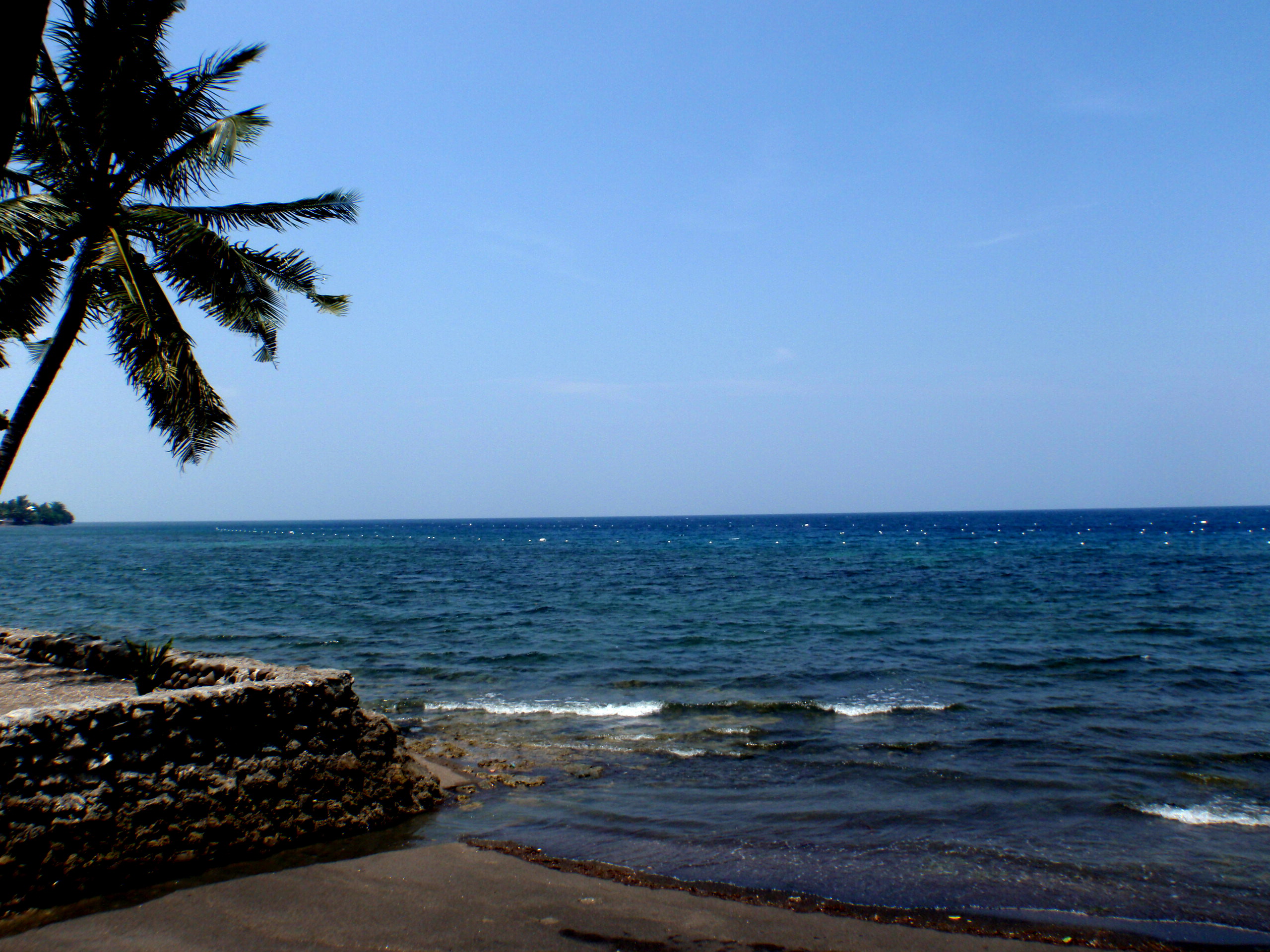
The site in Barangay Samburon, Linamon, Lanao del Norte
In few days, we will commence our work in the Linamon coral transplantation, just few more days. We have waited for so long, but now we will finally do it. The trajectory given by World Bank mandated to complete the works not later than June 30. And it was a tall order.
Now, I can only imagine the dives that have to be done to finish the remaining area of the one hectare coral nursery. For sure, it would be work unlimited underwater, for marine life preservation and protection in the area. The community is involved in this project and have fully participated since it all started, one of the best practices to ensure the sustainability of the marine protected area. Finishing off the one hectare coral nursery is indeed a gargantuan task.
Planted corals on substrates
It’s been almost twenty months since I last joined them in the evaluation of the first few substrates that were tested. Soon, I would be working in a different environment under different pressure. Breathing underwater in gears, carefully planting the materials in “pots” in silence. It’s pretty outlandish and not everybody has the opportunity to do this kind of work for the marine environment.
In few days I’ll be joining the good men of Linamon for this noble task and I can hardly wait. In few days…
As your diving season arrives, it might be a good time to remind everyone about eating for diving. Over my many years of diving, I have had the occasion to learn through trial and (mostly) error, as well as watching others, what it takes to have a pleasant day of diving. What you eat just might make the difference between a good, safe dive and what might be a ‘bummer’, a trip to the chamber. What follows is my ‘fool-proof’ list of things to eat or drink in preparation for your long-awaited dive trip.
Six to three days before
This is the time to build your water and carbohydrate stores. Note the order of importance. It is a must to drink enough water so that your urine is ‘copious and clear’ the last few days before a dive. Being well-hydrated is thought by many to be vital to the prevention of decompression sickness. Excessive alcohol intake or a bout of local “Montezuma’s Revenge” will dehydrate one rapidly, and it might take a day or two to recover from becoming dehydrated.
Be sure to choose a good portion of your foods from the bread/starch and fruit categories. Roughly one-half to two-thirds of your calories should be from complex carbohydrates (whole grains, pasta, veggies, fruit, etc.) depending on the intensity of yourdiving. If you’re doing a full week of repetitive dives, stay closer to the two-thirds calories from carbs and eat plenty of calories. Also, make sure you get enough protein by taking in low-fat dairy products, beans, nuts (use for salads and cooking) soy products, and lean meat and fish.
Two days before
This is the day to be sure you have plenty of water in your system and plenty of calories. It’s here that some people get into trouble on long airplane trips by ingesting too much alcohol containing beverages. The alcohol acts as a diuretic, directly causing dehydration. In addition, the dry atmosphere of the airplane cabin can cause significant fluid loss.
Most people do well to eat a little more than usual on this day, sticking to high carbohydrate foods and evenly spaced meals. Some people prefer to get the extra calories from food while others like sports drinks or milk. Also, work on getting a few good nights sleep here, because it can be difficult to sleep restfully on a plane trip to the dive site.
Day before
Here is where most divers get into trouble–overeating during the trip to the dive site. Avoid bad eating habits you may slip into if you have to travel to the dive. Eating a little less than usual today will make you a little lighter tomorrow on your dive day, so drop your intake by about 500 calories. One of the worst things you can do is raid the pre-dive pasta bash. Lots of oil-laced pasta, buttered bread, and high-fat salad dressing will only give you plenty of “ammo” for the boat head in the morning. At this point, it’s too late to make up for poor eating earlier in the week. Diarrhea on a diveboat is not a good thing! Stick with broth-based soup, Jello, cereal, low-fat pudding, fruit, vegetables, carnation instant breakfast, and sports drinks on this day. Be sure to drink a little extra water.
Dive day
Stay away from unusual foods. Eat a small breakfast if you suffer from heartburn (gastroesophageal reflux). Be sure to eat at least two hours before the dive and avoid high-fat muffins, doughnuts, and honey buns. If the dive is in the afternoon, keep the portions small and choose high-carbohydrate foods and sports drinks or water for lunch. You should be drinking water up to one-half hour before the dive. About 10 or 15 minutes before the have a water bottle handy and take in two-four ounces of water. Water consumed this close to the dive start will help counteract the obligatory diuresis of your initial water immersion.
During the dive
Depending on the number of dives, drinking water is usually best. Most dive boats have a supply of cold water available with plenty of cups. If it’s a long way to and from dive sites with a long off-gassing between dive period, consider a sports drink or try easy to eat, high-carbohydrate foods (fig bars, bananas, sports bars/gels, low-fat cookies, etc.) and plenty of liquids. Most divers bring their own sources of energy (lemon drops, hard candy, oranges). I’ve not seen any divers using any of the ’sports gels’ that runners use. One word of caution–on some dive sites in distant, ethnic spots, the food served for the between dive lunches is indigestible if not inedible.
After the dive
Scarf down high-carbohydrate foods after a dive as soon as possible (this doesn’t include beer if you’re diving the next day). Try to eat something every couple of hours all day long if you’re diving again and at least for four-six hours after short dives. Avoid alcohol as long as possible the few hours after a dive as it will dehydrate you as well as slow the restoration process of your liver and exercising muscles.
While following these tips may not allow you to dive any deeper or use less air, it can make a big difference how you feel during and after the dives. It is just possible that you might ward off getting bent and ruining a good vacation or even having permanent neurological damage. In addition, your slim physique also might also save a few bucks by you being able to get into last years wet suit and BC.
I hope you enjoyed the article and learned a thing or two! I personally came across a product I just love to use while diving… Divers D/Lyte.
The unique and proprietary formulation is based on supplementing the essential and semi-essential needs of the divers most important piece of equipment, the human body. Read more about how this product was formulated specifically for divers to keep in optimal shape during and after their dives as well as providing them with lasting energy!
I have convinced my self it’s not yet too late to scribble my last year’s journey in the underwater realm, something I could come anytime in the future to feel and reminisce the joys and wonders as I go through this quest. Much has happened but on a nutshell, here it goes:
Had a total of 38 dives making it to 109 accumulated dives and accumulated 86:46 hours as of year-end
Revisited sites such as Moalboal, Mantangale, Agutayan Island & Coron both special for me and my favorite dive buddy
The great Tubbataha Dream finally – I had thirteen dives in this underwater paradise!
Discovered great sites aside from the wonders of Sulu seas such as Apo Reefs, Mactan & Puerto Galera – the experience was magical and captivating. I had a long write-up in these trips
Never missed the International Clean-Up Day and joined the diving community with my dive buddy in a coastal town here in Misamis Oriental
Took up lessons using enriched air with my dive buddy and now certified EANx diver
My 100th dive in Balicasag Island, right where I catch the spell of the blue world – another milestone!
Having back a camera after a lull of fourteen months, though I’m still getting to know her I’m learning more on underwater photography
More controlled bouyancy, thus more more efficient air consumption, never had an air lower than 500psi or 50 bars
Technically, there was much improvement – I can dive comfortably sans DM but still with dive guide; night dive is now sans angst; and wreck diving give me that kick that rose my adrenaline – penetrated five wrecks with my dive buddy, not to mention other minor hulks we discovered in PG and Tubba
I will never forget the challenges, struggles but more on the joys, victories and graces attached to all of these tales. My blue world – my passion, my dream, my life…
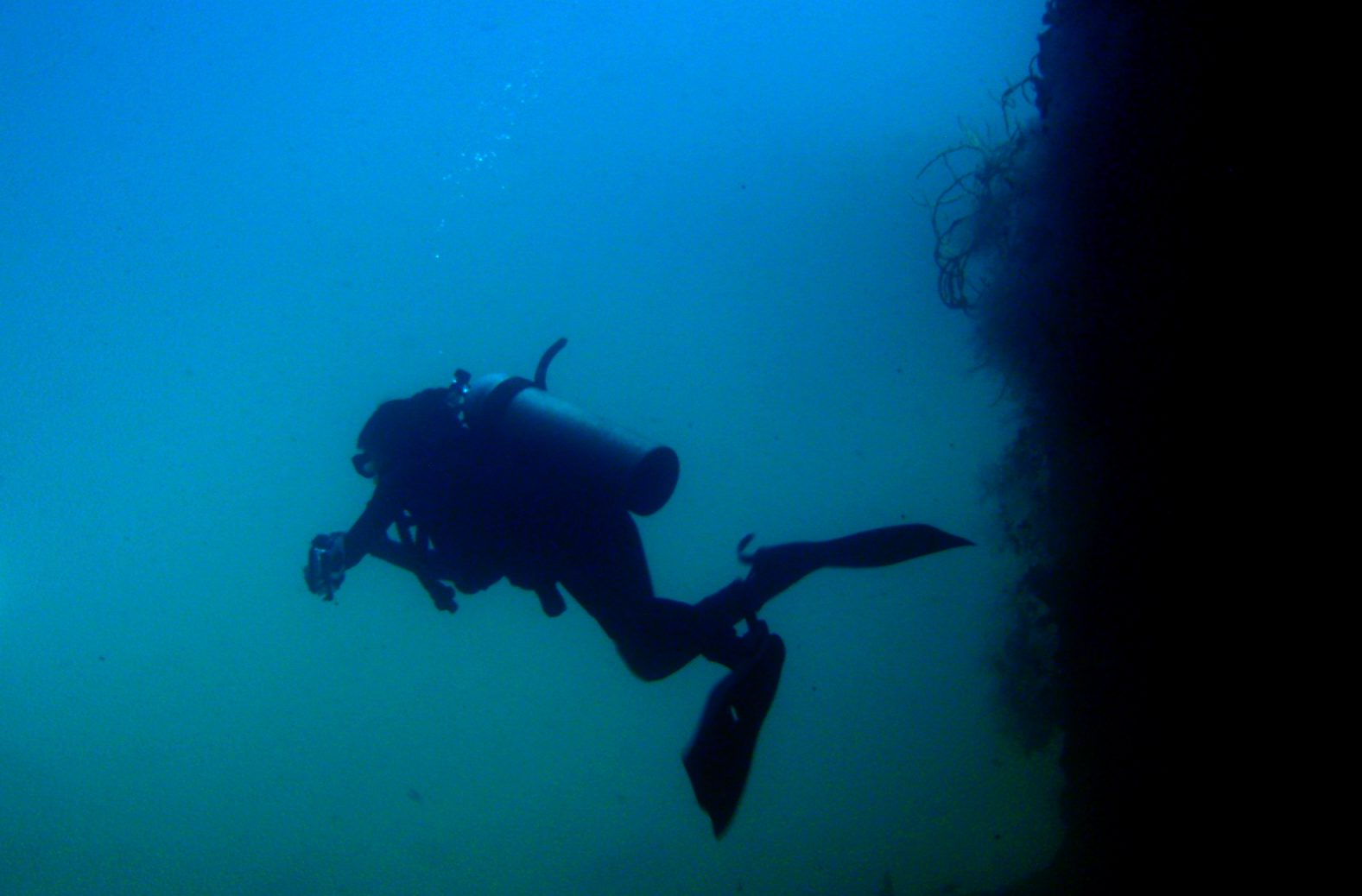
NB. Photo by Angel taken while diving Irako Maru in Coron, Palawan.
Squeezing my second weekend this January, I met up with Angel in Cebu – not for the Sinulog Festival but for a dive in one of our favorite site in the south of the province. Barely ten months ago, we were in Moalboal for the glorious sardines run. But just a day before our trip, I learned that the sardine and threshers in Pescador Island are nowhere in sight. It didn’t dampen our spirits though, it’s been four weeks since our last dive and we direly needed to be in the waters again.
Our friends in Moalboal welcomed us warmly, DM Geom of Cebu Dive Center and the Siggelkows of MoalboalBackpacker Lodge were so helpful and provided for our reservation needs. Torsten was in town and it’s good to see them both, the lodge is like home to us. Arriving the dive center past 11am already, our dives were arranged all in the afternoon. It was a blessing we catch up the van almost leaving for Moalboal when we got to the terminal.
Hardly a worm!
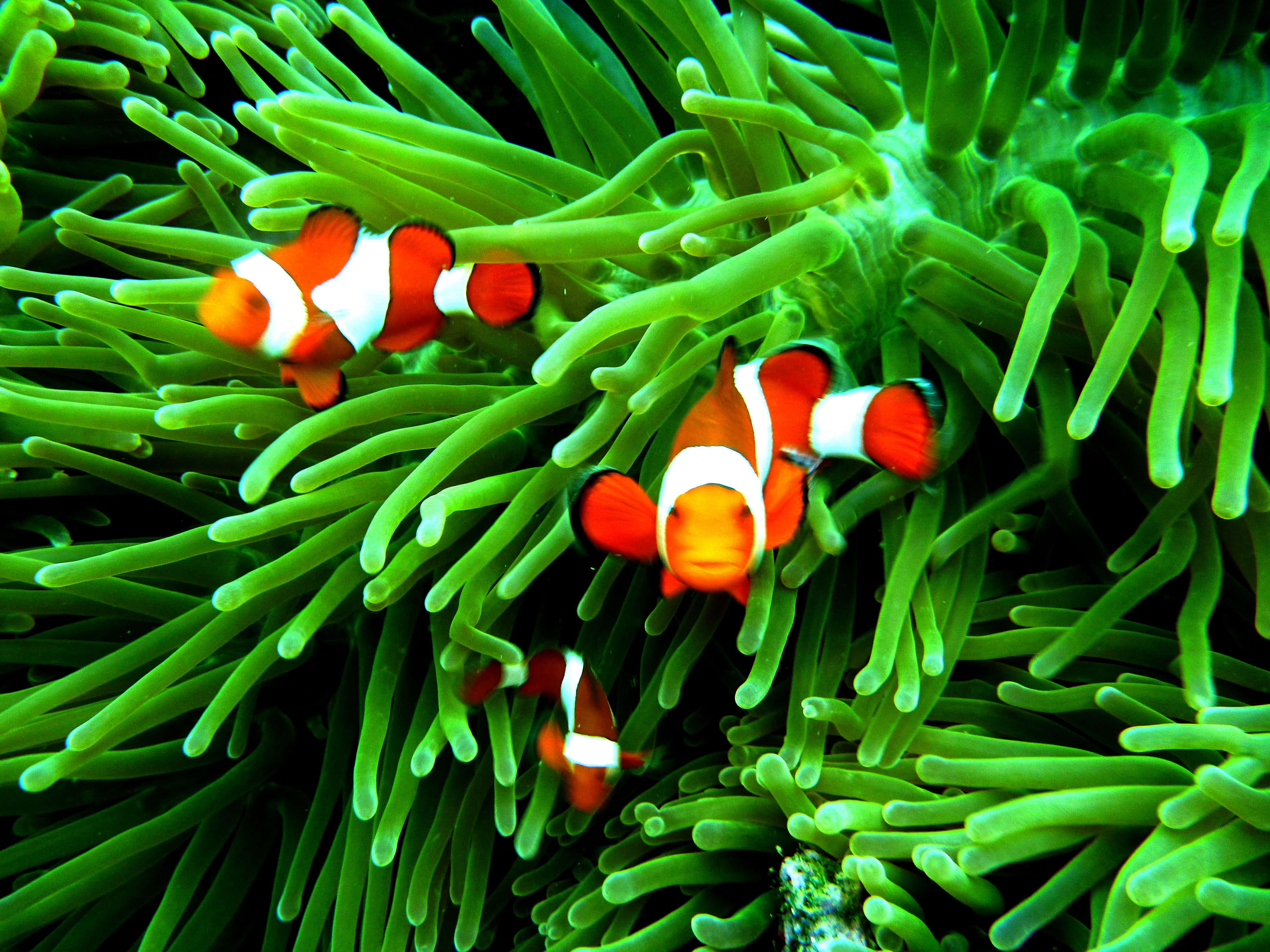
After a hurried lunch at the Chili Bar, we geared for our first dive. Our guide Bebet dismissed Pescador, aside from the absence of the sardines, the waters could be choppy as it was afternoon already. The weather was perfect, the sun was not scorching and was somewhat shady. Our first descent was at Talisay Point limiting our depth to 30 meters, unto a reef wall with overhangs and crevices. It houses variety of soft and hard corals, where macros carefully camouflaged for protection. Coral crabs, cleaner shrimp on bubble coral, reef crab, clam digger on rubber coral. We went inside a small cave and peek on holes for electric shell, with the torch light reflections it glowed in the dark. The wall was decorated with anemones, maze coral, staghorns, and other branching corals. Variety of anemone fish abound in the area, sighted also balloon corallimorph, sea fans in yellow, green and brown. A shoal of shrimpfish decorated an overhang with whips and sea ferns. We stayed longer on a wide coral area going around until we had our safety stop at five meters, still swimming around. We made the ascent after 57 minutes.
Large gorgonians decorated the reef
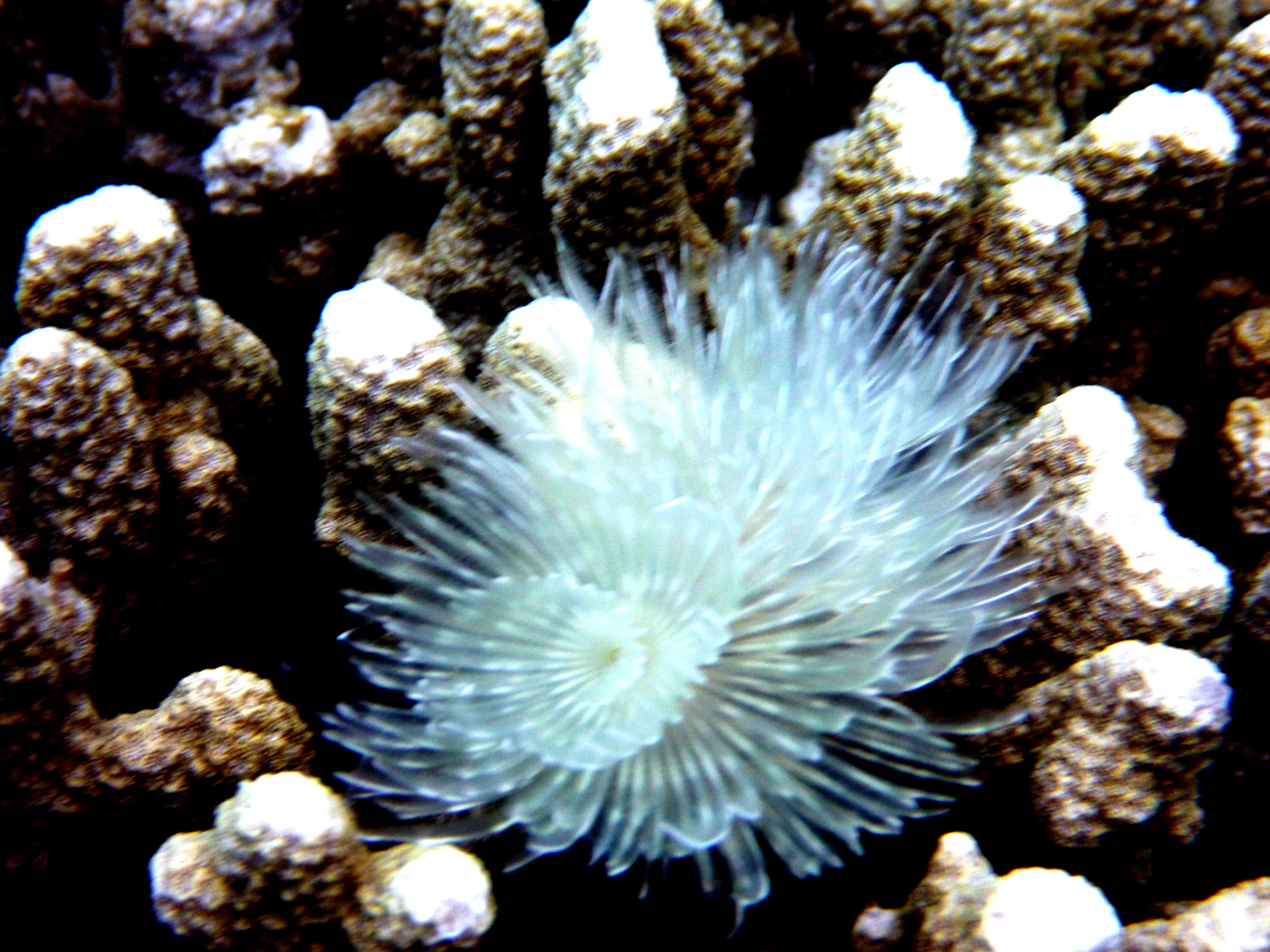
Our boat went further west for Kasai for our next descent, and after a surface time of 55 minutes, we got back unto the waters and went down directly unto reef wall with active fish life decorated with a variety of colourful corals. There were hawkfish, buttefly, angelfish, lionfish and nudis. I needed keen eyes for the macros – a blenny on a sandy area, worms and other invertebrates. A banded pipefish wiggled away from me to the corals. We stayed most on a wide coral area again hopping around, a large green turtle graced us but swam fast away when other group of divers chased him around. We found a puffer hiding in between coral branch, anthias hovering on corals were abundant, sea cucumbers, sea stars, worms, anemones, scorpion fish and many more. We ascend after 50 minutes, the cold afternoon waters left us shivering.
Vibrant soft coral with coral crabs hiding
Although we planned for three dives, we dismissed the idea for a night dive. Our brief escape in the town with two descents in its waters was a great way to quick start our dive pursuits for the year. The mild sun on my skin and the sea air in my lungs revived my spirits, ready for waiting tasks back home. There is always something different in every descent, new sightings and new learnings. It was our third visit but definitely not our last – that’s pure madness, I guess!
By then, I’m still in love with Moalboal sans the sardines run, but here’s hoping that they will be back in their home at Pescador, at the right time in the near future.
As a tradition I went for my concluding dive for 2011, and I have every reason to rejoice. After almost three years, I’ll be coming back to the wonderful Agutayan Island off Jasaan coast, a site I was enamored in the early days of my diving. Secondly, I’ll be diving with my dive mentor exclusive after more than two years, and most importantly my favorite dive buddy is coming over to join me for our last dive of the year. Few days earlier, the weather forecast threatened a storm in Northern Mindanao on the dates but I was keeping my fingers crossed hoping that the conditions would still allow us.
True enough, we made it to Jasaan on a Saturday morning with bright sunny skies with no trace of overcast horizon. The previous night though was a disaster, the flash flood from Cagayan de Oro river have wreck havoc on the communities along the river bank and lowland areas, it was a total nightmare for everyone. My dive mentor was kind enough to arrange everything for the trip though hesitant at first, knowing for sure that visibility would be affected.
Aboard the bigger and wider Sakayan, we sped off to the island about five kilometers away from the shore. The municipal waters which has always been blue, serene and beautiful now marred with tons of debris all floating around. Just watching heaps of floating trash, one can judge the enormous wreckage in the city only God can tell how severe it was! I had a heavy heart watching the horizons as we continue to cruise for Agutayan.
Beneath the Mess
Approaching the white sand bar, we geared up, and prepared ourselves as if we’re unstoppable, so sure to soak our dried-up gills, it’s been eight weeks since our last dive! Our indomitable spirits nagging us, you know how headstrong divers are. Mario descend first to check conditions when we got to the Sanctuary, we noticed the current on the surface. Mario appeared after few minutes informing us that the visibility and current is manageable down – halleluiah! 🙂
We descend past 11am already, as always diving with my mentor has the same old familiar feeling – so safe and comfortable, Angel and I had DM one on one. We tried to maneuver the surface current as we reached for the bouyline for our final descend. But just few meters down the surface, immersed in the cold waters, I totally forgot the clutters above us. We went around the slopes and had encounters of marine life, at least six turtles graced us – the last was a huge one on his back to us digging something in the reef crevice, perhaps feeding himself with some algae. He was so surprised to notice us, he scampered away and disappeared a cloud of silt before us. There were few nudis, worms, shrimps and other invertebrates, triggerfishes which we avoided for fear of attack. There were sponges, seafans, variety of corals and tropical fishes that abound the area. We ascend after 43 minutes with my air still at 1200 psi.
After our leisure lunch and some short nap, Mario summoned us for our next descent. The floating debris continued to increase while the local fishermen roaming around searching what they could salvage from the waters. Our next descent was at Artificial Reefs (AR) area, where there was variety of models of these ARs – tires, concrete, steel. In variety of forms, they were planted around the sandy area, if not for these ARs now home to a variety of marine species, there would be nothing in the spot, probably no life will exist. The area is a home too of the planted clams, now had grown in number and size. Tropical fishes have now claimed the ARs as their home, gaily decorating the area. After having our safety stop on a shallow reef , we ascend after 55 minutes with my residual air at 1100 psi away from the boat.
Although we planned for three dives, we called it a day after the second dive. The debris had swarmed the waters and leaving the area late is not advisable. Over us, we found the locals gathered many household effects from the waters which include furniture, clothing, chairs, tv set, range and many more.
Unstoppable Indeed
We arrived back in the city as if everything was in order. But how implausible it was, that we were still diving despite the storm. I learned later that on that Saturday morning under the sun, the flood continues to ravage other districts of Cagayan de Oro, while we are diving in Agutayan waters! How foolish… Perhaps, I have been a fool since I decided to become a diver.
Angel and I couldn’t be more grateful how things were arranged perfectly for our dives. I felt so spoiled for such gesture of God’s kindness and faithfulness. Our year-end dive is a subtle statement of God’s abounding grace, generosity and tenderness on our part, without prejudice to the typhoon victims. He surely can calm the winds and the angry seas, He is unstoppable.
NB.
Tropical Storm Sendong hit Cagayan de Oro on December 16, 2011.
Photos by Angel using Lumix TS2 with Ikelite casing.





 Life in the Great Beyond
You must be logged in to post a comment.