"Now more than ever do I realize that I will never be content of a sedentary life on the surface, I will always be haunted by thoughts of being drenched elsewhere"….
Happiness in silence, simply marvelous. Angel’s favorite shot in our last descent at Blue Hole wall…
Swimming in tow with DM Peter and his wife Anne Lorraine
My dive buddy requested me for this shot! 🙂
Just two weeks ago I was back in my blue world with my favorite dive buddy and new found friends, in an off beaten site in Romblon waters. It was such a joy!
NB.Photo courtesy of Angel for photos 1 and 2, using Lumix TS2 with Ikelite casing.
You can never miss Bongao Peak before touching down Sanga-Sanga Airport
After two plane rides a day apart, I find myself in the southern most province with a cluster of 307 islands and islets, one of the red flag spots in Mindanao – Tawi-Tawi, more than 328 kilometers from the nearest urban center in Zamboanga City. I had been doing my research and inquiries about diving in these group more than three years ago, and in 2011 chance upon a seat sale on Zamboanga – Bongao – Zamboanga route. My MRDP workmates were too encouraging having visited the province for marine preservation activities. Unfortunately, we had the trip cancelled after some irrational changes of flights leaving my tickets down the drain. Finally, I made it with my dive buddy, of course. I watched Bongao Peak in wonder as it loomed before us, while approaching the terminal of Sanga-Sanga Airport. It was still early, and the locals were just starting the day.
Zenith Moments
We went straight to our refuge in Beachside Inn, our modest room with windows facing the sea was just to our liking. We had a long day at hand and after an hour break, headed for the trek to Bongao Peak. Yet we need the bananas for the macaque monkeys which is really necessary, the climb is not possible without the offering. Our friendly guides assured the trails won’t be horrid as it has been sunny in the past weeks. The midday sun was already scorching as we started our ascent.
The climb was only one third when we got at the cemented steps, it was getting steep which surely make one breathless but the glimpse of surrounding waters beyond was so alluring. The myth is true, the monkeys appeared for the offering and I was thinking, without the bananas all of them will swarm and block the way. They could be dangerous indeed. But personally, I found the plastics tied on the trees so disturbing, I will always see them as trash – inarguably, it marred the purity of the trees and forest. Lot of trash was left on the trails, from the climbers without doubt, it was so pathetic.
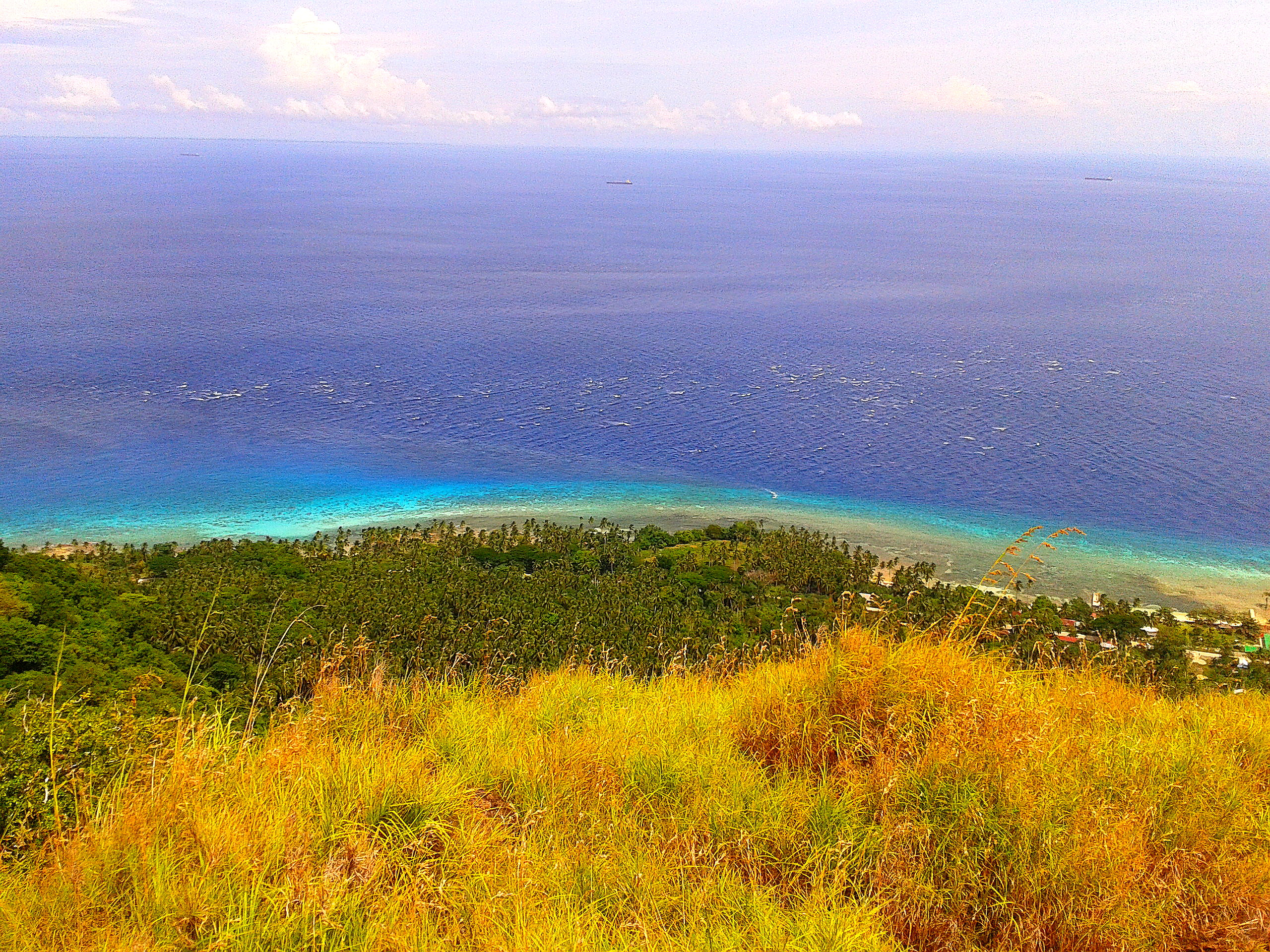
The peak was all consuming, it gave us an ample view of the surrounding islands with turquoise waters around, the town, the communities and the airport. The endless blue seas meeting the blue skies beyond is so calming. Breathless with the panorama! Peaks are always marvelous indeed.
Intense Depths
Diving in Bongao includes climbing or hoisting yourself from the waters to this boat!
The main agenda of the trip was diving of course, what else? An off-beaten site is always to our liking, Some what mysterious and there is much to unravel. We were up early the next day, it was a gloomy Saturday morning as we gather up our gears waiting for our transpo at 7am. There is no dive operator in Bongao but the local Tawi-Tawi Divers Club (TDC) has been handling diving trips in the province, and we are grateful to them.
The hired boat, similar to those floating at the old Chinese pier was already at the bridge connecting Sanga-Sanga Island to Bongao, waiting for us. Our first site was at Sanga-Sanga Reef which is just at the front of the airport. The waters started to get choppy when we got there, but DM Ramon first sought permission from the guards, it meant wading down the waters until the shores.
Summary of our descents during the day, our first and last dive was with DM Ramon while the wreck was with Sir Dong Reyes, the president of TDC:
   Sites                  Depth   Bottom Time     Conditions
 Sanga-Sanga Reefs        15.3m     0:45        Strong current
 Pahut Plane Wreck        19.1m     0:31        Very strong current
 Sowangkagang Tiny Wall   12.1m     0:36        Mild current
One need to be an experienced diver especially that current are all common in every sites. The most challenging one and my top pick was the Plane wreck in Pahut, it was believed to be a World War II Japanese Tora-tora plane. Sir Dong had a detailed briefing before the descent making us aware of the currents judging from tide movements. The good thing was other local divers were invited, making us six in all, two of which are new graduates form MSU – Tawi Tawi from Marine Bio and Environmental Management. The instruction was once in the waters, descend immediately to the floor and hold on while waiting for others, everyone will swim or drift to the wreck together. Angel warned me to stay close with him and never to getlost, I went ahead of him for the entry.
We all swam to the wreck with Sir Dong leading us, the overriding current almost sweeping us but firmly finned for the spot. I was somewhat dismayed that the remnants barely outlined the plane, far from the photos I saw taken two years ago. I came too near holding on an iron part, the strong current fiercely gushing and swooshing before us. Although I was focused with the currents, my eyes never failed to notice the colorful fishes hovering the artificial reef, such lovely sight! I tried to circle around still seeking refuge in the wreck mound. We all drift away as our DM signaled to depart from the spot, passing hard and soft corals with the tropical fishes – there was no pelagic in sight. We ascend too far from the boat!
Diving in Bongao or in Tawi-Tawi for that matter is not for the faint hearted, its depths is as fierce as its local people, silent but tough and can be dangerous. Confidence and trusting in one’s capacity is necessary but never forgetting basic safety rules. Forget about the comfortable white-washed dive boats with amenities and ready stairs, doing the Spartan way is the mode, climb your way from the side sans modesty and without reservations. I have gone that far, but that’s all part of the job!
Our last descent was for finishing touch with DM Ramon, it was already late at 4pm but the current has gone mild fading away. Sowangkagang was just near our lodgings. It was not a wall actually but a sandy slope decorated with soft corals like it was filled of brown grasses swaying with the current, it was mild and barely noticeable. We took some time trying to find the giant clams Sir Dong was talking about but it was nowhere. Three dives with currents are exhaustive and left us almost breathless, thanks to my oxygen! I learned that there is more joy in the routines than conquering the site – challenging or not!
The abundant marine resources of the Tawi-Tawi group has been depleting
Marine Preservation and Protection
It is impressive to note that while Tawi-Tawi province is distant and the frontier to Malaysian waters, it is not last in terms of marine environment protection – government agencies, local government and advocacy groups like WWF, FISH and even MRDP are collaborating cohesively in information & education campaign around the islands. The efforts to address existing environmental problems is supported by local communities particularly in preservation of MPAs, research studies and activities were put in place too. I learned from Engr. Dong Reyes that TDC in cooperation with MSU Tawi-Tawi College of Fisheries replanted coral polyps from dead corals due to dynamite fishing. He showed few of this artificial reefs scattered near the university’s port with the grown corals which will be transplanted in areas with depleting coral reefs. WWF Philippines on the other hand has satellite office in Bongao and extension works in the islands of Simunul, Sibutu and Sitangkai. They claim that marine resources have depleted precariously, fish stocks are overfished and important habitats are being lost – fish catch of fishermen are dwindling over the past years. The increasing number of people living in coasts and continuing rise in consumer demands for fish threatens marine biodiversity. Yet hopeful with this impending crisis as the rural communities are aware and cooperating in preservation and protection efforts. The Tawi-Tawi group is one of the country’s significant breeding grounds and a rich source of marine products and by-products – definitely more than just a “tourist” destination. No, definitely this province is not struggling to be seen, just come and be their guest!
Travel Notes:
1. There are no dive shops in Bongao, diving in islands can only be arranged with Tawi-Tawi Divers Club (TDC) through Engr. Rosendo Reyes at 0917 7222905 or 0921 2938287. 2. Bringing your own gear is recommended, TDC gears are owned by members and by chance not available. 3. Boat hires are available at old Chinese Pier: for diving within Bongao it costs P 1500.00; going to the islands costs more depending distance, Simunul Island is P 2,300.00 – haggling skills may help. 4. Trek to Bud Bongao is more than an hour including stops and monkey offerings, the descent is about fifteen minutes depending your pace. 5. Sunsets are best viewed at the Provincial Capitol that sits on a hill. 6. Simunul island, is the site of oldest Mosque in the Philippines and home of the revered Sheikh Makdum one of the early pioneers in the spread of the Islamic religion in the country.
NB.My point and shoot cam was totally useless during my dives, sorry no underwater photos on this post
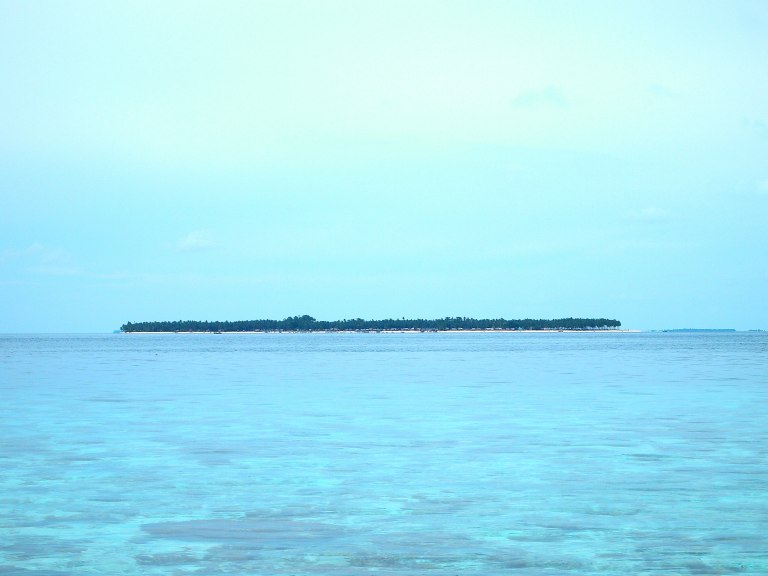
There are 307 islands in the southern most province of Tawi-Tawi (Philippines) and Laa Islet in Simunul is just one of them. It was gleaming under the sun as we cruise for mainland Simunul – turquoise waters, marine life, healthy reefs, beach with no people, blue skies – common sights in its surrounding waters. Rural life it is!
My recent stop-over at Zamboanga on our way to Bongao, Tawi-tawi gave me an opportunity to rediscover this historic city and I had my share of surprises. Since our time was limited, we just planned for a quick hop at Sta. Cruz island, the famed islet with the pink beach.
This slideshow requires JavaScript.
Angel and I was in awe, the island is more than just a glimmering white beach or pink beach for that matter, its depths is teeming with marine life. And right there in the beach front nestled are turtle eggs waiting to be hatched, about more than thirty days later! The nearby Pequeño Sta. Cruz is MPA, that explains why going to the island is forbidden. The tourism officer (who happened to be a diver) informed us later that diving is allowed in certain parts of the sanctuary – hallelujah!
Getting a dip and swim at Sta. Cruz was irresistible , I gave in and joined Angel in the refreshing waters under the cheery sun – as if it was summer! It is always an advantage to be at the beach on weekdays, the little paradise was all to ourselves!
Zamboanga – yo quiero la mar y la playa! Soon, you will be our diving destination…
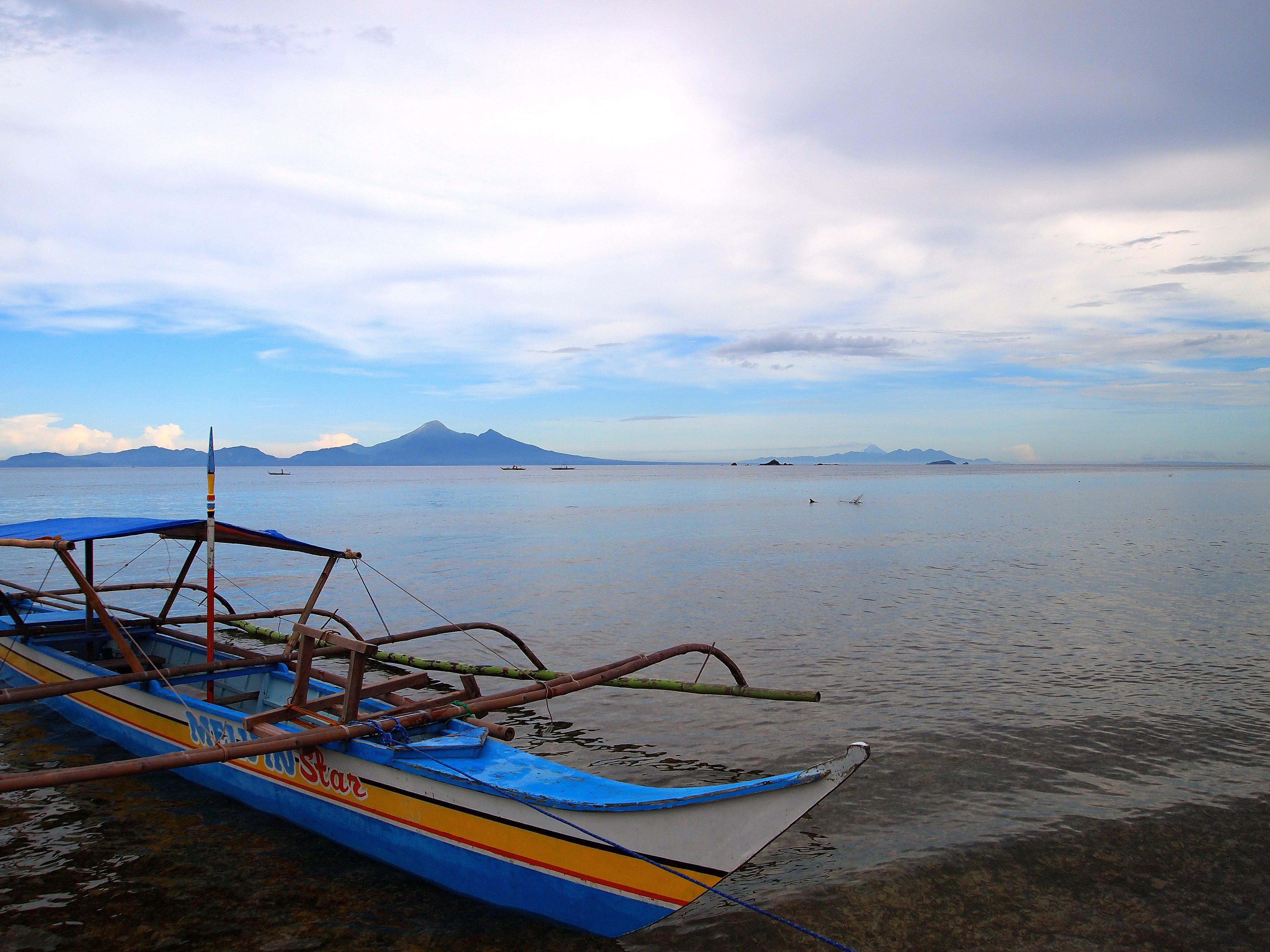
Morning horizons in Biri! The bluish outline of Mt. Bulusan afar.
Coming to this quiet, remote island in Northern Samar off the coast of San Bernardino Strait was whimsical at first, having discovered a diving shop that just operated in the locality. With a manifold of dive destinations visited across the islands, we are now in search of secret and unknown sites, again it would be more interesting to uncover new spots. Most likely there would be more stories and amazing discoveries, in most cases unchartered waters mostly reveal unspoiled underwater life.
Initially it was randomly targeted to visit Biri in CY 2012 but erratic schedules and other pursuits deferred the trip until summer of 2013, so May would be ideal according to Angel since Samar is a typhoon path being front in Pacific Ocean waters. Indeed, we were blessed with good weather during the four-day trip.
Spending a Wednesday night at the airport, taking an early morning flight to Catarman, taking a jeepney to Lavezares, and after haggling with the dispatcher took the one-hour cruise to Biri. You will not miss the white big statue of Jesus and St. Peter on the water as you sailed out of Lavezares. Shortly, the waters went choppy but as we went between a strait, mysteriously it went flat. The patches of white beaches, the coco trees, blue waters and the clear, sunny skies were so welcoming. Nearing the town as it loomed before us brought smiles in our lips. It was just a little past of 10:00am when we finally arrived in our lodgings at Biri Scuba Resort.
Into the Rocks
Exploring the town was the most logical thing as we have more than enough time for the day and the sunny weather was just perfect. Dismissing meals we left for the Rock Formations through a hired motorbike under the scorching heat. Our guide cum transpo driver advised us to take advantage of the low tide so we need to leave sooner. We started off at the farthest end at Magasang, passing the area over a cemented foot path I haven’t seen any agri production lot except for the scattered coconut trees covering even the hills. Riding on motorbike over the wide green horizons, the winds just made the heat bearable – I can hear Angel behind me humming a song. 🙂
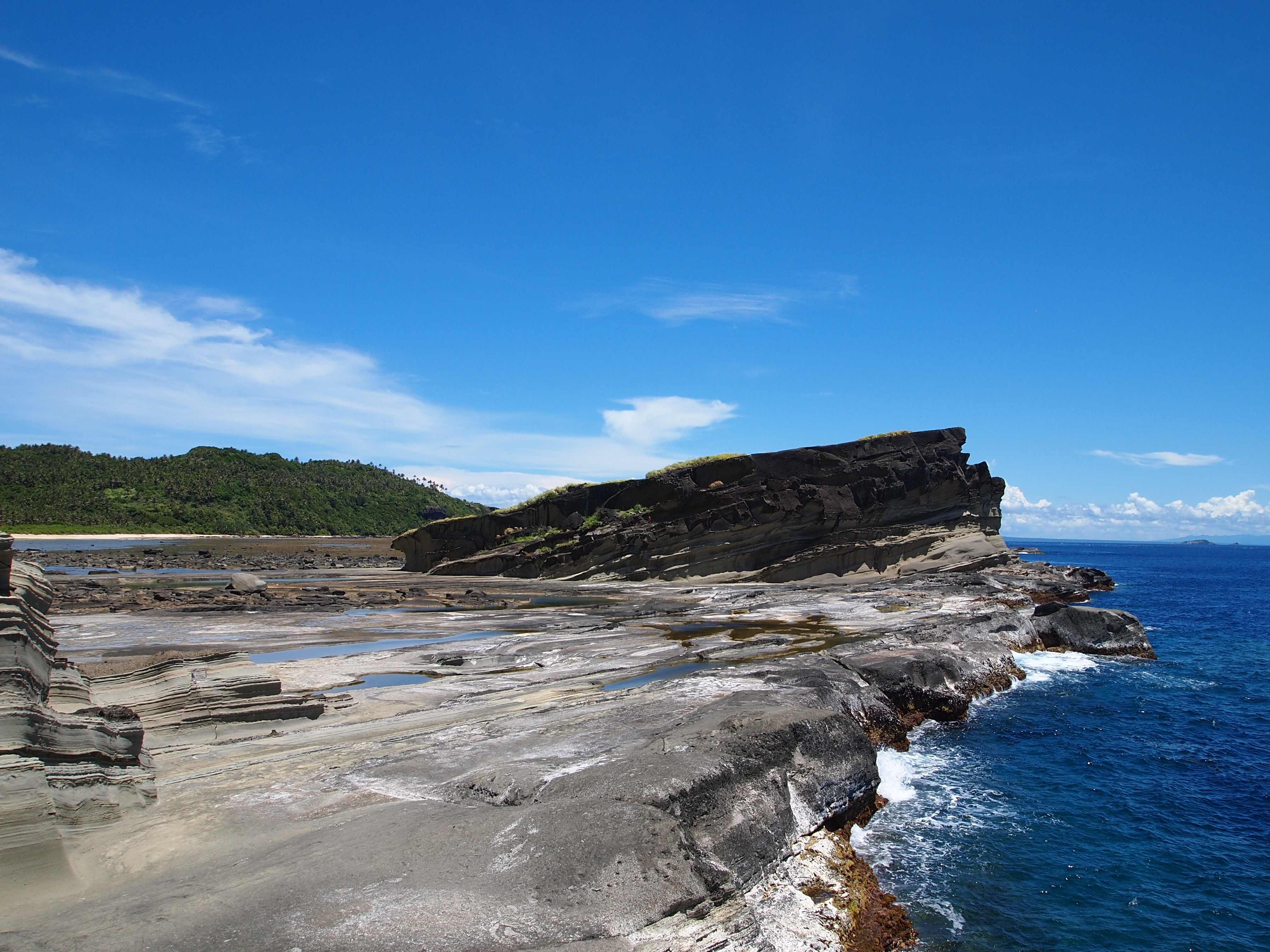
Rock formation at sea side
The Biri Rock Formation is declared protected area under RA 7586, preservation of the area is mandatory and thankfully the LGU laid out the necessary regulations. So we need to stop at the parking area and walk all the way to explore the formations to the sea coast. We walked, climb, descend, wade water pools and hike further as we viewed Magasang, Magsapad and Makadlao Rocks. Unique formations which left one wondering how astonishing works of nature are, and I always end up going back to the Lord of Creation. Soaking up under the sun actually is a violation on my part but summer is all about sun! I remembered my friend in Lubbek, Belgium who mentioned that using an umbrella during summer is definitely crazy, stares and sneers surely got you!
Blue waters and blue skies!
Going to Bel-at needs our transpo so we got back to Magasang where we have left off the motorbike, our guide told us that the half-way bridge to the formation is a new structure, barely six months old. It has a shed or hut on its end ideal for picnic. I was wondering why it was not a whole stretch to the formation – budget issues perhaps! Magasang area has been planted with mangroves which according to our guide is about ten years past, many wasn’t full grown and stood like seedlings on the waters. The wooden walk-way to Bel-at is much longer winding along the mangroves ending up at a wide clearing leading to a tidal pool. We found large group of people on a picnic, some swimming on the pool. Further we explored going to Caranas, we found few tidal pools on the way. Going to the sea side, the waves keep splashing the rocks, definitely there were no patch of beaches in the area. It was disappointing that the area wasn’t spared of trashes, so bad we didn’t bring our net bag we could have done some clean-up.
Unto the Depths
Mound filled with soft and hard corals
The next morning gave us a wonderful sight in the horizons, early mornings create clear skies free from clouds, which gave us a blue outline of Mt. Bulusan and far yonder, the majestic Mt. Mayon! Our dive guide suggested for an early trip to get away with the current, there was no definite site to explore depending on water situation. It was an exclusive dive for us, judging from the dive guide prattle, very few came to Biri to dive. We aimed for the Managtuka Sanctuary as our first site, just off the coast of the town. We sighted two large herd of dalagang bukid just few meters from our boat, surely the area has active fish life. We entered the waters but it was unfortunate that my regulator had leakage, we aborted our descent. We explored instead the Managtuka Rocks while the boat got back to the shores for another set of gear.
Three nudis in one spot!
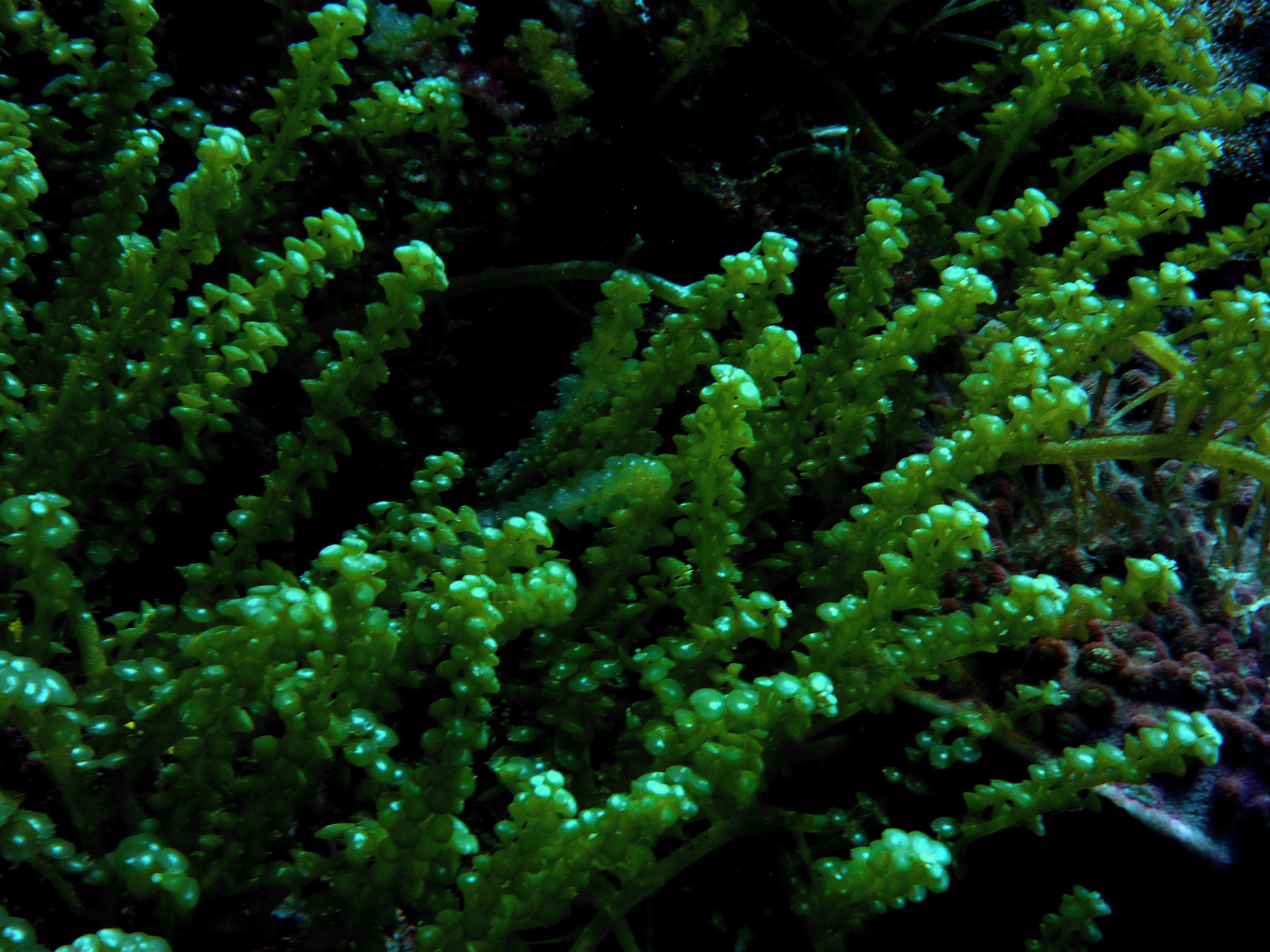
Exploring the sanctuary was dismissed due to currents as it was late already, so we sailed off to the other side of the island fronting the Pacific hoping the waters would be manageable. The water was flat and blue perfect for a dive, we agreed to have the first descent in Cogon – a surfing area of the island during habagat season, obviously the site is only dive-fitting during summer months. We descent to a slope filled with hard and soft corals, sea weeds is dominant making the area looked like green forage lot. There wasn’t much fish life although juveniles hovered over corals and the perennial nemos over sea anemones. We sighted three nudis on same spot, giant clam and more of the sea weeds. The area looked like green hills all over, a different kind of terrain. We ascend after 56 minutes with my air still at 140 bars.
Fresh sea weeds, anyone?
We sailed and anchored at Magasang for our surface interval, being in the Pacific side is an advantage as we got the view of the formation in a different angle on a wider scale, which I understood can only be done in summer months. Only few encounters of fishers on their banca, obviously the nearby water was all to ourselves to explore. Watching the nearby formations, coco trees dotting the hills and blue waters under sunny skies, was perfect – good enough while waiting for our next descent.
Giant clam amidst vibrant corals
Back rolling in our small boat was pitiful but being exposed to such similar conditions before was no trouble at all, we descend on slope once more decorated with soft and hard corals. We swam further passing those mounds again, in search of reef sharks our dive guide brought us to a short tunnel. Further inspecting crevices and sandy hollows under rocks but there was none, going through the holes is quite interesting for me! The sea weeds are still all over, alternately with soft and hard corals. We ascend at Masapad formations after an hour with my air still at 90 bars. Our boat captain searching for us not expecting to cover such distance.
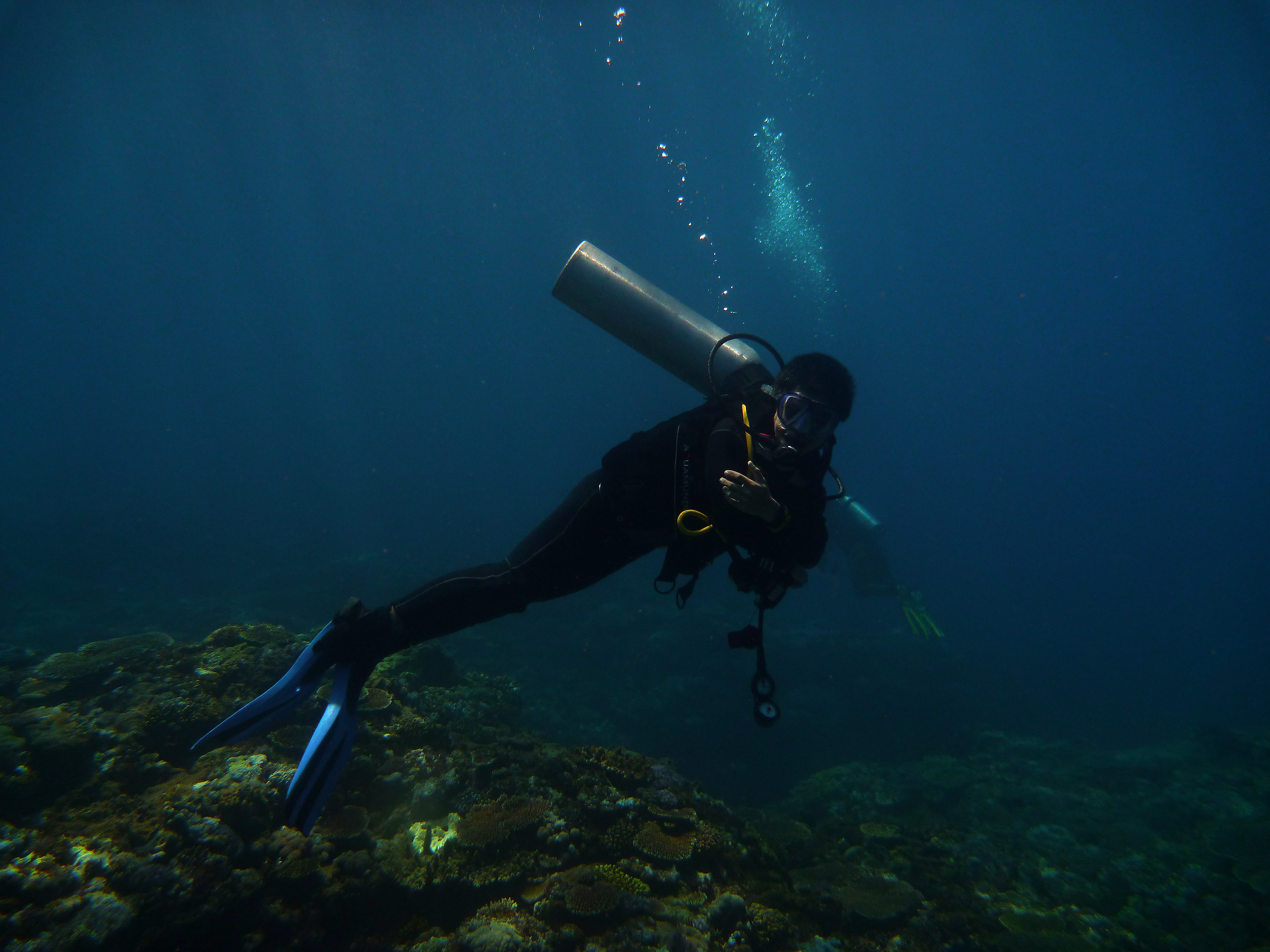
My buddy’s tank was falling off!
Different locations with different discoveries, perhaps not ostentatious but definitely Biri’s unspoiled depths did not disappoint us, beyond the rocks is a wide marine garden with healthy corals and plants. The surrounding waters has rich marine life, we encountered a boy previous afternoon carrying with him a string of tropical fish – rabbit fish, sergeants, fusilier, sweet lips and moray eel from spear fishing! Well, I could have wanted to see them in their habitat swimming coyly before me.
Travel Notes
1. There are only three commercial lodgings in the island: Glenda’s Hotel, Villa Amor Hotel and Biri Scuba Resort; electricity in the town is only 12:00 noon to 12:00 midnight.
2. Boat fare from Lavezares to Biri Island is P 50.00/pax but you need to wait for the boat to be full; if you are in a hurry, boat hire will cost P 300.00
3. Environmental User’s Fee is P 50.00/pax; local fixed rates of habal-habal is prescribed by Local Tourism Office but if you need to hire for your own transpo needs to the rock formations – P 700.00 for 2 pax including tour guide
4. Diving in the island is best during summer (March to May) and sans the full moon – the tides and currents can be erratic and time adjustments is necessary to dive in certain sites. Only Biri Scuba Resort offers diving in the island. There are more than 20 diving sites including those off San Bernardino Strait.
5. If you need to get a good view of all the rock formations, rent a boat and explore by the waters for them all lined up in the pacific side – Magasang, Magsapad, Makadlao, Puhunan, Bel-at and Caranas.






 Life in the Great Beyond
You must be logged in to post a comment.