"Now more than ever do I realize that I will never be content of a sedentary life on the surface, I will always be haunted by thoughts of being drenched elsewhere"….
In the corner of my eye, sighted this unique bivalve slightly open camouflaging among marine plants. It has unusual form unfamiliar to the best known bivalve such as oysters, clams, mussels and scallops. Just like its sisters, this lowly specie sits in a corner waiting for its prey. it has round valve shells, though its hinge is somewhat hidden. It quickly closed up at a faint shadow and movement.
There are over 30,000 species of bivalves including the fossils one, all of them live in the water, most of them in the sea or brackish waters. Have you ever encountered this round clam?
There are places that are meant for a return, exactly a year after a quirky trip to this town in the southern tip of Panay Island, I was back to dive once more its unspoiled depths. This town is not known in the diving map but my two deep dives last year inarguably convinced my innate sense that it was worth for more descents. Although I wasn’t in a rush, my beloved dive buddy’s persuasion ended with my ticket bookings for Iloilo and arranging reservations at The Divehouse – my home in Aninni-y.
Getting there on a morning was perfectly better passing the heritage towns and catching glimpse of the wide blue sea as we rolled off on the coastal road. Far from the night trip I had last year, when the dark night hid the rural scenery. Arriving early in our refuge at Siraan Spring Resort gave us ample time to explore the town which includes snorkeling in the turquoise waters of Nogas Island – for over an hour! Just floating, relaxing and watching the marine life silently with my dive buddy, and the mermaid in me was rejoicing. The gleaming white beach, the warm sun and blue waters was a perfect picture of summer, even if it was already end of August.
In our diving day, our unexpected warm-up pumped-up more energy for us, we walked three kilometers to the next barangay to attend the Sunday mass! The morning breeze, mild sunrise and rural scenery were good enough for the hike. The adrenaline prod us rushing to the diveshop, we were expected at 8:00am. DM AJ welcomed us warmly, the smell of the kitchen and the sight of the long, heavy, wooden dining table reminded me of home.
Rich unspoiled marine environment!
DM AJ arranged our first descent at Mamam, a deep dive with those tricky swim throughs – I can only remember my wonderful sightings last year. So we sailed westward with our dive guide Paldon leading, we were joined with two divers from Iloilo. We dropped anchors after a little detour to Nogas Island dropping off a couple guest, after more than thirty minutes trying to find a favorable spot. We descend to a white sandy slope, the viz was somewhat hazy. In a while we found the rocks with those tunnels just enough for a person to swim. It felt playful like doing some hide and seek over the rocks, but I miss the giant jacks which the others crossed path in the tunnel, including Angel. We found angels, moorish idol, cardinals and wrasses, I noticed clown triggerfish swimming along nearby but wiggled away when it noticed me. There were few nudis too and variety of corals. I was hoping to see again the school of silver barracudas and the leaf frogfish but none appeared. I think early mornings are best to find them as they trouped for early preys! We lingered a bit more circling the area until we slowly hover up for ascent after 41 minutes conscious of my NDL, my deepest at 28.6 meters.
Yellow breams contently swimming among the reesf…
Our surface interval was utilized for checking out from our lodgings and a bit of lounging at the dining area exchanging pleasantries with DM AJ, Owie and RJ while preparing for our next descent with them. DM AJ finally got the chance to guide us tagging with him his Japanese diver guest. We were a bunch, all my companions are guys but after some time I got used to it already, my dive buddy’s company is always comforting.
The ubiquitous clown fish always adds color over anemones!
We sailed off Nogas Island aiming for Malou’s Rock for our last descent after a short briefing from DM AJ, the warm afternoon waters ushered us to a sandy slope with big boulders bringing us to a wall. We tread the waters with the wall on our left shoulder, drifting as we passed the thriving marine life. Colorful juveniles hovering on corals, yellow breams parading in herd alternated with sew whips and colorful crinoids. There were trumpet fish, sand perches, triggers and scorpion fish! Invertebrates also abound, the obscured bivalves of different species silently lurked in corners abruptly closing in a faint shadow or movements. There were few nudis and even flatworms that adorned the reef. We signaled for ascent after 50 minutes, my deepest was 26.5 meters. I guess I feel more comfortable having back my dive computer, Suunto D4i is the great all-rounder indeed! We ended our stay at the resort after we agreed for a diving expedition summer next year in the Sulu seas!
Have you gone to Antique province or Panay Island?
Travel Notes:
1. Buses going to Anini-y and other Antique towns are stationed at Molo terminal, first trip is at 6:30am. Catching the 5:00pm trip back to Iloilo is ideal, reaching the city about 7:00pm.
2. The only diveshop in Anitque is The Divehouse, a friendly accredited PADI shop, accommodations can be arranged also in this dive facility.
3. This lowly town offers other interesting spots – Nogas Island, Siraan Hotsprings and a heritage church.
4. Direct flight to Iloilo from Cagayan de Oro is now available daily!
This rustic paradise in Panay was one of the reason for the return in the town of Anini-y
Catching up summer in this uninhabited island in south of Panay, was purely relaxing and everything was perfectly lackadaisical. Simple pleasures that feed one’s soul sans superficiality.
Snorkeling for an hour watching in silence the marine life amid turquoise waters, walking along the kalachuchi-lined road towards the lighthouse, climbing the lighthouse, and while on top, watch the giant bats hanging on that big tree. We were accompanied by white kitty-meow, which for me unusual since there are no residents in the island. We capped our hop by circling the island on foot which was bit tricky, we lost a bit but the old giant banyan tree was a surprise yet mystical in a way!
And yes! We dove in its waters the next day. 🙂 Nogas Island is simply replete with hidden beauty…
Sea squirts are rounded or cylindrical animals ranging from about 0.5 to 10 cm (0.2 to 4 in) in size. One end of the body is always firmly fixed to rock, coral, or some similar solid surface. The lower surface is pitted or ridged, and in some species has root-like extensions that help the animal grip onto the surface. The body wall is covered by a smooth thick tunic, which is often quite rigid. The tunic consists of a cellulose-like substance called tunicin along with proteins and calcium salts. Unlike the shells of mollusks, the tunic is composed of living tissue, and often has its own blood supply. In some colonial species, the tunics of adjacent individuals are fused into a single structure.
This marine invertebrate commonly known as Ascidians are characterized by tough outer tunic and are filter feeders. These animals are found all over the world usually in shallows, they are sessile which means they are firmly attached to substratum, such as rocks and shells. As seen above they are attached to a tube-like coral just near to sea anemones or coral reef systems.
There are 2,300 species of ascidians and three main types: solitary ascidians, social ascidians that form clumped communities by attaching at their bases, and compound ascidians that consist of many small individuals (each individual is called a zooid) forming colonies up to several meters in diameter.
Some sea squirt produce a chemical called Ecteinascidin, a potential for pharmaceuticals! Sea invertebrates like sea squirt are subjects of research in medical laboratories for possible medicinal products.
We found this animal while diving in Siquijor, their colony was getting my attention and quickly snap the above photo!
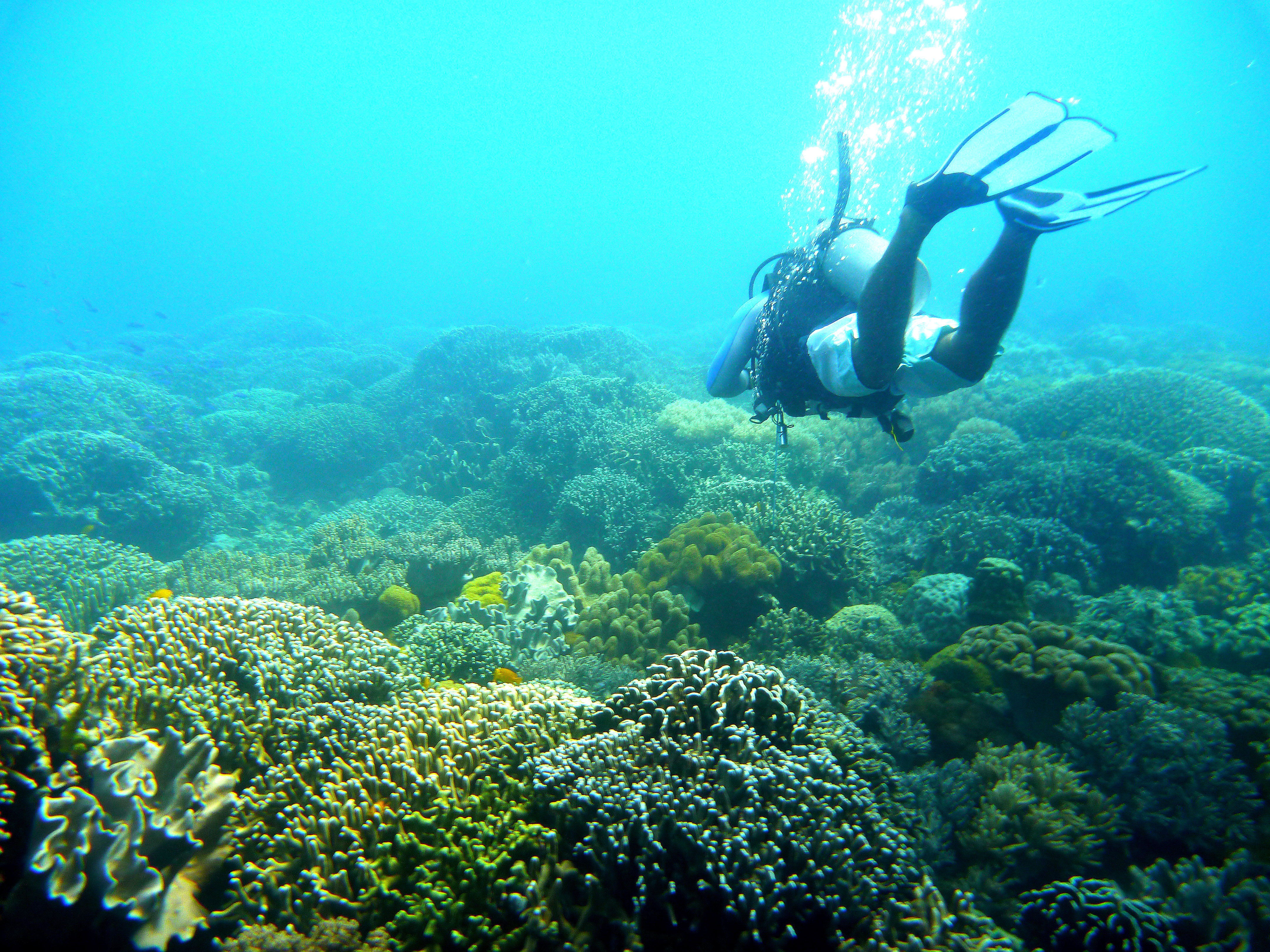
Apo Island will always be a prime destination for diving!
After a wonderful hop to Siquijor, we cruised back to Dumaguete for retracing back what I have left behind five years ago. You know, there are few things you wanted to savor again after some time, those moments that kept lingering in your mind. The wait was over, smiling as I watch from afar the night lights at the city’s pier. The Saturday night festive mode gave us a warm welcome in the city.
If you are a diver and you travel to Dumageute City, chances are you are aiming for Apo Island in Dauin, one of the world’s best known community-organized marine sanctuaries.
First things First
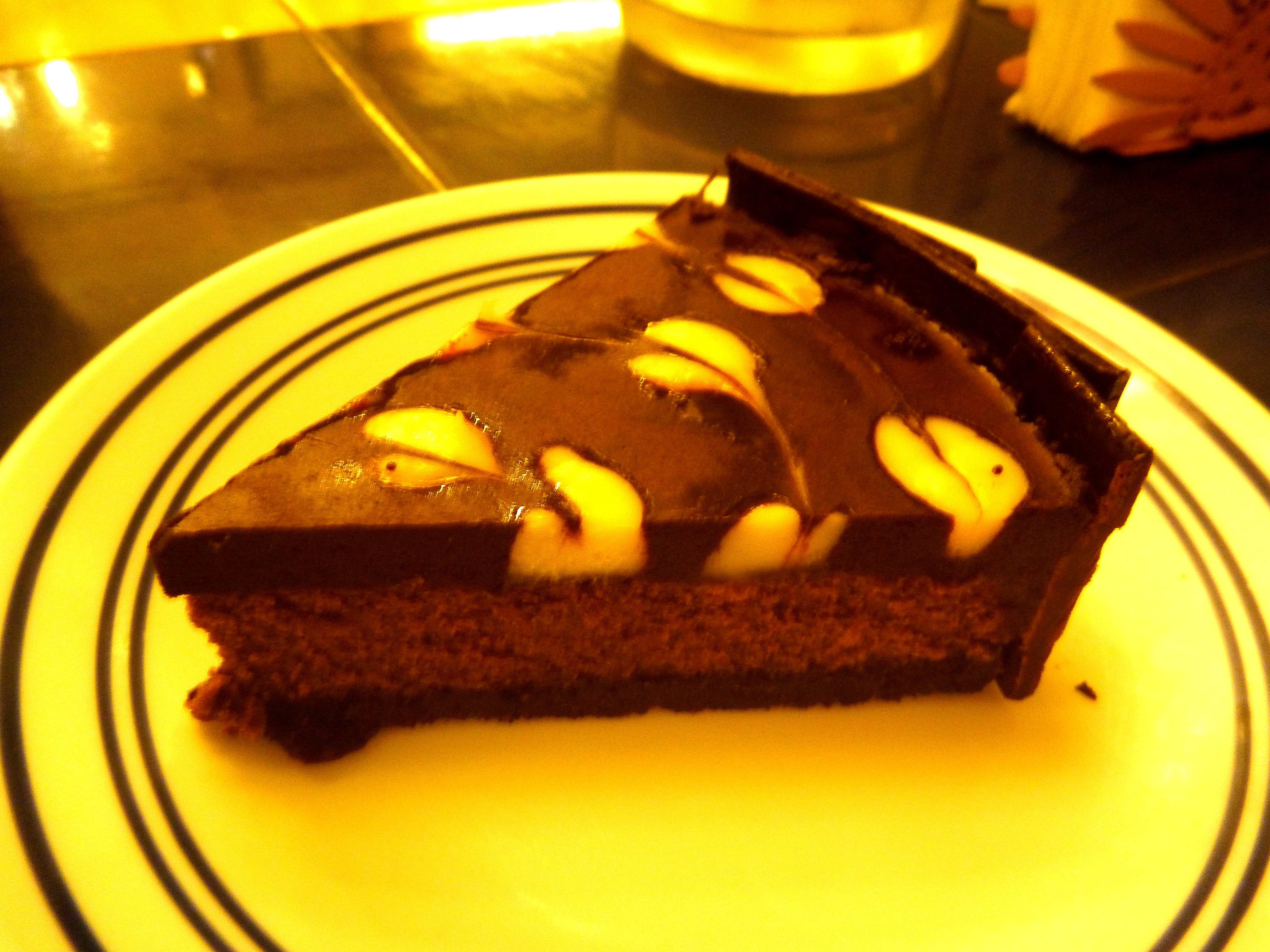
After checking in and settled at Harold’s Mansion (Hibbard Avenue), we took a leisure walk finding our way to Rizal Boulevard, we can’t just put off for tomorrow our cravings! 🙂 Indeed, Sans Rival was overflowing with diners, we need to stay for awhile at the by-side to wait for a table. But our nut & dates dacquoise, choco cheesecake and concorde cake was too sweet and rich, and perhaps it was worth the wait! I guess I had a good night’s rest after the wonderful dives and sweets interlude at the boulevard. 🙂
Choco cheesecake, utterly sweet!
We started early next morning for a mass, fitting to start our Sunday events – a thanksgiving and worship for the gift of nature from one island to another. How I waited for this home coming at Apo Island, the underwater scenery kept playing in my mind. Unlike in our travels in the past, it was our first time to have back-to back dives in two different locations in succession rolled in one trip!
Marine Paradise
I will never get tired of turtles! 🙂
If there’s one individual to be grateful what Apo Island is now, it is Dr. Angel Alcala (of SU Marine Laboratory), his efforts paid off and the community’s participation is one great aspect that help greatly in the preservation and protection of its marine resources, emulated by other coastal communities in the country. Apo Island has been a renowned model in coastal resource management.
Our DMs picked us up promptly and we drove for about 45 minutes to Dauin, the short drive was a venue for “getting to know”. As usual, apart from names and addresses, the most common discussion is about dive sites explored. The Chinese couple was glad hearing about diving Siquijor, their next destination. They were just recently certified divers and were just ecstatic exploring new sites.
Have you encountered garden eels?
Our first descent was in Chapel (because according to DM Richie, it’s near the chapel of the island), and as I expected, the rich diversity is imminent – field of healthy corals teeming with fish life. My favorite moray eel was peeking from her hole, perhaps unmindful as we passed by. We sighted variety of nudis, stonefish and when we got over a white sandy area, the garden eels at least ten of them, poking from their holes. I tugged Angel to get his attention but as we get closer, they all disappear! 🙂 So playful. The juveniles contently hovering the coral field, just like what we did. We lingered over the wide coral area – hopping, swimming, floating – feeling its vastness. The visibility was perfectly clear! We ascend after 44 minutes with my air still at 100 bars.
Can you see the stone fish? 🙂
Our desire to step once more on the island’s shores was granted, the DMs announced that our boat shall docked near the sanctuary for lunch and the necessary surface interval! I was thinking of watching up close the granite rocks again near that small patch of white sands. But snorkeling in the shallow waters took my time away, it was a show while floating and watching in silence the rich marine life.
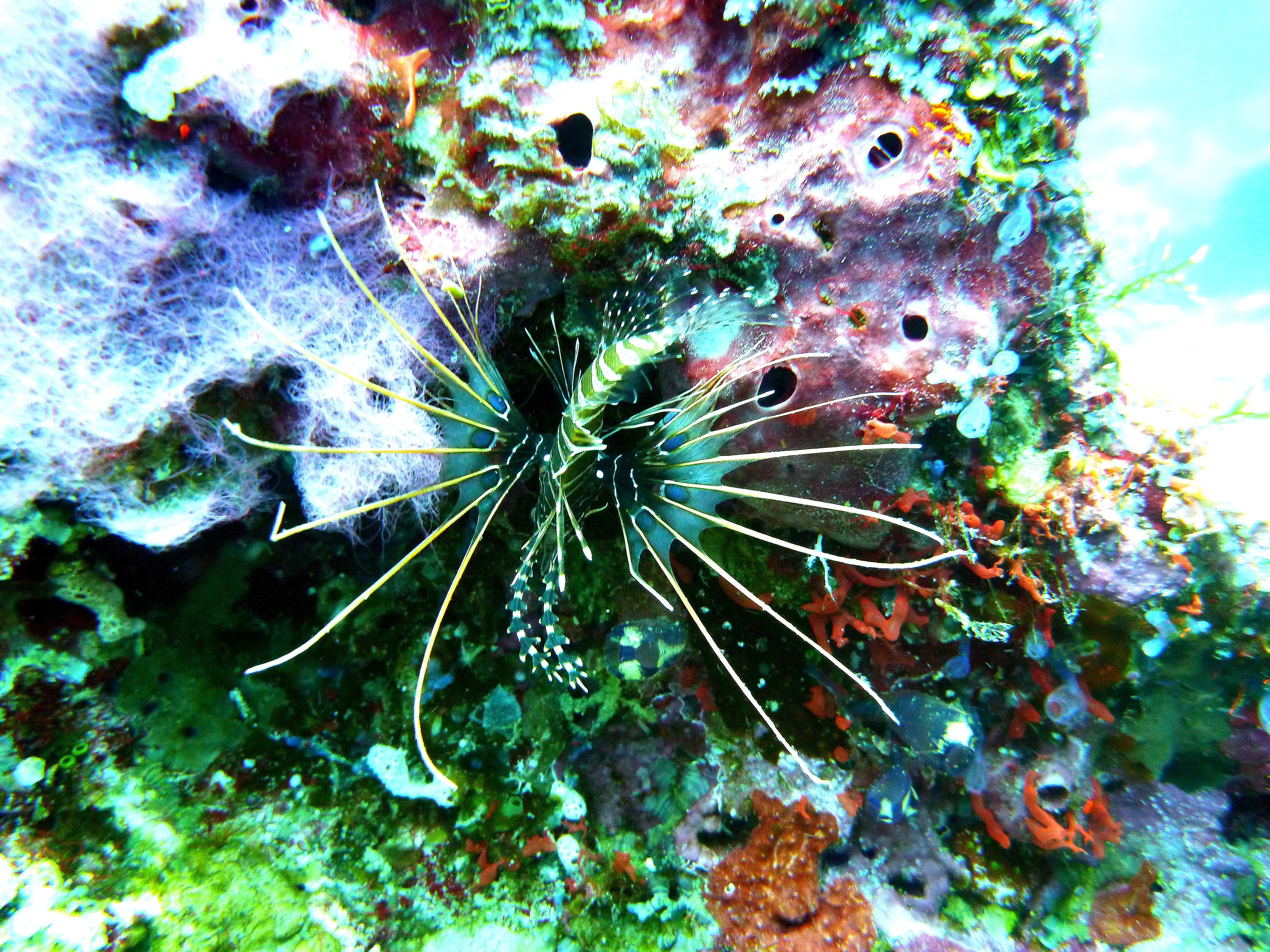
A juvenile peacock lionfish decorated the reef!
Our last descent was just nearby at Katipanan towards south of the island, another richly decorated with diverse marine life. It is a steep slope but definitely with no currents during our dive, we hovered at first on a coral garden until we go deeper from the brink, our deepest was 21.5 meters. Apart from the tropical fish, we feasted with nudibranches and turtles! Again we lingered over a wide coral area obviously in perfect condition and corals just outdo each other in color and shape. We slowly ascend back to the flat sandy slope, still in oblivion I wanted to linger having more than enough air but our DM signaled for ascend. My bottom time was at 44 minutes with 110 bars of air.
So far, I explored only five sites in the island out of twelve, obviously the remaining seven are equally rich and diverse in marine life, a perfect reason to be back.
Sweet Nothings
Casablanca poster on its wall reminds this classic film
Sweet dacquoise of walnut & dates!
Casablanca salad, freshly baked baguette and potato salad is more than perfect for our taste!
Capping our wonderful dives from Siquijor to Apo Island was just proper, a kind of celebration for such gratifying moments in the depths. So, we had a lovely dinner in Casablanca (our favorite!) and later hop to next corner for coffee and pastries at Sans Rival. And we got home on foot exploring the calles despite the drizzle, perhaps to shed off our fullness and to catch the city by night mode in the streets. How about that? 🙂 It was all glorious!
Apo Island – its enticement will make one promise for a return!
NB. At present, the island is home to over 650 documented species of fish and estimated to have over 400 species of corals. Most of the Philippines’ 450 species of coral can be found here, from tiny bubble corals to huge gorgonian sea fans and brain corals. Visitors and tourists pay a fee to enter Apo Island and to snorkel or dive in the marine sanctuary there. These fees are used to keep the sanctuary clean and in good condition.
In 2003, Chicago’s Shedd Aquarium opened a Wild Reef exhibit based on Apo Island’s surrounding reef and marine sanctuary. In 2008, Sport Diver Magazine listed Apo Island as one of the top 100 diving spots in the world. (Credits to Wikipedia)

 In the corner of my eye, sighted this unique bivalve slightly open camouflaging among marine plants. It has unusual form unfamiliar to the best known bivalve such as oysters, clams, mussels and scallops. Just like its sisters, this lowly specie sits in a corner waiting for its prey. it has round valve shells, though its hinge is somewhat hidden. It quickly closed up at a faint shadow and movement.






 Life in the Great Beyond
You must be logged in to post a comment.