
Preventing the Bends

Diving can be one of life’s most special and enjoyable activity, personally it is my strategy in maintaining my equilibrium. I treasure my underwater moments and discoveries – there is always joy in diving. Admittedly though, there are risks and we all knew this since the early days when we took our first lessons in diving. The ever present possibility of decompression sickness (DCS) is always on the lookout. DCS or the bends is a big turn-off for others, indeed it is not for the faint hearted.
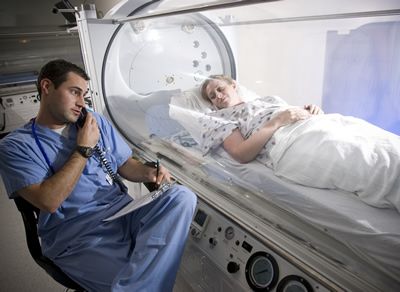
diving emergencies

Of course, the bends can be avoided as we all learned, by following the guidelines and using our common sense. Here are few rules I lifted from Dive Medic written by Steve Muscat in Asian Diver:

1. If you have extra air left, why not do more deco than required, even if your computer says you don’t need it, especially if you are enjoying it. Computers give you the minimum stop required, but if you want to be really safe, you can do a really long, shallow stop.

2. The second common cause of DCS today is deep double dives with too short a surface interval. This is present in places with multiple or large wrecks in deeper water, because divers dive more than once at the same site. Contrary to what one finds in the literature, inner ear DCS has become much common in sport diving. Reverse profile diving is commonly associated with more hits. So, if you are doing a 15 meters and a 40 meters dive, the deep one should be the first. Also, if diving repeatedly all week, slot in a day off to avoid accumulation of nitrogen.

3. In warm climates, hydration is always a problem. Divers notoriously don’t drink enough before a dive and after a dive. Drinking alcohol before a dive increases dehydration, even if it is only a couple of beers the night before.

4. Diving with any form of illness or infection will also contribute to a hit. Signs of an infection is commonly found on a DCS patient even if they are feeling fine.

5. Acclimatisation is also another factor. Like climbing a mountain, one needs to build up to a deep dive. Some divers get a hit from a dive they commonly do, just because they had not dived for some months. Age is another consideration. When diving remote places do not push profiles just because you have done the dive before 30 years ago! It is also a well-documented fact that divers should avoid strenuous exercise before and after a dive as this can increase the chance of DCS.

Finally, many cases of undeserved DCS are seen. The scenario is usually a tourist who has taken on two consecutive dives deemed safe on computer but end up with a skin or inner ear DCS. A lot of these are found to have a PFO2 on investigation. So again if diving off grid, keep a safer profile than the usual.

There are obviously other factors involved in DCS causation. But if one follows the simple rules with common sense, DCS will be one less worry.

Diving is one sport where mindfulness and cautiousness is necessary, while one may  be too comfortable based on long experience, Yet following the basics one can never go wrong.

Here are list of Recompression Chambers in the Philippines in case of emergency:

Batangas City

Batangas Hyperbaric and Wound Healing Center
St. Patrick’s Hospital Medical Center
Lopez Jaena St. Batangas City 4200
Batangas, Philippines
Tel. +63-43-723-8388 Fax. +63-43-723-1606
Beeper: 150-611-169
Email: mperezmd@pworld.net.ph , mperezmd@batangas.net.ph

Cavite City

Sangley Recompression Chamber
NSWG, Philippine Fleet
Naval Base Cavite
Sangley Point, Cavite City, Philippines
Contact Person: Capt. Pablo Acacio
Phone: +63 (46) 524-2061 local 4191 / 4193

Makati City

DAN (Divers Alert Network) SE Asia Pacific:
Suite 123, Makati Medical Center,
2 Amorsolo St., Makati City 1200
Tel. No. (632) 817-5601
Contact Person: Dr. Benjamin Luna M.D.

Quezon City

AFP Medical Center – Recompression Chamber
V. Luna Road, Quezon City, Philippines
Contact Person: Jojo Bernardo, M.D., Fred C. Martinez
Phone: +63 (2) 920-7183
Phone: +63 (2) 426-2701 local 8991 / 6445

Subic

Subic Recompression Chamber
Subic Bay Freeport Zone,
SBMA, Olongapo City, Philippines
Contact Person: Randy Delara, Lito Roque
Phone: +63 (47) 252-7566
Phone: +63 (47) 252-7052, 252-5211 (evening)

Cebu

Cebu Recompression Chamber
Viscom Station Hospital
Military Camp Lapu-Lapu
Lahug, Cebu City, Philippines
Contact Person: Mamerto Ortega, Mamerto Ortega
Phone: +63 (32) 310-709 Chamber
Phone: +63 (32) 232-2464 to 68 local 3625 / 233-9942

Roving Chamber

Philippine Coast Guard Action Center
Roving Vessel Chamber
Tel. No. (632) 527-3880

M/S BRP EDSA II 002
M/S BRP SAN JUAN 001 (Based in Cebu)

NB. Photo credits to http://www.thescubadivingdirectory.com

Diving in Pearl Island

Stitched Panorama
Pearl Island before destruction from Typhoon Yolanda. Photo credits to http://www.fotocommunity.de von Herr Martin Schaublin. Danke viel mals!

An off-beaten site, I haven’t even heard or read about the spot and we only knew we were going there when we were already on the boat for our scheduled dives.

“Where do we go today? Asking in wonder our DM, whom we just met that morning.
“To Pearl Island!” He blurted briefly with no further description about the mysterious island.

It is just one of the islets off Guiuan, Eastern Samar and coming to this town was just a detour when Biliran province was just hit by typhoon. The lone dive shop in the province cancelled our weekend dives accordingly.

The morning skies was down cast and I was crossing my fingers the waters would be considerate enough for the dives. We were fortunate, Angel found a DM on the web who accepted our last minute booking. Guiuan being hit by Yolanda (in November 2013) was still picking up pieces from the havoc and finding lodgings was also hard, but thankfully we found a home stay at Barangay Hollywood. The town is not in the diving map and definitely not yet in our list but it was more than a blessing we had what we need for that weekend getaway last July.

The waters was bit choppy and the cruise took us an hour but the aqua marine hue of the surrounding waters and the prospect of the far-off island slowly getting near was a real treat to perk us up. But seeing the place as we step on its shores was heart-rending – total wreckage was overwhelming. The three white dogs and the caretaker welcomed us warmly, enough to soothe the pain I felt watching the miserable state of the station.

The sky was still downcast and the visibility was not favorable but hoping for surprises in our descents, we geared up leisurely for our first dive – it was a shore entry but somewhat tricky as the viz was hazy. The plan was to circle the islet swimming with the current hoping to cover the whole sanctuary. There were variety of soft and hard corals with juvenile fishes, I needed to be more keen for critters. But what I saw was more wreckage – uprooted talisay tree, broken coco trees, galvanized roofings, rubbles and more. There was more debris than marine life as we went around. Inspecting closely a crevice, I found a lobster, its antlers swaying slowly outside the hole. She stood her ground as I came a bit closer beckoning Angel. It was a rare find and quite a surprise, it was my first sighting of a big lobster! We roamed around over a coral but in a twist of fate, I was separated from Angel and our DM, the obscure viz was not really a help. I surfaced about 15 minutes later than them….

For sure, there was still more to explore down but the DM beg-off for the second dive, it would be rude to demand from him as he was feeling sick.

The devastation of the town was fading physically barely noticeable in one glance but visiting the island could pierce one’s heart, the BFAR building was totally destroyed, rows of concrete beds for the pearl culture was empty and useless, coconuts and talisay trees uprooted. It is almost bare to the ground. The lash of the unforgiving typhoon was evident even underwater. Exactly the small islet was an exact show window of the Yolanda devastation.

Perhaps, there will be another chance to visit Guiuan, by that time the town is booming & blooming and the typhoon destruction will only be a faint memory.

Travel Notes

1. Pearl Island (aka Kantican Island) is an experimental station of Bureau of Fisheries & Aquatic Resources (BFAR) on pearl culture, at the same time a protected marine sanctuary. It caters as venue of seminars, training and workshops of the province. It was established and a gem during Marcos era.
2. There is no commercial diveshop at the moment but can book diving services from a local DM. Bringing own gears would be advantageous.
3. Aircon vans from Tacloban to Guiuan (and vice versa) have daily regular trips every hour, travel time is two hours.
4. There are more than 10 dive sites in Eastern Samar including Homonhon Island.

Disclosure

I savor few moments on the swing under the talisay tree (survivor after the typhoon) just before we left the island. Despite the devastation, there still a little source of simple joy for a sad soul. Angel was worried to death when he surfaced and cant find me.

Moalboal Shoaltime!

This slideshow requires JavaScript.

Definitely my madness of Moalboal is unrelenting, it seems I never get enough of its underwater show. For the nth time, I declare that the sardines’ phenomenon is grand spectacle and literally an iconic one. The mammoth shoal is my overriding reason for coming again and again to Moalboal, and I will never get tired of watching in awe while underwater. It is the only dive site in Southeast Asia that is home to a school of fish so immense, it provides a rare and iconic backdrop of shimmers, shadows and amazing shapes. I was in for a show as I float at fifteen meters watching above me. So stunning!

We went again for the 4th time to experience once its majestic display last June, and mutually agreed for another return for this same reason.  Moalboal is a must visit site in the Philippines and if you are after this majestic display of humongous school of sardines, don’t wait long for a trip to this southern town in Cebu. Experience this underwater Shoaltime!

Gear Review: BCD and Regulator Set

AQUALUNG ZUMA BCD

Being a traveler diver, my first criteria is weight – logical, I don’t need the bulk and excess weight. And I don’t want to hurt my back. At first I was eyeing for Diverite but it was really heavy for my pocket.

The fun, travel-friendly Zuma was just right. This ultra-light, weight-integrated, back inflation BC has everything you need, yet lacks weight and bulk. Once you lift it, you’ll feel for yourself that a size ML/LG weighs less than 2.2kg (4.75 lbs), with the airway and weight pockets included!

Extremely lightweight with great packability, It has padded spine and lumbar support for comfort and stability for a diver.

APEKS FLIGHT REGULATOR

Probably, the lightest regulator in the world! I was simply attracted to its trim features – thin cords, smaller mouthpiece, small console – in other words, tangle-free but very functional. Truly advance and revolutionary yet resilient, efficient and safe.

The most compact, complete regulator is the Flight 2nd stage approximately 20% smaller than the Apeks XTX range. Weight reduction is prime objective, but other benefits result from this design journey, not least the comfort of your regulator. The reduced size offers less drag, the 2nd stage is designed to be as neutrally buoyant as possible reducing jaw fatigue during dive. A more relaxed purchase on regulator mouthpiece is also achieved through the in-line positioning of the primary regulator hose from the 1st stage. The 1st stage has 4 medium pressure ports located in-line for hose comfort and the 2 HP ports are radially configured for optimum hose routing and ideal instrument positioning.

Total regulator weight including hose (yoke version) is only 708g!

NB. Photo credits to Aqualung and Apeks website

Disco Clam!

The clam was flashing red lights!

Ctenoides ales, known to scuba divers as the “electric clam” or “disco clam”, is a species of saltwater clam, a marine bivalve mollusk in the family Limidae, the file clams. The clam has been given these nicknames because its soft tissues flash light like a disco ball.

Studies revealed that it is not a bioluminescence phenomenon, but is instead coming from reflection of the ambient light, either the sun or diving light.  It was my second sighting when we dive  in Moalboal last June,  a rare specie I didn’t encounter them in any other dive sites we visited so far.