"Now more than ever do I realize that I will never be content of a sedentary life on the surface, I will always be haunted by thoughts of being drenched elsewhere"….
My passion for diving and the underwater life had given me that keen sense for the red flag with the diagonal line, it seemed I am drawn to it even in the midst of other travel agenda. I have promised myself to be productive in every trip, learn and discover especially marine issues and activities and possibility for diving trips in the future. I always believe that many places are worthy for diving, this country has 7,107 islands and literally surrounded by waters. Indeed, many interesting spots are not in the diving map but some brave souls just establish dive shops in rural areas even if scuba diving is unpopular in the locality. Recently I unexpectedly found dive operators in the least popular setting, new discoveries that sent flutter in my heart!
Surigao City
Mabua Peeble Beach is just 10 minutes away from Surigao City
We went to this popularly unique pebble beach in Mabua to fulfill my promise to the kids – my nephews and nieces, it was long overdue and have to squeeze schedules for a two-hour travel from Butuan to Mabua and another two hours for the return trip. We drove to the tip of the cove for the beach cottages, and somewhere halfway I caught sight of a cottage painted white with the dive sign, it was a surprise! I thought there was only Punta Bilar Dive Center in the city. It is operated by Dirk/Doris, a friendly couple who just started the shop few months back. Mabua Divers (www.mabuadivers.com) can be reached at 09166439982. The site is a good prospect as it is in the nearby Caraga region and can be reached by land, there’s no need to fly!
Legazpi City
Recently visited the city through a work trip, at the airport while waiting for my luggage I hastily approached the tourist info booth and asked about diving, it was again surprising as the attendant handed me a calling card. I mentally noted Pacific Blue (www.pacificblueasia.com) not sure to find or visit the shop. Later that afternoon, a friend’s friend showed us around and drove us to Embarcadero and further to Legazpi Boulevard. There tucked in between with newly constructed establishments is a lowly but with large ground space is the shop. I asked our host for a short stop to inquire which he politely obliged. A Japanese which looked like a Filipino to me, attended to my inquiries – a casual conversation about the divesites and its marine life. There were damages from dynamite fishing and currently they are working on coral transplantation to revive the coral reefs in the surrounding Albay Gulf. It was interesting to note their effort to restore the marine environment, in coordination with BFAR.
As expected diving in Misibis Bay is in dollars!
The luxurious Misibis Bay offers diving but I cringed as I inquired for the rates, the bay is still reviving from dynamite fishing damages. A sanctuary is maintained by the resort, giant clams transported from Bolinao, Pangasinan were planted and adapting well, tropical fishes which includes over-sized groupers are decorating the nearby resort waters.
Butuan City
Right in this city where I grew up, I wasn’t expecting that diving will come right at home. In my own opinion, hardly would anybody set up a dive shop in Butuan, it was unbelievable. The notable body of water in the city is the Agusan River, with its murky waters it is not feasible for diving. The decent beaches worthy for the usual weekend outings are in Nasipit and Carmen, which is more than 25 kilometers away. Most likely, diveshops will open in the coastal towns with obvious reasons. JJ Dive Center started operations just few months back this summer, with the vision that Butuanons will embrace Scuba Diving as a sport, hobby and passion.
Punta Diwata Reef is offshore of Punta Diwata Cave (Photo credits of wikipedia.org)
I found their announcement online through a diver Mexican contact and noticed that their dive spots include those located in Surigao City and Carmen, Agusan del Norte. These localities have notable marine environment and have existing partnership with government agencies for marine preservation and protection. I’m looking forward to discover and explore the mysterious depths in Caraga, and again there’s no need to fly!
After more than six years in diving I have adored the depths and the amazing life in it, with increasing passion I wanted to know closely the interesting creatures that contain this mysterious world. My encounters with them were all in silence, even with restraint and patience, for them bigger species (like divers) are threatening and must be avoided. There are few of them that are generous and stood their ground even with my presence, face to face encounters are rare moments which I always treasure.
Moray Eels (Muraenidae) are interesting and just one of my favorite friends, I always stop at a distance for a quick observation – round eyes, naughty grin with razor teeth, elongated body like snake, brown or deep blue countenance – what a beauty! It could just easily glide away if feeling threatened, it is always my joy to glance at it without moving, and watch in awe how it gawk at me as if wondering what kind of fish I am! Glorious, but sadly I can’t touch my moray but just gaze in wonder.
I gathered few facts about this specie, few things that I must always remember when I dive expecting encounter with them:
1. Moray eels are found in shallow tropical ocean waters throughout the world, and live in crevices around reefs and rocks.
2. While moray eels look like snakes, they are actually fish which lack scales.
3. Morays are covered by a slimy mucus that allows them to quickly slither around reefs without getting all scratched up.
4. Morays have poor eyesight, and are known to accidentally bite the fingers off of divers who feed them (so don’t).
5. Cleaner shrimp and cleaner wrasses (tiny fish) coexist with morays and eat the parasites that live on them.
6. Moray eels are one of the few species of fish that can swim backwards.
7. Morays look menacing and scary, but they are relatively docile fish that will only attack if threatened (for example by a diver reaching into a moray’s hiding spot).
8. Morays are predators that typically hunt at night using their sense of smell; their prey include fish, crustaceans, octopus and squid.
9. Morays can cause ciguatera food poisoning if eaten by humans. The symptoms include serious gastrointestinal and neurological conditions
10. To breathe, moray eels must continually open and close their mouths to move water over their gills. Scuba divers often incorrectly interpret this behavior as threatening
It is comforting to note that morays are never aggressive but just like me and my cat, they are docile and undoubtedly lovable. And I always considered it a compliment if a moray would stop and stare back at me as if saying – we are friends!
The world we have created today as a result of our thinking thus far has problems which cannot be solved by thinking the way we thought when we created them. ~Albert Einstein~
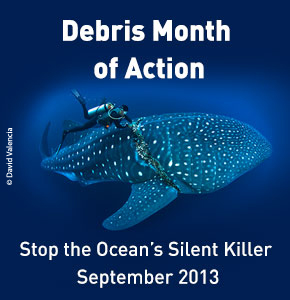
Scientists think over six million tons of marine debris are entering our ocean every year. One can just imagine the volume of underwater trash that threatens marine life, destruction is evident and many documentaries can only reveal the devastating effects of these wastes. In my own diving trips, the disheartening sight of trashes is very common – either on the shores or floating on the waters or underwater. Definitely, the debris don’t belong to the waters – so pathetic! But we are not hopeless, the global diving community have focus on battling the ocean’s silent killer from beneath the surface.
This September – Debris Month of Action – let us join to combat the growing marine debris problem and inspire year-round action to remove, report and prevent underwater debris. Volunteer this September for this drive and be counted, join a group event or grab your dive buddy and report your data. Moreover, make this a habit, let us pledge to dive against debris all year, a lifestyle we must maintain. Together, we can stop marine debris by taking local action and supporting policy change. By submitting your underwater data on an ongoing basis, we’re one step close to prevention.
Let’s join the fight against the ocean silent killer!
You can never miss Bongao Peak before touching down Sanga-Sanga Airport
After two plane rides a day apart, I find myself in the southern most province with a cluster of 307 islands and islets, one of the red flag spots in Mindanao – Tawi-Tawi, more than 328 kilometers from the nearest urban center in Zamboanga City. I had been doing my research and inquiries about diving in these group more than three years ago, and in 2011 chance upon a seat sale on Zamboanga – Bongao – Zamboanga route. My MRDP workmates were too encouraging having visited the province for marine preservation activities. Unfortunately, we had the trip cancelled after some irrational changes of flights leaving my tickets down the drain. Finally, I made it with my dive buddy, of course. I watched Bongao Peak in wonder as it loomed before us, while approaching the terminal of Sanga-Sanga Airport. It was still early, and the locals were just starting the day.
Zenith Moments
We went straight to our refuge in Beachside Inn, our modest room with windows facing the sea was just to our liking. We had a long day at hand and after an hour break, headed for the trek to Bongao Peak. Yet we need the bananas for the macaque monkeys which is really necessary, the climb is not possible without the offering. Our friendly guides assured the trails won’t be horrid as it has been sunny in the past weeks. The midday sun was already scorching as we started our ascent.
The climb was only one third when we got at the cemented steps, it was getting steep which surely make one breathless but the glimpse of surrounding waters beyond was so alluring. The myth is true, the monkeys appeared for the offering and I was thinking, without the bananas all of them will swarm and block the way. They could be dangerous indeed. But personally, I found the plastics tied on the trees so disturbing, I will always see them as trash – inarguably, it marred the purity of the trees and forest. Lot of trash was left on the trails, from the climbers without doubt, it was so pathetic.
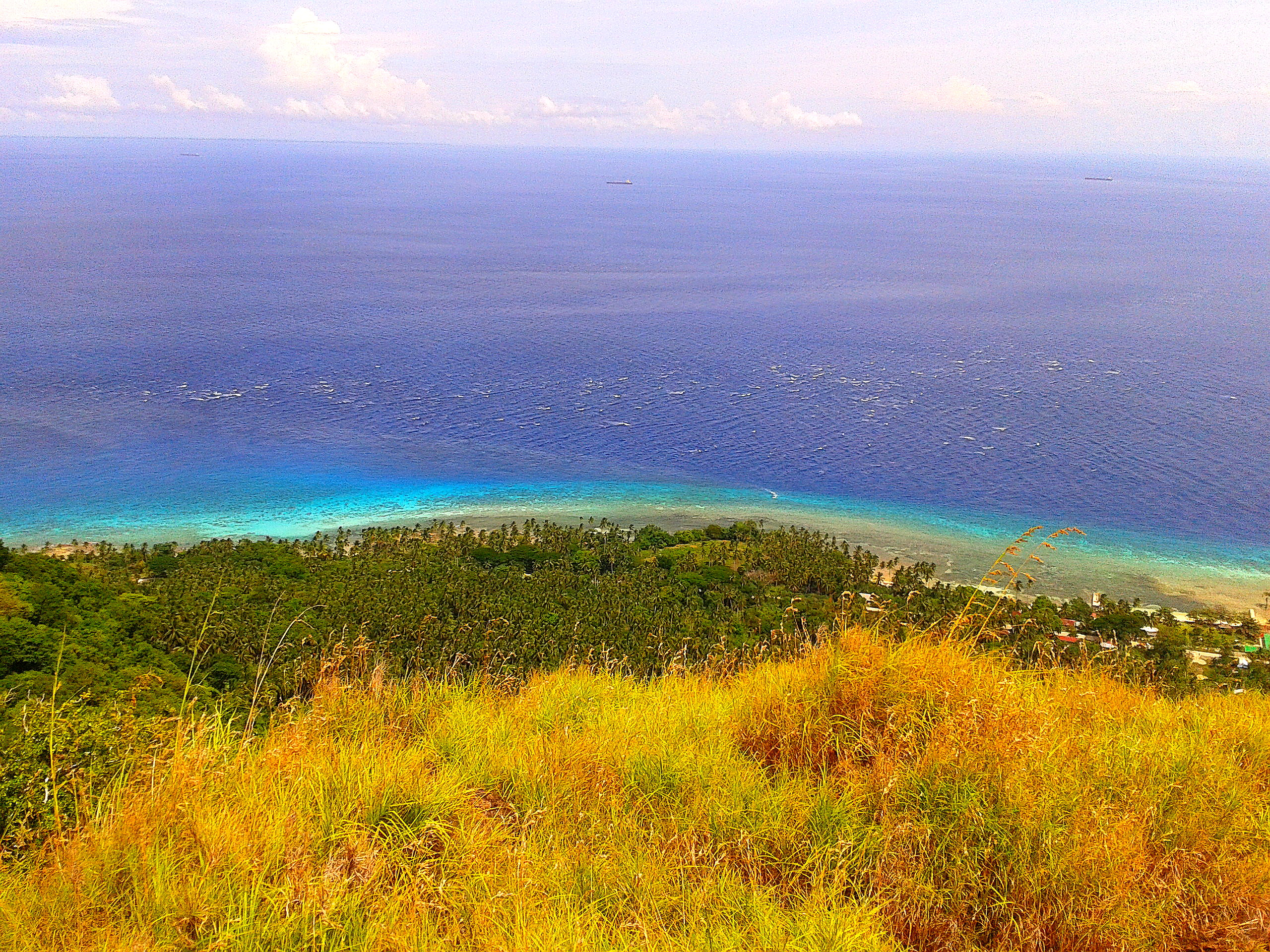
The peak was all consuming, it gave us an ample view of the surrounding islands with turquoise waters around, the town, the communities and the airport. The endless blue seas meeting the blue skies beyond is so calming. Breathless with the panorama! Peaks are always marvelous indeed.
Intense Depths
Diving in Bongao includes climbing or hoisting yourself from the waters to this boat!
The main agenda of the trip was diving of course, what else? An off-beaten site is always to our liking, Some what mysterious and there is much to unravel. We were up early the next day, it was a gloomy Saturday morning as we gather up our gears waiting for our transpo at 7am. There is no dive operator in Bongao but the local Tawi-Tawi Divers Club (TDC) has been handling diving trips in the province, and we are grateful to them.
The hired boat, similar to those floating at the old Chinese pier was already at the bridge connecting Sanga-Sanga Island to Bongao, waiting for us. Our first site was at Sanga-Sanga Reef which is just at the front of the airport. The waters started to get choppy when we got there, but DM Ramon first sought permission from the guards, it meant wading down the waters until the shores.
Summary of our descents during the day, our first and last dive was with DM Ramon while the wreck was with Sir Dong Reyes, the president of TDC:
   Sites                  Depth   Bottom Time     Conditions
 Sanga-Sanga Reefs        15.3m     0:45        Strong current
 Pahut Plane Wreck        19.1m     0:31        Very strong current
 Sowangkagang Tiny Wall   12.1m     0:36        Mild current
One need to be an experienced diver especially that current are all common in every sites. The most challenging one and my top pick was the Plane wreck in Pahut, it was believed to be a World War II Japanese Tora-tora plane. Sir Dong had a detailed briefing before the descent making us aware of the currents judging from tide movements. The good thing was other local divers were invited, making us six in all, two of which are new graduates form MSU – Tawi Tawi from Marine Bio and Environmental Management. The instruction was once in the waters, descend immediately to the floor and hold on while waiting for others, everyone will swim or drift to the wreck together. Angel warned me to stay close with him and never to getlost, I went ahead of him for the entry.
We all swam to the wreck with Sir Dong leading us, the overriding current almost sweeping us but firmly finned for the spot. I was somewhat dismayed that the remnants barely outlined the plane, far from the photos I saw taken two years ago. I came too near holding on an iron part, the strong current fiercely gushing and swooshing before us. Although I was focused with the currents, my eyes never failed to notice the colorful fishes hovering the artificial reef, such lovely sight! I tried to circle around still seeking refuge in the wreck mound. We all drift away as our DM signaled to depart from the spot, passing hard and soft corals with the tropical fishes – there was no pelagic in sight. We ascend too far from the boat!
Diving in Bongao or in Tawi-Tawi for that matter is not for the faint hearted, its depths is as fierce as its local people, silent but tough and can be dangerous. Confidence and trusting in one’s capacity is necessary but never forgetting basic safety rules. Forget about the comfortable white-washed dive boats with amenities and ready stairs, doing the Spartan way is the mode, climb your way from the side sans modesty and without reservations. I have gone that far, but that’s all part of the job!
Our last descent was for finishing touch with DM Ramon, it was already late at 4pm but the current has gone mild fading away. Sowangkagang was just near our lodgings. It was not a wall actually but a sandy slope decorated with soft corals like it was filled of brown grasses swaying with the current, it was mild and barely noticeable. We took some time trying to find the giant clams Sir Dong was talking about but it was nowhere. Three dives with currents are exhaustive and left us almost breathless, thanks to my oxygen! I learned that there is more joy in the routines than conquering the site – challenging or not!
The abundant marine resources of the Tawi-Tawi group has been depleting
Marine Preservation and Protection
It is impressive to note that while Tawi-Tawi province is distant and the frontier to Malaysian waters, it is not last in terms of marine environment protection – government agencies, local government and advocacy groups like WWF, FISH and even MRDP are collaborating cohesively in information & education campaign around the islands. The efforts to address existing environmental problems is supported by local communities particularly in preservation of MPAs, research studies and activities were put in place too. I learned from Engr. Dong Reyes that TDC in cooperation with MSU Tawi-Tawi College of Fisheries replanted coral polyps from dead corals due to dynamite fishing. He showed few of this artificial reefs scattered near the university’s port with the grown corals which will be transplanted in areas with depleting coral reefs. WWF Philippines on the other hand has satellite office in Bongao and extension works in the islands of Simunul, Sibutu and Sitangkai. They claim that marine resources have depleted precariously, fish stocks are overfished and important habitats are being lost – fish catch of fishermen are dwindling over the past years. The increasing number of people living in coasts and continuing rise in consumer demands for fish threatens marine biodiversity. Yet hopeful with this impending crisis as the rural communities are aware and cooperating in preservation and protection efforts. The Tawi-Tawi group is one of the country’s significant breeding grounds and a rich source of marine products and by-products – definitely more than just a “tourist” destination. No, definitely this province is not struggling to be seen, just come and be their guest!
Travel Notes:
1. There are no dive shops in Bongao, diving in islands can only be arranged with Tawi-Tawi Divers Club (TDC) through Engr. Rosendo Reyes at 0917 7222905 or 0921 2938287. 2. Bringing your own gear is recommended, TDC gears are owned by members and by chance not available. 3. Boat hires are available at old Chinese Pier: for diving within Bongao it costs P 1500.00; going to the islands costs more depending distance, Simunul Island is P 2,300.00 – haggling skills may help. 4. Trek to Bud Bongao is more than an hour including stops and monkey offerings, the descent is about fifteen minutes depending your pace. 5. Sunsets are best viewed at the Provincial Capitol that sits on a hill. 6. Simunul island, is the site of oldest Mosque in the Philippines and home of the revered Sheikh Makdum one of the early pioneers in the spread of the Islamic religion in the country.
NB.My point and shoot cam was totally useless during my dives, sorry no underwater photos on this post





 Life in the Great Beyond
You must be logged in to post a comment.