"Now more than ever do I realize that I will never be content of a sedentary life on the surface, I will always be haunted by thoughts of being drenched elsewhere"….
In the corner of my eye, sighted this unique bivalve slightly open camouflaging among marine plants. It has unusual form unfamiliar to the best known bivalve such as oysters, clams, mussels and scallops. Just like its sisters, this lowly specie sits in a corner waiting for its prey. it has round valve shells, though its hinge is somewhat hidden. It quickly closed up at a faint shadow and movement.
There are over 30,000 species of bivalves including the fossils one, all of them live in the water, most of them in the sea or brackish waters. Have you ever encountered this round clam?
Sea squirts are rounded or cylindrical animals ranging from about 0.5 to 10 cm (0.2 to 4 in) in size. One end of the body is always firmly fixed to rock, coral, or some similar solid surface. The lower surface is pitted or ridged, and in some species has root-like extensions that help the animal grip onto the surface. The body wall is covered by a smooth thick tunic, which is often quite rigid. The tunic consists of a cellulose-like substance called tunicin along with proteins and calcium salts. Unlike the shells of mollusks, the tunic is composed of living tissue, and often has its own blood supply. In some colonial species, the tunics of adjacent individuals are fused into a single structure.
This marine invertebrate commonly known as Ascidians are characterized by tough outer tunic and are filter feeders. These animals are found all over the world usually in shallows, they are sessile which means they are firmly attached to substratum, such as rocks and shells. As seen above they are attached to a tube-like coral just near to sea anemones or coral reef systems.
There are 2,300 species of ascidians and three main types: solitary ascidians, social ascidians that form clumped communities by attaching at their bases, and compound ascidians that consist of many small individuals (each individual is called a zooid) forming colonies up to several meters in diameter.
Some sea squirt produce a chemical called Ecteinascidin, a potential for pharmaceuticals! Sea invertebrates like sea squirt are subjects of research in medical laboratories for possible medicinal products.
We found this animal while diving in Siquijor, their colony was getting my attention and quickly snap the above photo!
Grape corals (Plerogyra sinuosa) are not common in every coral reef environment although commonly thrives in shallow waters in the Indo-Pacific. The specie is also known as pearl coral, bladder coral or branching bubble coral. Its grape-sized bubbles increase their surface area according to the amount of light available, they are larger during the day but smaller during the night. It does look attractive with their bubbles among the coral reefs.
Albay Gulf has abundant colonies of these in different colors, which was striking compared to other sites visited. Undoubtedly, it is subject to the threats of climate change and destruction of its reef habitat common to other coral species.
The iconic St. Francis of Assissi Church welcomes you to Isla de Fuego!
The pristine waters of this idyllic province which is a come-on for tourists is no doubt one good reason for water enthusiasts to tread its depths. We have been planning to be back not just for a detour but to explore the deeper vista of Isla de Fuego. Five years was long enough for the wait and making most of a long weekend in June, we finally made it. Cherry, Angel and I was looking forward for this passage, my tickets were bought in last November yet!
The heat and humid air suggested for a long summer, the weather perfectly cooperated our cruise from Cebu to Tagbilaran, to Dumaguete and finally to Siquijor. Angel joined us in Dumaguete port to Siquijor under the scorching heat. The low tide perfectly revealed a long stretch of white sand shores as we step on the port. Local kids swam and enjoyed the waters, how alluring that even the port offered an immaculate scene and unspoiled view of the province!
Sandugan Beach
We lingered over a wide area of colorful corals
Our booking was in Kiwi Dive Resort, a self-contained and homey refuge that offered everything we need – diving facility, lodging, food and friendly staff. The tricycle we hired from the port brought us south of the island in Larena, and later served as our transpo as we went around making most of the remaining hours before dark. We need to show Cherry around, we ended up in Salagdoong Beach passing the picturesque mini-forest already dark, yet in a festive mood which gave us a reason to linger – and munched the pasta, bread and cold cuts we had. We wanted to stay longer until our trike summoned us for our ride home.
I was inside a small cavern watching the golden cardinals swimming around the entrance
The next morning was gloomy as if a storm was coming, but the waters was perfectly calm for our two dives, our DM Raul had an interesting flair as he briefed us and told about possible sightings. Our first descent was a boat dive, we cruised shortly to Sandugan Canyon which our DM suggested as replete with critters but not with pelagics.
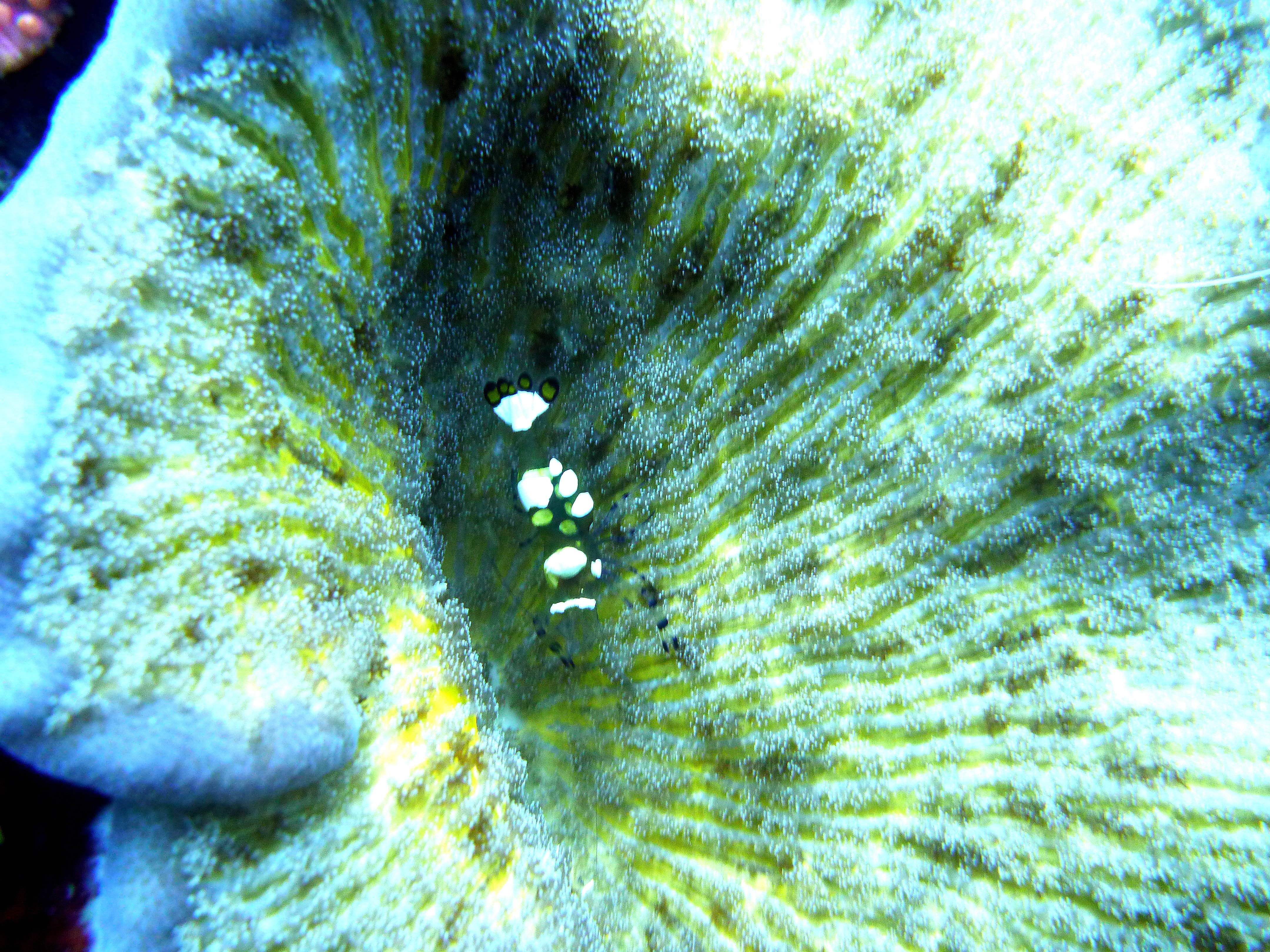
Look closely, can you see it? 🙂
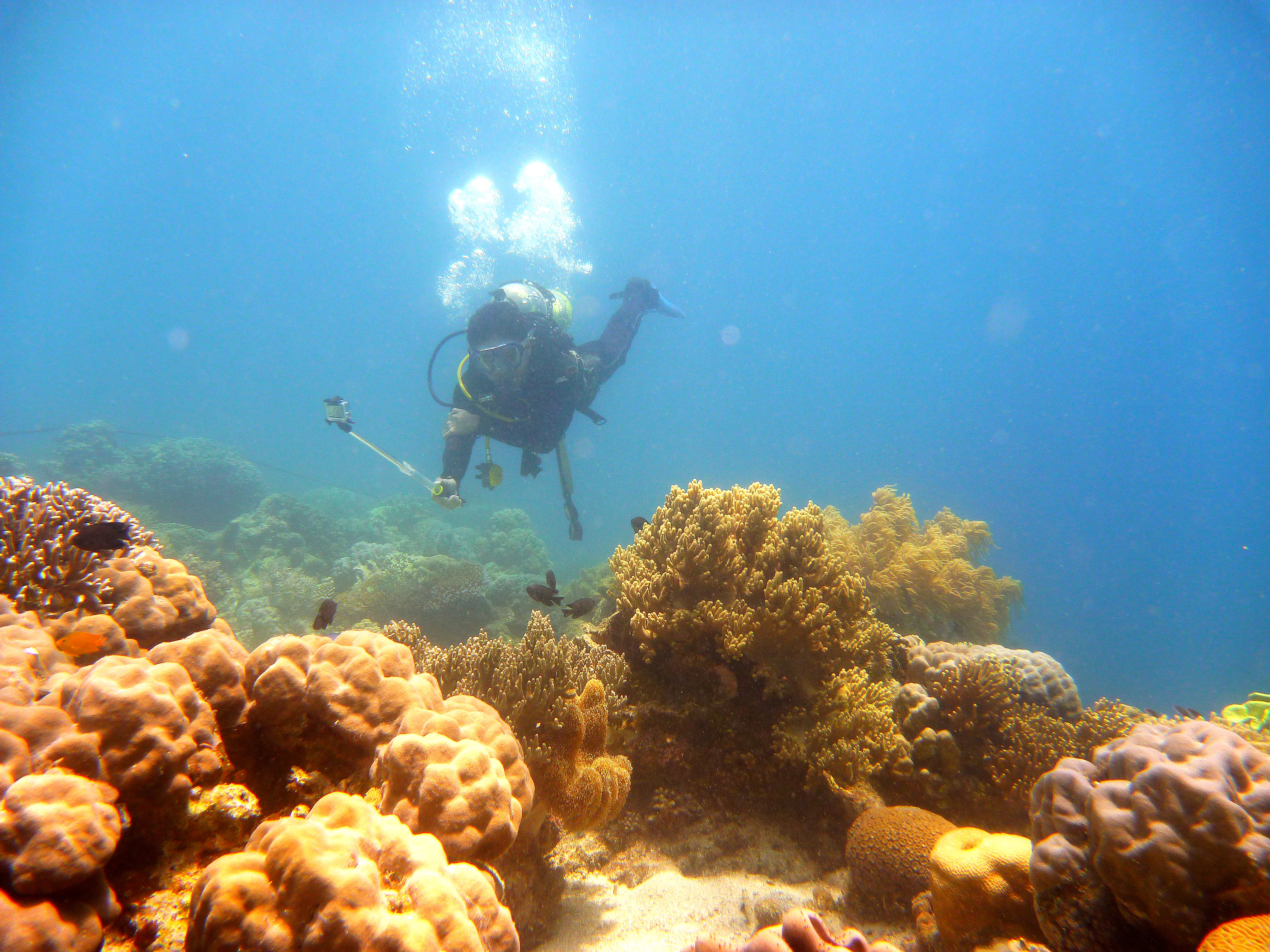
It was a wall dive and indeed, there were variety of nudis – in different bright colors and sizes. We entered a cavern which housed variety of fishes, the herd of golden cardinals swirling around as if disturbed by our presence, was a sight to behold! I stayed longer feeling the serenity and warmth of the scenery. We found more nudis as we went around, cleaner shrimp and variety of juveniles. We went over a wide coral area, in different colors and assortment. After twelve weeks of lull, it felt good to be back in the depths. We ascend after 65 minutes!
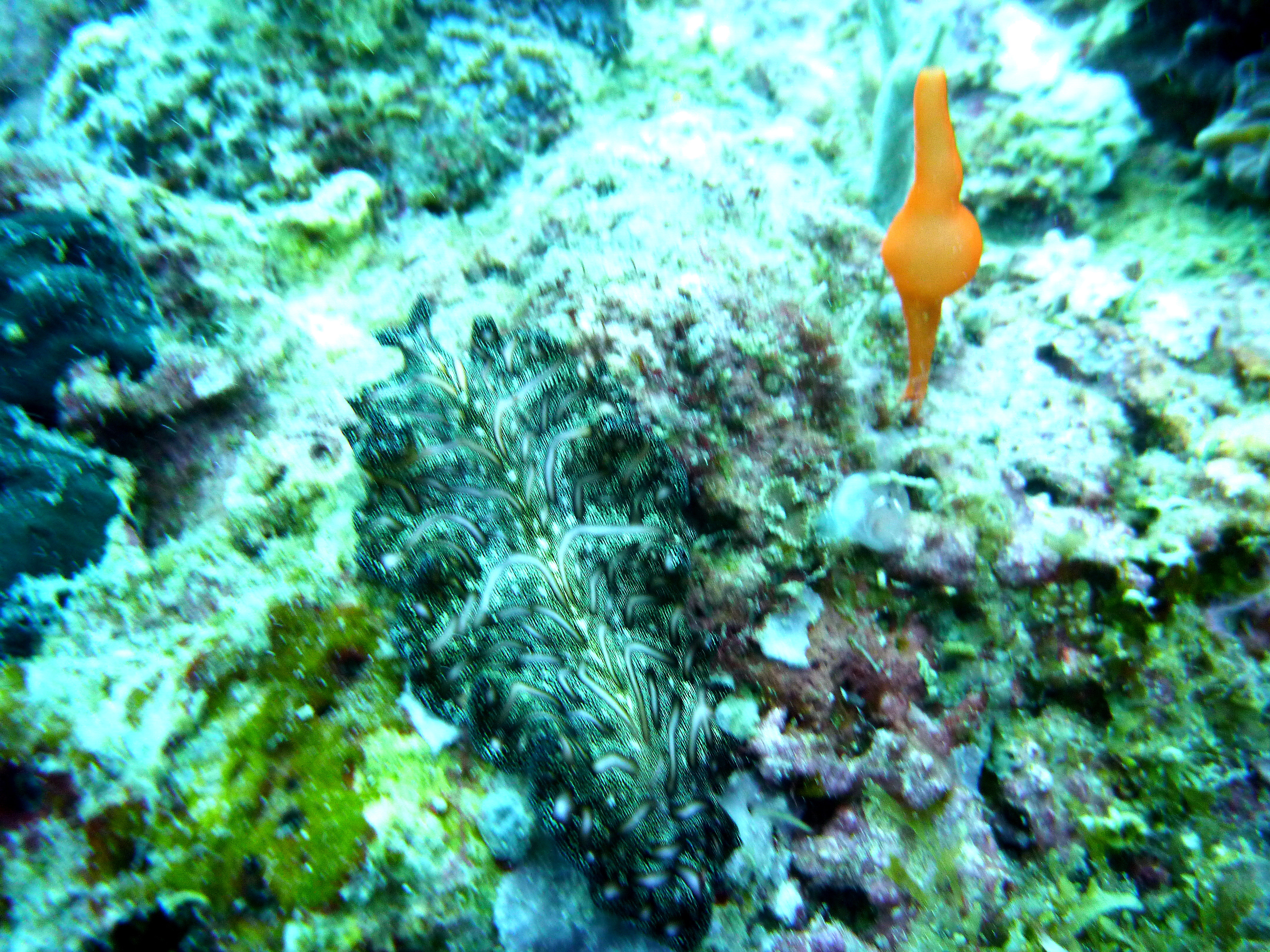
The graceful Bedford’s Flatworm surprised us!
After an hour of surface interval back at the resort, we head for our next descent at the Sanctuary with DM Cedric , it was a sloping sandy area and as soon as we were down, a sea moth was resting mimicking the sand’s color! It was my first sighting of the specie, but it didn’t swim, or fly – the sight of a sea Pegasus flapping its wing-like pectoral fins would be an interesting sight. We sighted also garden eels peeking on the sand but quickly disappear as we got near. There were a lot of nudis again, and swam over a wide coral area. The unspoiled marine environment was inspiring, less exposure to threats could only mean healthy marine life. Less population, less pollutants, and rare disturbance is always an advantage. We ascend after 66 minutes with my air still at 90 bars!
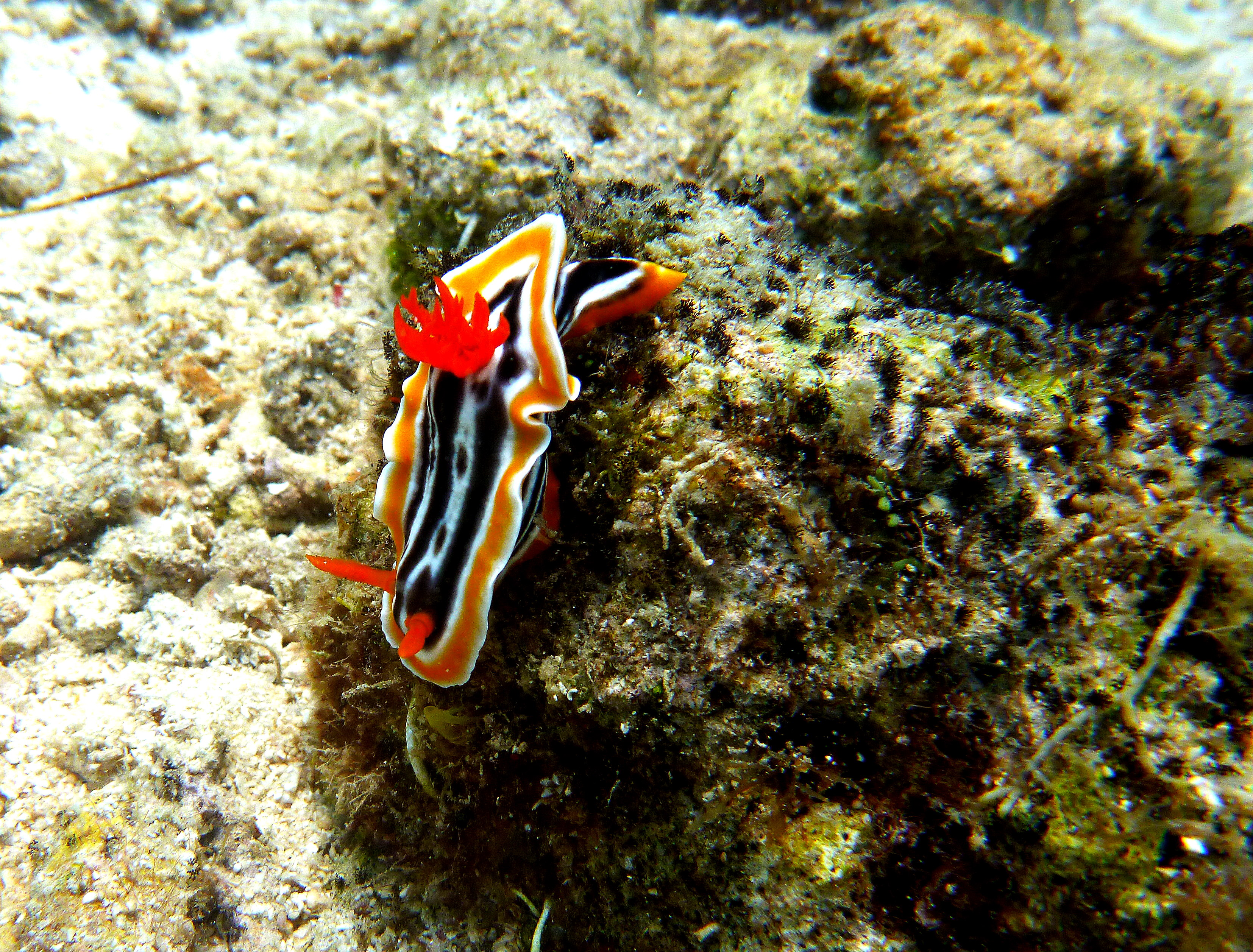
This striped pyjama nudi gave a colorful touch among the corals
Meeting A Shaman
Until today, the island is still known for shaman and healers, and many anecdotes have been passed around. Some even have reservations visiting Siquijor for this reason. Seeing one is a welcome thought but have never expected we had the opportunity. But our guide cum driver was enthusiastic to suggest we should visit, he knew one who have healed him and provided help when once he lost his wallet. So, we made most of our time as we wait for the last trip boat for Dumaguete. It was a brief encounter but his stories were more than enough to compensate for our long wait as he went out for a patient. Perhaps, beyond what we see on him was some supernatural powers to read our appearance! He was normal though, like us!
The balmy sundown at Kagusuan Beach!
Coming again in Siquijor is not impossible, with the wonderful discovery we had on its depths it is another destination in Central Visayas worthy for another visit in the future!
Indeed, the Philippine waters for me is the best snorkeling arena. It holds never ending possibilities for water adventures. As an archipelago, it has long list of remarkable destination for snorkeling not to mention diving, from coast to coast and from one island to another. Just like diving I can do it whole year round without waiting for specific season, the waters just waiting to be explored. The first half of the year gave me opportunities to discover and rediscover marvelous realms allowing my body to float, relax and wonder in nature’s wild in the depths. And yes, the great depths will never exhaust its mystery, infinite as ever and it could only stir up one’s curiosity. My snorkeling expedition in the past months had fanned my increasing love and passion for the blue world.
Donsol for Whalesharks Location: Donsol, Sorsogon
The quest for Donsol was finally realized in March, the long wait was compensated with wonderful sightings. It is however, an advance open water snorkeling – that’s how I described the rigidity of finding these gentle giants. It requires agility and speed, sharp eyes is also a must. I think the slow and inattentive would never see one, in a blink of an eye they were gone. Again, only the focus mind will experience the magic.
The first whaleshark we encountered in Donsol was this big. Such adrenaline rush!
Donsol indeed is gifted by nature with rich waters that it maintained its breeding grounds for the largest fish. This once sleepy town suddenly become a flourishing destination and sought out by many, local or foreign.
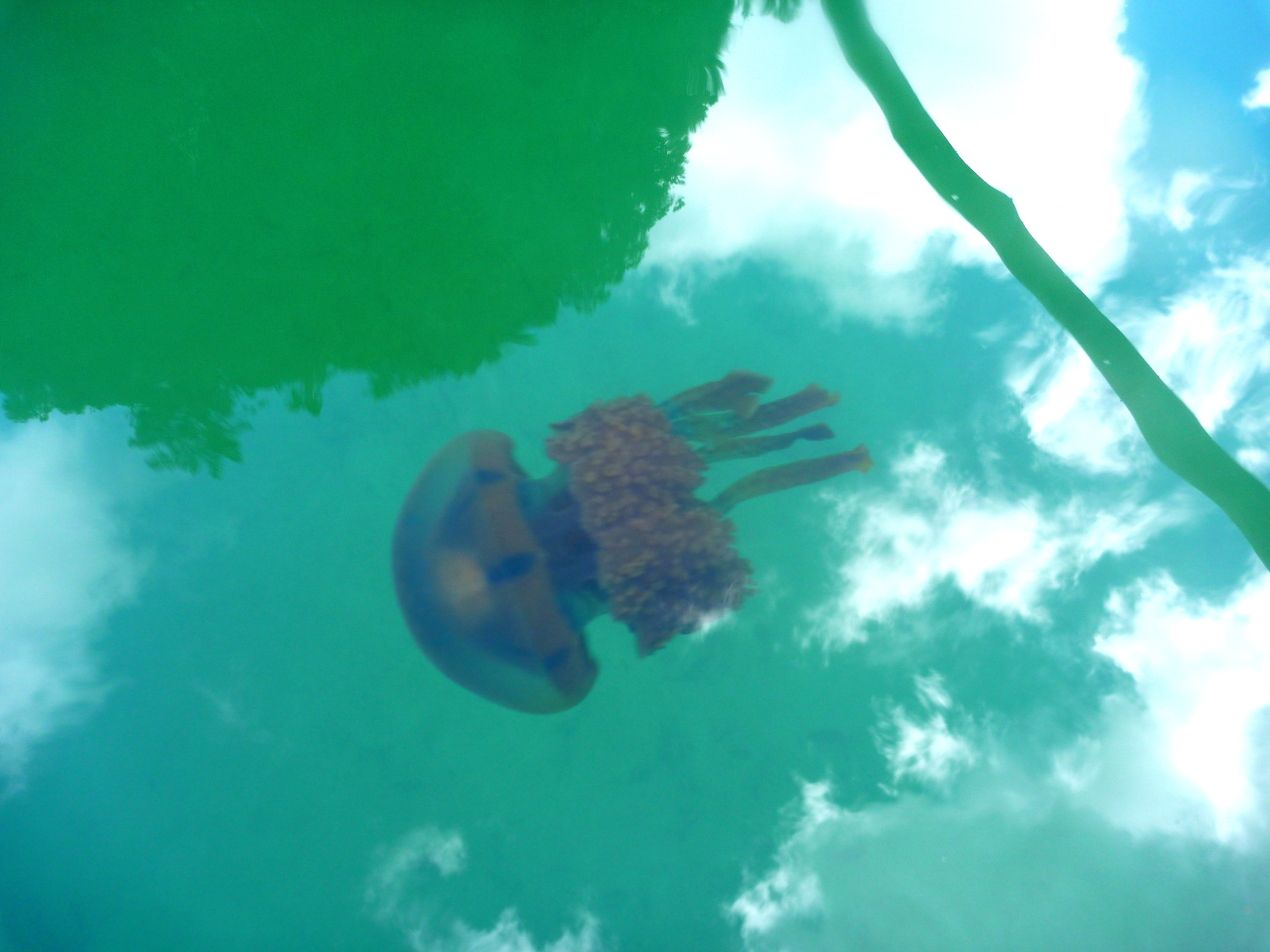
Jellyfish Lagoon Location: Bucas Grande Group, Surigao Norte
I went for a quick visit in Bucas Grande group in April to savor its homey environs and I was blessed to catch up the stingless jellyfish in Tojoman Lagoon. Although not yet in full season, their presence have warmed my heart, and added joy in my homecoming. I swam with them again silently, just floating side by side and watch them pulsating. I was wondering if ever they saw me, because they were never disturbed of my presence. My jelly friends were always there to welcome and swim with me. Snorkeling in the emerald waters in the lagoon always highlighted my trip to the islands.
Apo Island Location: Dauin, Negros Oriental
Perhaps, there is no other richer marine sanctuary I visited than Apo island, its shallow waters was teeming with marine life I can only find in the depths of other sites. We were lackadaisical in our dive plans in Dumaguete, we just trusted the diveshop so we left everything to them, our June dive trip was pure bliss! And it was a blessing again our dives were in Apo island, I remembered the rich encounters we had five years ago! So I had the opportunity to snorkel and explore its shores during our surface interval. It was much longer as we expected, our lunch break was more relishing after my wonderful sightings.
The lovable sea turtle never cease to amaze me!
I got down from our dive boat, wade in the waters and swam in the sanctuary, allowing my body to float freely in the shallows. It wasn’t long before I found many sea cucumbers scattered around in different species, size and color. Then beyond were two turtles, rummaging the corals around, eating moss and occasionally swam up for air. Such a beautiful sight! Perhaps I don’t look threatening, they were never disturbed of my presence as I watched them silently. I sighted banded sea snake also. I can’t get enough of gliding through the waters and marveling at the corals, colorful fish and plants. There are over 650 species of fish and 400 different species of coral in the protected waters around Apo Island, which is why the island is such a popular dive spot – even included in the 100 best diving sites in the world.
Yes, it happened from north to south through the islands – in Luzon, Visayas, Mindanao! Have you gone to these sites? If you do, bring your mask & snorkel next time and discover how rich the waters right here in the Philippines arena!
NB. Photo of whale shark in Donsol is courtesy of Angel 🙂

 In the corner of my eye, sighted this unique bivalve slightly open camouflaging among marine plants. It has unusual form unfamiliar to the best known bivalve such as oysters, clams, mussels and scallops. Just like its sisters, this lowly specie sits in a corner waiting for its prey. it has round valve shells, though its hinge is somewhat hidden. It quickly closed up at a faint shadow and movement.






 Life in the Great Beyond
You must be logged in to post a comment.