Deeper in Albay (Part II)

P1050112
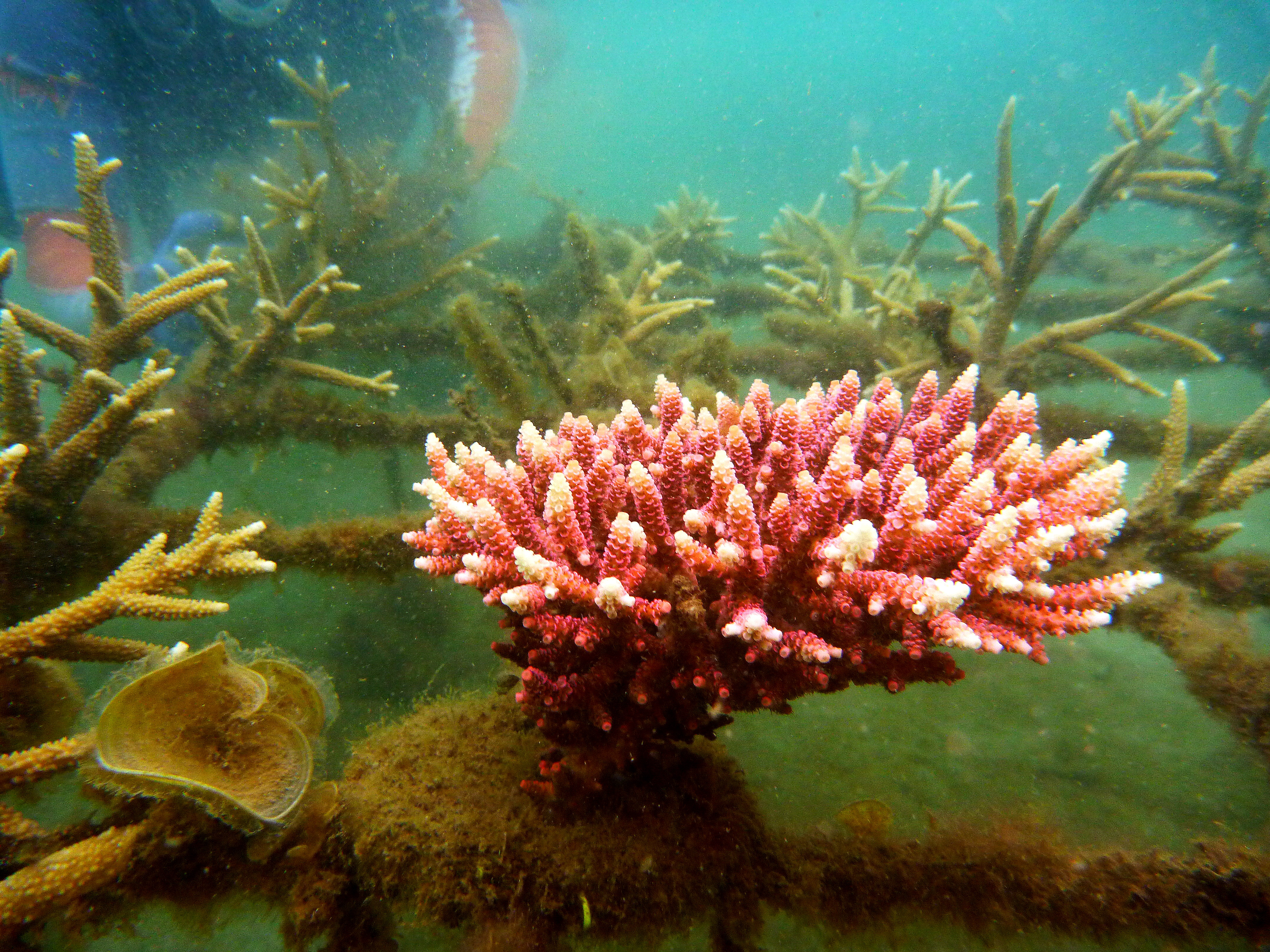
Nursery that propagates corals – pink corals, anyone?

Legaspi City Coral Nursery

Many local government units (LGUs) maintained nurseries, in agriculture parlance nurseries are where we nurture seedlings which shall later planted in its appointed time and appropriate area. It could be fruit trees seedlings, vegetable seedlings, flower and the like. In the waters, to preserve the reefs and provide shelter for the degrading marine life, many have adopted coral transplantation. Just like planting on the surface, selected seedlings are necessary to be nurtured and for this purpose that would need a coral nursery. Legaspi City is one the few local government units that installed and maintained one. It is a formidable task for the LGU alone, so in partnership with BFAR, BU, MCCF and Pacific Blue they established the facility. Last year, the brief encounter with Mr. Jin Masuda of Pacific Blue who was too optimistic on the success of the restoration efforts was too encouraging. For me, the importance of protecting and preserving marine resources can not be undermined. I just thought, this nursery is worthy for a visit!

Pacific Blue was kind enough to arrange one for me for free, the ICRM office was just beside the dive shop  and I had a good chance in meeting the sea patrol unit. Legaspi City is one of the few who are serious in the fishery law enforcement in their territorial waters which I found too interesting. I had a long surface interval discussing their activities, plans, difficulties, challenges as well as victories.
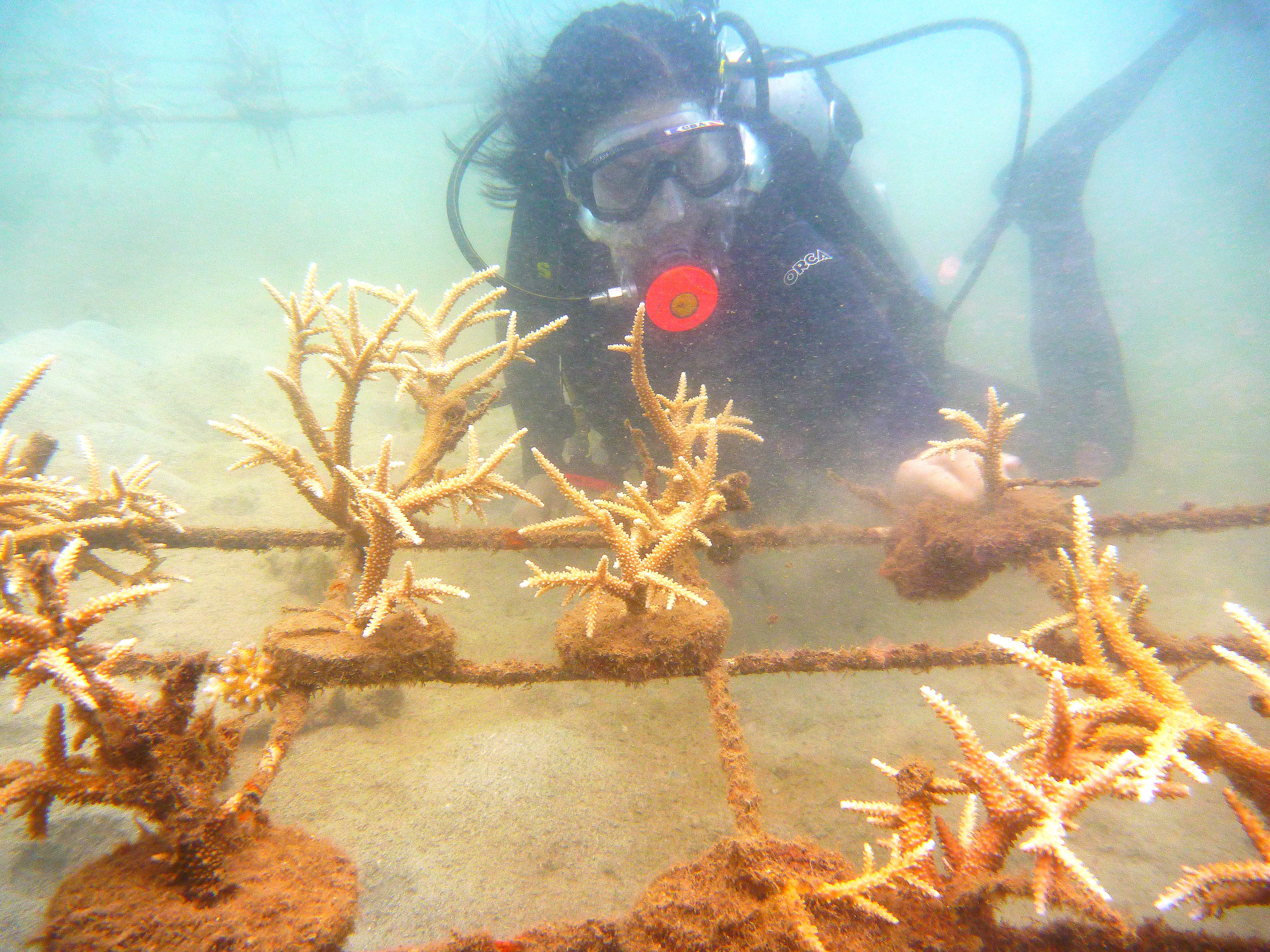
P1050133
Coral seedlings are branching out!
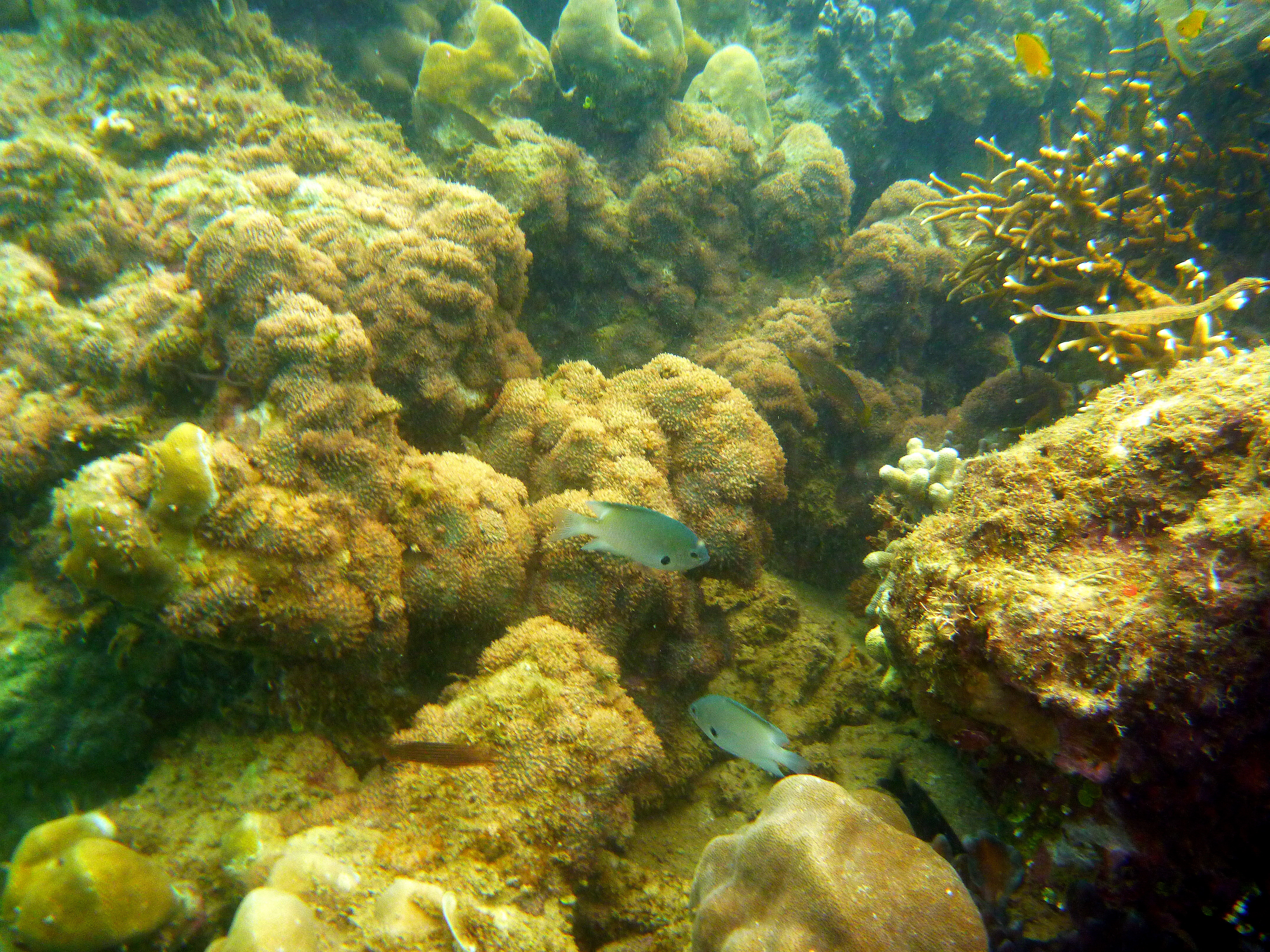
P1050137
Juveniles claiming their home in the restoration project

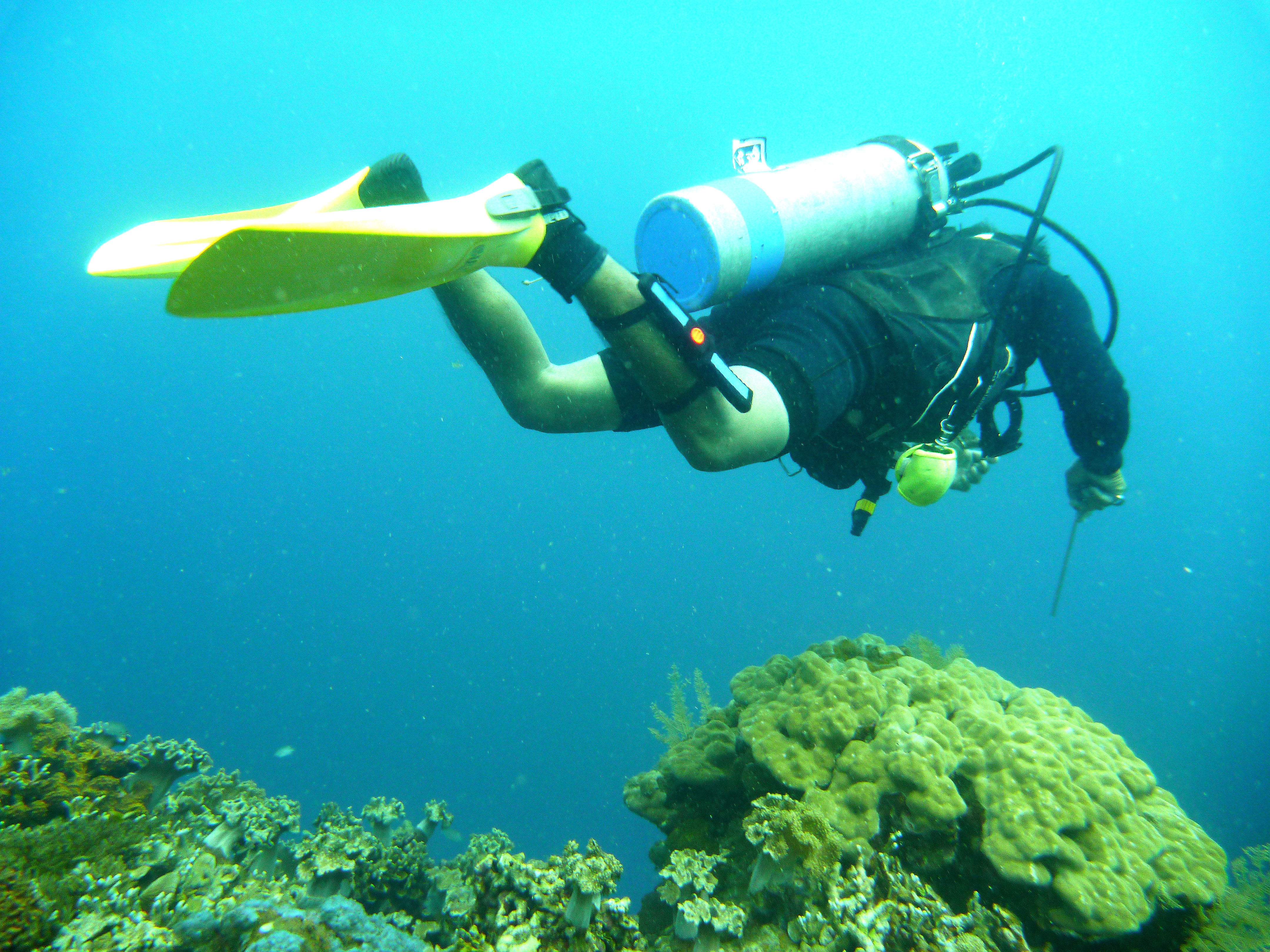
We trooped to the west end of the boulevard, took the ICRM boat donated by AECID  and had my third descent for the day enjoying the afternoon warm flat waters, I was bit excited what to find in the depths. It was only at 9 meters on a sandy area, it wasn’t long when we found the crates of the seedlings. Their technology is different from the Linamon Project but all the same, the seedlings are allowed to grow first before the transplantation. The corals are sourced out in the nearby for adaptability advantages. My two companions – Ato of ICRM and Jun of Pacific Blue got instantly busy. Cleaning, arranging and inspecting the crates. They went around from end to end, later they told me they were searching for thatone missing crate which I had no idea while down there. We found it like 20 meters away from its original location. The newly transplanted corals in the area thrive well and juvenile fishes were roaming around.

After 40 minutes of going around we ascend, it wasn’t really long (I could have stayed longer I still have much air) but what a great privilege to be one of the few who witnessed such uncommon but very beneficial project for the marine world. Mr. Masuda is right, in five years Albay Gulf would be carrying in its bosom a colorful, active, rich and productive reefs. The home of Mt. Mayon is more than just its alluring surface, something is more fascinating in its depths!

NB This is dedicated for the World Ocean’s Month

AECID  – Spanish Agency for International Cooperation and Development
ICRM    – Integrated Coastal Resource Management

Sea Fan

Alcyonacea is an order of colonial cnidarians found throughout the oceans of the world, especially in the tropics like the Philippines. The name “Gorgonacea” is no longer considered valid and Alcyonacea is now the accepted name for the order. Gorgonians as they are called are also known as sea whips or sea fans and are similar to the sea pen, a soft coral. Gorgonians are closely related to coral. Individual tiny polyps form colonies that are normally erect, flattened, branching, and reminiscent of a fan. Others may be whiplike, bushy, or even encrusting. A colony can be several feet high and across but only a few inches thick. They may be brightly coloured, often purple, red, or yellow.

Last March while diving in Albay Gulf, it was surprising there were abundant sea fans in Pasig Out and Itom na Buya sites, I was quick to presume that its environment has started to regain its balance. Fan are normally feeding with planktons and particulate matters, obviously its waters now healthy enough to contain such compounds enabling the food chain of existing marine life.  The area is laden with currents, although it wasn’t strong during our dives.

Gorgonians are classified in Cnidaria alongside the orders Alcyonacea (soft corals) and Pennatulaces (sea pens). There are about 500 different species of gorgonians found in the oceans of the world, but the are particularly abundant in the shallow waters in Indo-Pacific like the Philippines.

Deeper in Albay (Part I)

P1050078
We were floating over a wide expanse of corals!

After discovering over a year ago that Legazpi has diving opportunities, I was back to explore Albay Gulf. It is not really known for scuba diving, I just thought it isn’t much exploited and it would be less crowded and I would have enough time taking it slow, down in the depths. Craning my neck looking for Mt. Mayon as my plane prepared for arrival, she was hidden by clouds even as we touched down. Seeing her countenance everyday was another inspiration for my three-day get away. I was noting mentally my to do’s for the day as I headed for my new house at Mayon Backpackers, located perfectly in the downtown area bit far from the dive shop. But going around the city all by myself was just as interesting as discovering one new place, surface or in the depths.

Morning Delights

My diveshop was too kind to arrange for my pick-up and being early had given me enough time to take it slow as I wait for my companions. Indeed, it wasn’t congested there were only two of us as their guests, I was joined to a 67 year old Japanese who just earned his certification few months back. Taking it slow as I wish!

P1050069
Bubble corals were also abundant!

We cruised shortly to our first descent, DM Almar briefly introduce the site which they called as Itom na Buya (Black Bouy) which I presumed originally marked with black bouys. Mr. Jin Masuda of Pacific Blue have mentioned that restoration of the bay is on-going but it was surprising that the area was colorful and was filled with variety of corals including wide sea fans in different hues. Although the fishes were juveniles but it wasn’t totally devoid of marine life and it looks healthy. There were bubble corals, branching corals, rubber corals, whips, ferns, and feather stars. There were occasional juvenile nudis, and we found a shrimp lurking on the coral. We ascend after 47 minutes with air at 80 bars, my deepest was 25 meters.

P1050074
There were lot of sea fans

Our second descent was in Pasig Out (there must be Pasig In!), a sandy slope which is not really far from dive shop shores. Our first sighting was a tombstone of diver who lost his life in accident while diving many years ago. It still standing there now covered with fossilized parasites. For sure, diving in Albay wasn’t something new and maybe the diver or the accident has been forgotten buried from lapse of time . Corals also abound in the area – bubbles, rubber, staghorns, spirals, seafans, whips, squirts and even crown of thorns. Although there was an area of coral rubbles the reviving and flourishing marine life is imminent. Juvenile fishes are contently hovering over corals! At noon, the waters went choppy already, not wanting to stay on the surface longer I carry my tank on my own.  We ascend after 40 minutes with air still at 100 bars, my deepest at 22 meters.

P1050098
Juveniles wiggling among the corals, marine life is obviously thriving in the area!

The view was perfectly glorious, my ascents and descents were decorated with the view of Mt. Mayon, watching her from the waters in a different angle was a unique experience! It was a great morning for our descents and my afternoon was more interesting. I had a long interval for my third dive which deserves another write-up. Taking it slow, you know! 🙂

Cleanup Ideas for World Oceans Day!

world ocean day 2015Cleanups are a great way to bring people together and enact actual change for the local environment. But what can you do with a beach clean up to make it unique? Well for starters you don’t have to clean up a beach! Here are 6 quick ideas for holding a cleanup on World Oceans Day – or anytime you want to do something for your community. Click here if you’d like to download a full-length aquatic clean up guide.

1. A clean watershed makes a clean ocean
Beach cleanups are great, but your event doesn’t need to be at the beach. You can stage a cleanup at the local watershed, river, wetland, or even underwater. Removing trash everywhere helps the ocean.

The Instituto EcoFaxina in Brazil focused on their local mangrove forest for World Oceans Day 2014 and removed 274 kg of trash! They learned about the importance of reducing plastic and recycling, while helping out their community.

2. Include everyone
Try to have activities for all ages and skill groups to do, and make sure to have relaxing ocean activities for breaks.

3. Go underwater
Even if you don’t participate in the activities yourself, try to involve local interest groups such as divers or surfers. For them, the health of the beach environment is directly important to their day to day life and they may want to help out.

4. Celebrate!
Have a fun activity planned for after the cleanup. Perhaps a beach BBQ, or a bonfire with s’mores. It’s a great time to get together and hang out with your local community of ocean lovers.

The group Sager der Samler in Denmark celebrated a successful harbor cleanup for World Oceans Day 2014 by enjoying a barbecue and live music together. Their event also included a large group of people including; sailors, rowers, divers, and anglers. According to organizer Paul Natorp, the day was great because it not only cleaned up the harbor, but strengthened bonds between the different groups who used it.

5. Get competitive for a cause
Why don’t you turn the day into a trash competition? Form teams and whoever picks up the most trash can win a prize (perhaps a WOD T-Shirt each).

6. Refresh: reduce, reuse, recycle
Afterwards you can refresh everyone’s knowledge of how to dispose of trash and recycling. Perhaps you can challenge the younger participates to reuse some of their own “trash” (such as water bottles from home) for crafts.

Have you ever participated in a cleanup? What happened in it that made it fun or unique for you?

NB. An article by Caty Fairclough for http://www.worldoceansday.org