Albay Waters by Chance!

Giant clams seeded in Misibis Bay waters

Albay Gulf is a promising dive destination and I was fortunate to learn that there is an ongoing restoration works on damages due to dynamite fishing. My brief encounter with Mr. Jin Masuda, the Japanese director of Pacific Blue have raised hopes, that the surrounding waters in the region would flourish and its resources more productive, in due time the most could be five years. The diveshop in coordination with BFAR, BU, MCCF and other groups collaborated on coral transplantation and restoration, it is a formidable task but he was optimistic that the works would largely improve the marine environment in the gulf. The documentation showed the growing transplanted branching corals and juvenile tropical fishes that started to multiply in the area. For sure, the cooperation of fisherfolks in the coastal communities would be necessary for its success.

In recognition to the growing importance of responsible and sustainable tourism, Misibis Bay too has pledged its commitment to protect the environment and to improve the livelihood of the local community through its Misibis Bay Coastal Care Foundation (MCCF), a non-profit organization launched in 2009 dedicated to the implementation of various conservation projects like coastal and underwater clean-ups, giant clam planting to promote coral reef growth, solid waste management, and monitoring and prevention of illegal fishing.

Unknowingly our side trip to Misibis Bay the next day gave me the chance to dip in the waters, but not diving – it was too expensive I cringed as I inquired for the rates! Snorkeling was allowed for free, three other workmates signed up to join me. The resort has established a marine sanctuary as an added attraction of its properties. The skies were downcast but we were in high spirits for a swim, we were in good mode as we rolled off for the diveshop. The facility was off the coast near a patch of beach at the far end of the cove. We descend as it started to drizzle, our guide was insistent that life vest is a requirement as we snorkel. We were not disappointed – giant groupers, snappers, parrotfishes, sweetlips, rabbitfishes and more tropical species swarmed near the shelter. The guide pointed few of the giant clams gone a stray, he said more of its population were seeded in the deeper part. So diving in the area will include the viewing of the giant clams, unfortunately the rain started to pour we were not able to swim further. My companions suggested to end our swim as the rains continued pouring and the waters getting colder.

With this development no doubt the region is a potential as a new diving destination in the future, its attractions more than just on the surface but beyond, in its mysterious depths!
NB. Photo credits to http://www.gophilippinestravel.com

CHOICES for the Great Beyond

P1040627
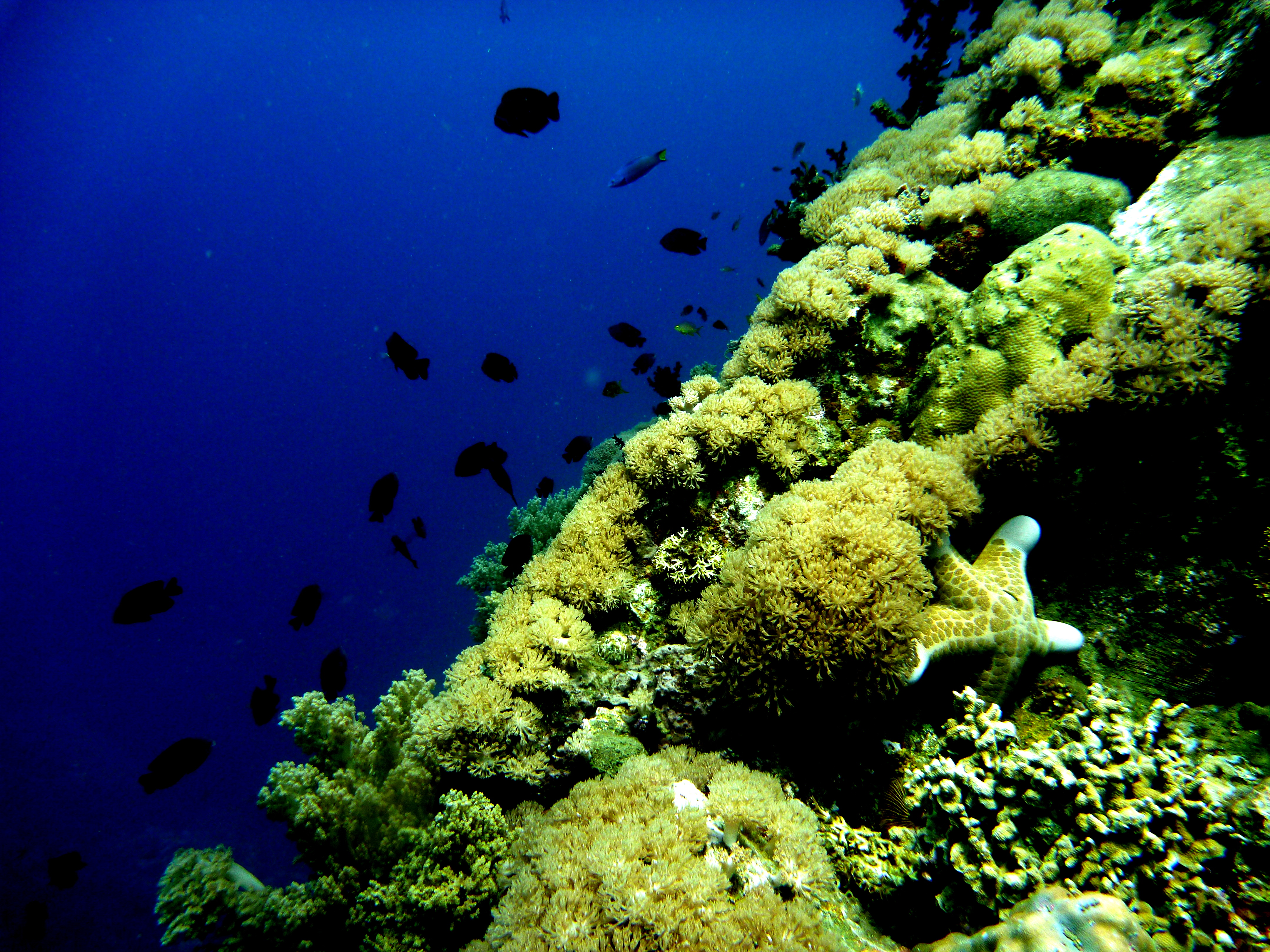
An explosion of colors in the depths, slowly deteriorating and maybe lost if we do not do something about its protection and preservation…

The choices we made reflect more of who we are, far more than our brains, skills and abilities…..

Our impact on land is important just as in depths, our choices as human beings has effects either blatantly or subtly. Years back, I was struck realizing that marine world is in great peril, the value of the reefs can never be underestimated. Human induced global warming now poses perhaps the most serious threat of all, the evidence is very visible. Before it leads to extinction, protection and preservation are all necessary with consuming effort by humanity.

Questions to Ask

Do I really need that car journey?
Do I really need all those plastic bags at the supermarket?
Do I need to fly as often as I like?
Do I really need products with all those packaging?
Do I need to change towels everyday?
Do I need all these dust-gatherers in my room?
Do I need to indulge in the bath tub weekly?

Basic and simple questions that need simple but radical decisions and change of lifestyle, indeed conservation starts at Home. By this time, I believe many are getting the message. It’s not something new, and many are seriously involved now  more than just marine enthusiasts. Clover’s book, “The End of the Line”, stated that citizens need to reclaim their stake in the future of the seas.

Decisions, Mature Decisions

Do I need to dive weekly or monthly? Do I need to take advantage of airline seat sales? For almost five months I had no dives, I was like a fish out of water! I knew that my presence underwater has ill effects though subtly, it was difficult but that break provides space for my underwater friends. My presence is not necessary for them to survive, in fact it poses danger to them.

I haven’t flown for almost three months and my travels were limited to work that can’t be delegated. These “low cost” airfares are misnomer, actually there’s a great cost and we are all going to pay for it whether we fly or not. Take this, flying to Maldives emits tons of carbon dioxide, an effective way in helping to sink them. With that reality, I can not visit this marine paradise and explore its wonders if only to make them afloat a little longer. All my plane fare now includes WWF donation to compensate for my carbon- emitting flight.  A diver like me needs to rethink about limiting trips, and reducing ecological footprints.  As the saying goes, a true ecotourist never get on a plane!

Just mid of last week I had dinner with friends, trying this new food chain in town – the seafood is great according to them. Maybe, it was filled with people when we got there.  But I was aghast of the plastics they use – from plastic gloves (eat with fingers), plastic bibs or apron (it’s messy), camote fries was on wax paper, and the worst was – our one (1) pound hot shrimps with garlic/butter sauce was in clear plastic (food grade I hope) tied on its top end, delivered to us like a bag of groceries! I can not imagine the bulk of plastic garbage they dumped everyday in the land fill, most likely tons – it was disgusting! I know I have no good reason to be back in that resto.

Seriously, if we need to make a difference, difficult decisions has to be made. I believe that the greatest wisdom is being able to master the things that enslave us – our passions, desires and wasteful habits that tries to consume us but we can be free and rise above all of these, all for that greater love and passion of the great beyond.

Divers as Protectors of Ocean Planet

Camiguin Island Underwater Paradise
Just like climbers and campers have an ethic or code to live by – so do scuba divers. Project AWARE’s 10 Tips for Divers to Protect the Ocean Planet helps divers of all skill levels make a difference when they dive, travel, and more. Share the 10 Tips for Divers to Protect the Ocean Planet and do our part to take this ocean ethic to heart.

  1. Be a Buoyancy Expert

Underwater plants and animals are more fragile than they appear. The swipe of a fin, bump of your camera or even a touch can destroy decades of coral growth, damage a plant or harm an animal. Streamline your scuba and photo gear, keep your dive skills sharp, perfect your underwater photo techniques and continue your dive training to fine-tune your skills. Always be aware of your body, dive gear and photo equipment to avoid contact with the natural environment.

  1. Be a Role Model

New scuba divers are being trained and certified every day. Regardless of your experience level, be sure to set a good example for others when interacting with the environment – while underwater and on land. 

  1. Take Only Photos – Leave Only Bubbles

Nearly everything natural found underwater is alive or will be used by a living creature. If you take a coral, shell or animal, you can disturb the delicate balance and add to the depletion of dive sites for future generations.

  1. Protect Underwater Life

Choose not to touch, feed, handle, chase or ride anything underwater. Your actions may stress the animal, interrupt feeding and mating behavior or provoke aggressive behavior. Understand and respect underwater life and follow all local laws and regulations.

  1. Become a Debris Activist

An astonishing amount of waste makes its way underwater, reaching even the most remote ocean areas. Once there, it kills wildlife, destroys habitats and threatens our health and economy. Don’t let your dives go to waste. Remove and report what doesn’t belong underwater every time you dive. Make a conscious effort to buy green, buy local and, when possible, buy less.

  1. Make Responsible Seafood Choices

Overfishing leads to species declines while harmful fishing practices damage and pollute underwater ecosystems. You play a critical role as a consumer. If seafood is part of your meal selection, ensure you’re choosing sustainably sourced species and encourage others, including restaurants and shop owners, to do the same.

  1. Take Action

Scuba divers are some of the strongest ocean advocates on the planet. Now, more than ever, divers like you are taking a stand. Speak out for conservation, share your underwater images, report environmental damage to authorities and campaign for change.

  1. Be an Eco-tourist

Make informed decisions when choosing and visiting a destination. Choose facilities dedicated to responsible social and environmental business practices that include water conservation, energy reduction, proper waste disposal, use of mooring buoys and respect for local cultures, laws and regulations.

  1. Shrink Your Carbon Footprint

Global warming and ocean acidification are putting your favorite animals and the whole ocean planet at risk. Do your part by understanding and reducing your carbon footprint and look for ways to offset what you can’t reduce.

  1. Give Back

Ocean protection depends on all of our actions, large and small. Investing in the ocean protects our planet and lets the dive adventure live on. Donate or fund raise for ocean protection to fuel the grassroots action and policy change necessary to ensure a clean, healthy ocean planet.

We are all ambassadors for the ocean and we have every reason to be active in protecting the deep blue world given the privilege to explore and experience its beauty and wonders. What about you, how do you protect the ocean? If you are a diver, environmentalist, marine enthusiast or a concerned citizen, take the pledge and spread the word. The Ten Tips Action Kit is a great and friendly tool for your eco boost. Go ahead!

 NB. Source is www.projectaware.org

Unity for the Ocean We Love

The month of September is all too important to the diving community, internationally every third Saturday is declared as coastal and underwater cleanup. For the past years marine enthusiasts and environmentalists gather together sharing resources and time and for this endeavor. They have gone a long way to protect and preserve our oceans and the amazing life that contain our vast waters.

As a diver, I have always wanted to be part of it, connected with all other in the waters to gather trash and marine debris. So last September 21 together with my favorite dive buddy, we joined my dive mentors group at Opol Marine Sanctuary. Mario had coordinated with LGU Opol, XU McKeough Research Center (MRC), local tourism office and other groups for the clean-up. It was an opportunity to see him, meet other divers and to revisit the sanctuary which we dove three years back for the same purpose.

It was a sunny Saturday and Mario had been waiting for us at the resort, AJIS resort grounds was in cheery mode when I got there. We finally left at past 9am when Angel arrived from far-off Languindingan airport, heading for Sakayan to transport us all off coast Opol waters. It was unfortunate I forgot our net trash bag, the surface seemed clean but the underwater held surprising debris. I descend finally with Angel after I surfaced shortly to change my BC as it kept inflating, making it hard for me to control my buoyancy.

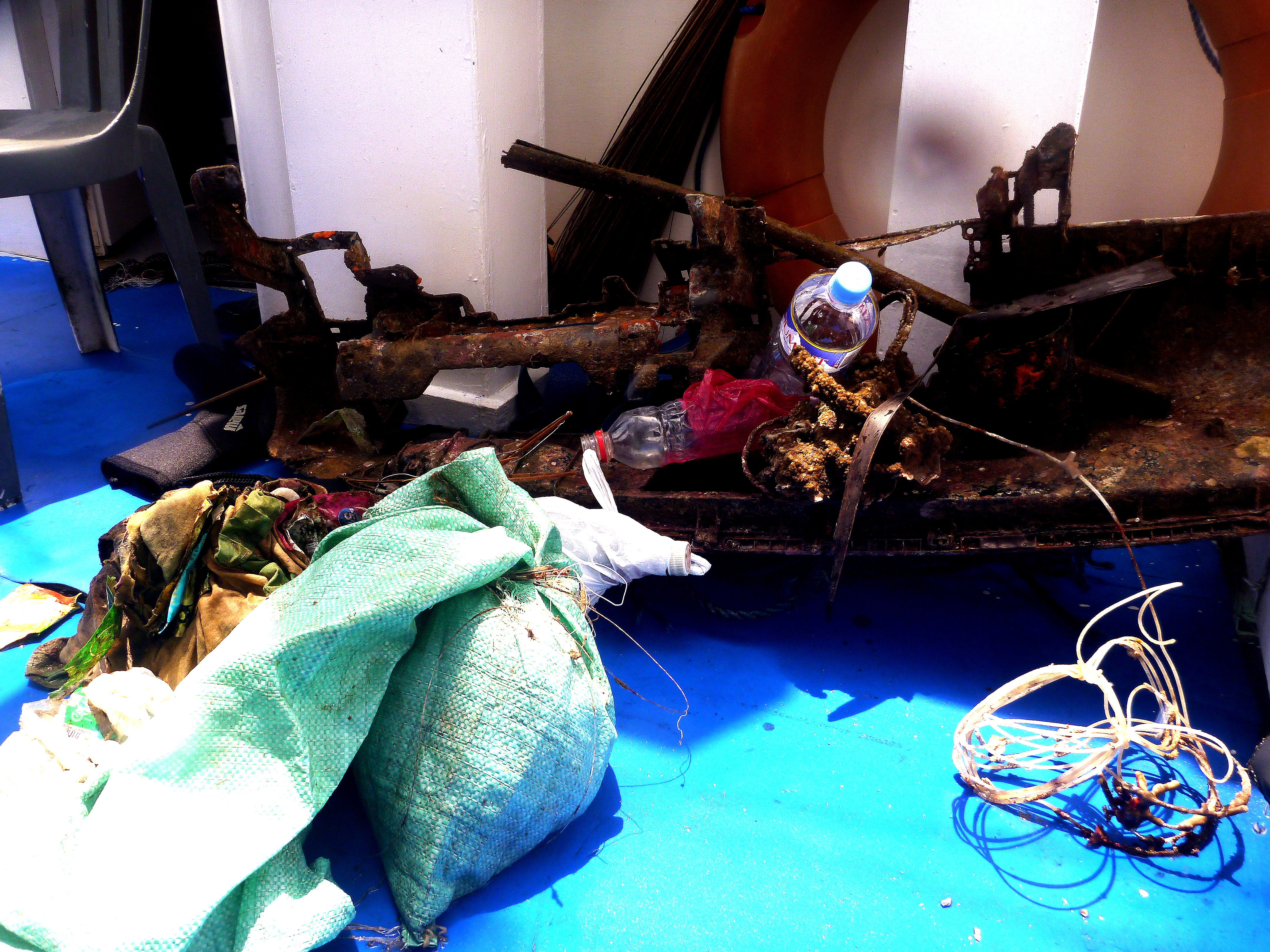
Opol is one of the town facing environmental safeguards issue, in fact it was one of the areas that suffered the devastation from Tropical Storm Sendong in 2011, small scale mining upstream made Opol river murky even without the rains. This unwanted sediments flowed into the Opol seacoast which affected the marine environment. But judging from what we saw, there has been much improvement underwater three years ago. The visibility was good and there were more tropical fishes roving the area. Healthy corals around the sanctuary are now abundant, I sighted giant clams and colorful nudis, Angel found a moray which quickly hid when I got near. Yes, we found trashes – plastic bottles, sachets, plastics, clothing and a large tire! Unfortunately, the tire was too heavy we need flotation device to carry up to surface. It was a productive dive and I was wishing for another descent – our one hour underwater was just too short for that sunny day. The water was too reviving for my dried-up gills! It was my fourth year to be part of this undertaking and I was thankful my favorite dive buddy came over for the dive clean-up here in Cagayan de Oro.

P1040370
Debris we gathered from the dive cleanup!

Let us not forget that this fight is not just once but whole year round. It’s a diver’s lifestyle, a habit, a pledge to fight the ocean silent killer. We can all do it!

Dive Against Debris

AWARE-DAD-Banner-2013

The world we have created today as a result of our thinking thus far has problems which cannot be solved by thinking the way we thought when we created them. ~Albert Einstein~

Scientists think over six million tons of marine debris are entering our ocean every year. One can just imagine the volume of underwater trash that threatens marine life, destruction is evident and many documentaries can only reveal the devastating effects of these wastes. In my own diving trips, the disheartening sight of trashes is very common – either on the shores or floating on the waters or underwater. Definitely, the debris don’t belong to the waters – so pathetic! But we are not hopeless, the global diving community have focus on battling the ocean’s silent killer from beneath the surface.

This September – Debris Month of Action – let us join to combat the growing marine debris problem and inspire year-round action to remove, report and prevent underwater debris. Volunteer this September for this drive and be counted, join a group event or grab your dive buddy and report your data. Moreover, make this a habit, let us pledge to dive against debris all year, a lifestyle we must maintain. Together, we can stop marine debris by taking local action and supporting policy change. By submitting your underwater data on an ongoing basis, we’re one step close to prevention.

Let’s join the fight against the ocean silent killer!