Siquijor: Pristine Paradise, Surface and Beyond

P1050337
The iconic St. Francis of Assissi Church welcomes you to Isla de Fuego!

The pristine waters of this idyllic province which is a come-on for tourists is no doubt one good reason for water enthusiasts to tread its depths. We have been planning to be back not just for a detour but to explore the deeper vista of Isla de Fuego. Five years was long enough for the wait and making most of a long weekend in June, we finally made it. Cherry, Angel and I was looking forward for this passage, my tickets were bought in last November yet!

The heat and humid air suggested for a long summer, the weather perfectly cooperated our cruise from Cebu to Tagbilaran, to Dumaguete and finally to Siquijor. Angel joined us in Dumaguete port to Siquijor under the scorching heat. The low tide perfectly revealed a long stretch of white sand shores as we step on the port. Local kids swam and enjoyed the waters, how alluring that even the port offered an immaculate scene and unspoiled view of the province!

Sandugan Beach
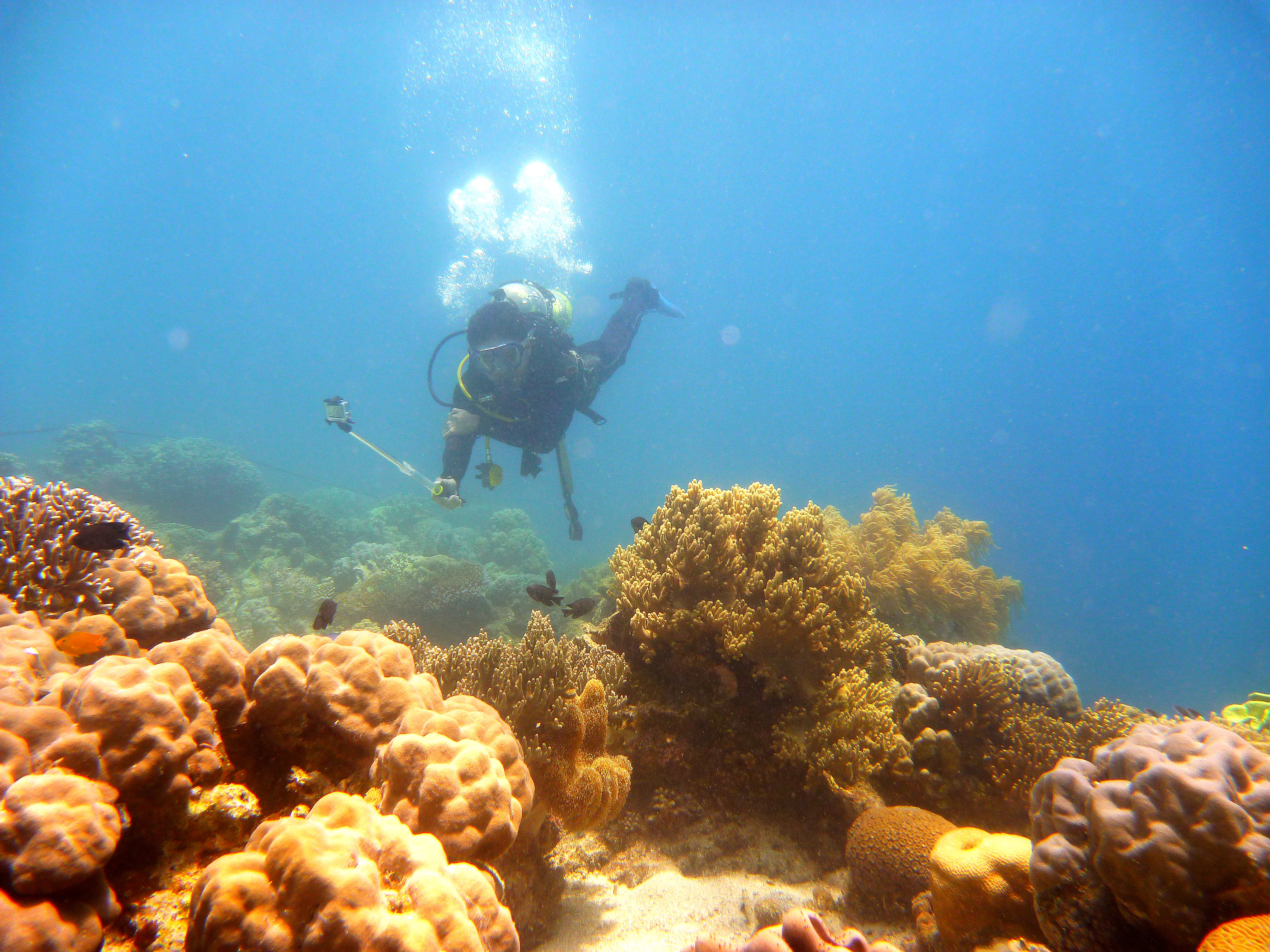
P1050444
We lingered over a wide area of colorful corals

Our booking was in Kiwi Dive Resort, a self-contained and homey refuge that offered everything we need – diving facility, lodging, food and friendly staff. The tricycle we hired from the port brought us south of the island in Larena, and later served as our transpo as we went around making most of the remaining hours before dark. We need to show Cherry around, we ended up in Salagdoong Beach passing the picturesque mini-forest already dark, yet in a festive mood which gave us a reason to linger – and munched the pasta, bread and cold cuts we had. We wanted to stay longer until our trike summoned us for our ride home.

P1050398
I was inside a small cavern watching the golden cardinals swimming around the entrance

The next morning was gloomy as if a storm was coming, but the waters was perfectly calm for our two dives, our DM Raul had an interesting flair as he briefed us and told about possible sightings. Our first descent was a boat dive, we cruised shortly to Sandugan Canyon which our DM suggested as replete with critters but not with pelagics.
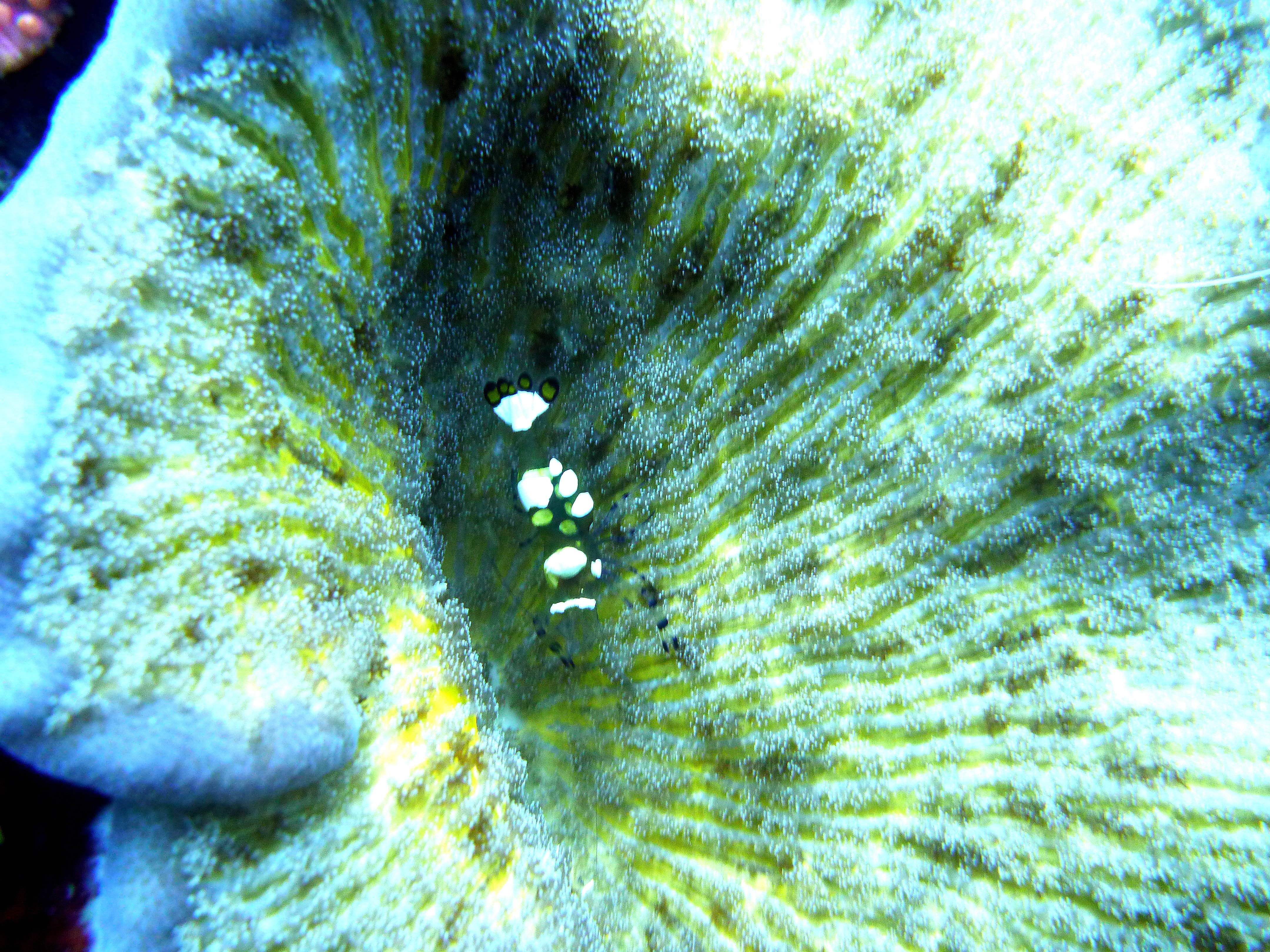
P1050420
Look closely, can you see it? 🙂

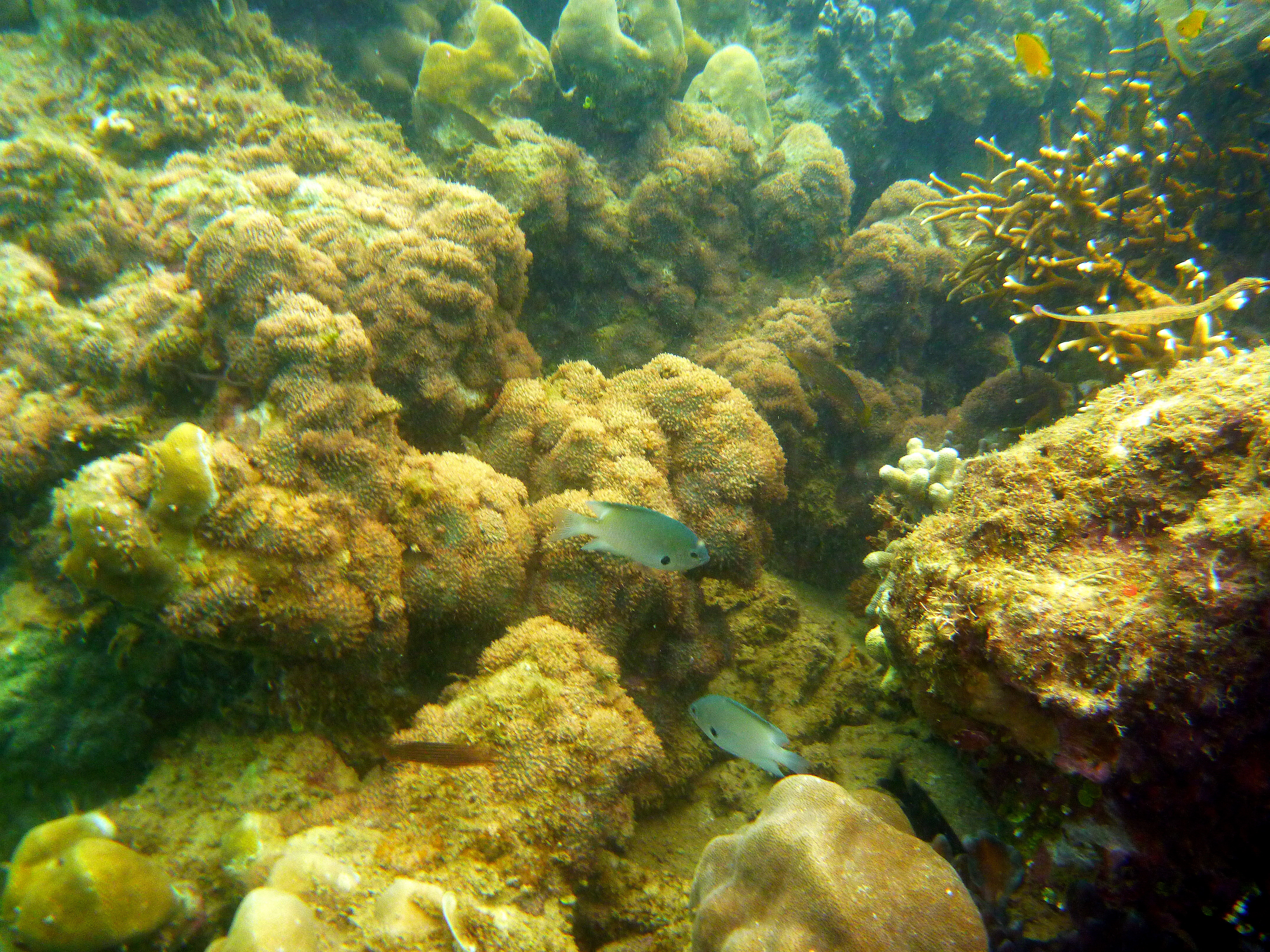
It was a wall dive and indeed, there were variety of nudis – in different bright colors and sizes. We entered a cavern which housed variety of fishes, the herd of golden cardinals swirling around as if disturbed by our presence, was a sight to behold! I stayed longer feeling the serenity and warmth of the scenery. We found more nudis as we went around, cleaner shrimp and variety of juveniles. We went over a wide coral area, in different colors and assortment. After twelve weeks of lull, it felt good to be back in the depths. We ascend after 65 minutes! 
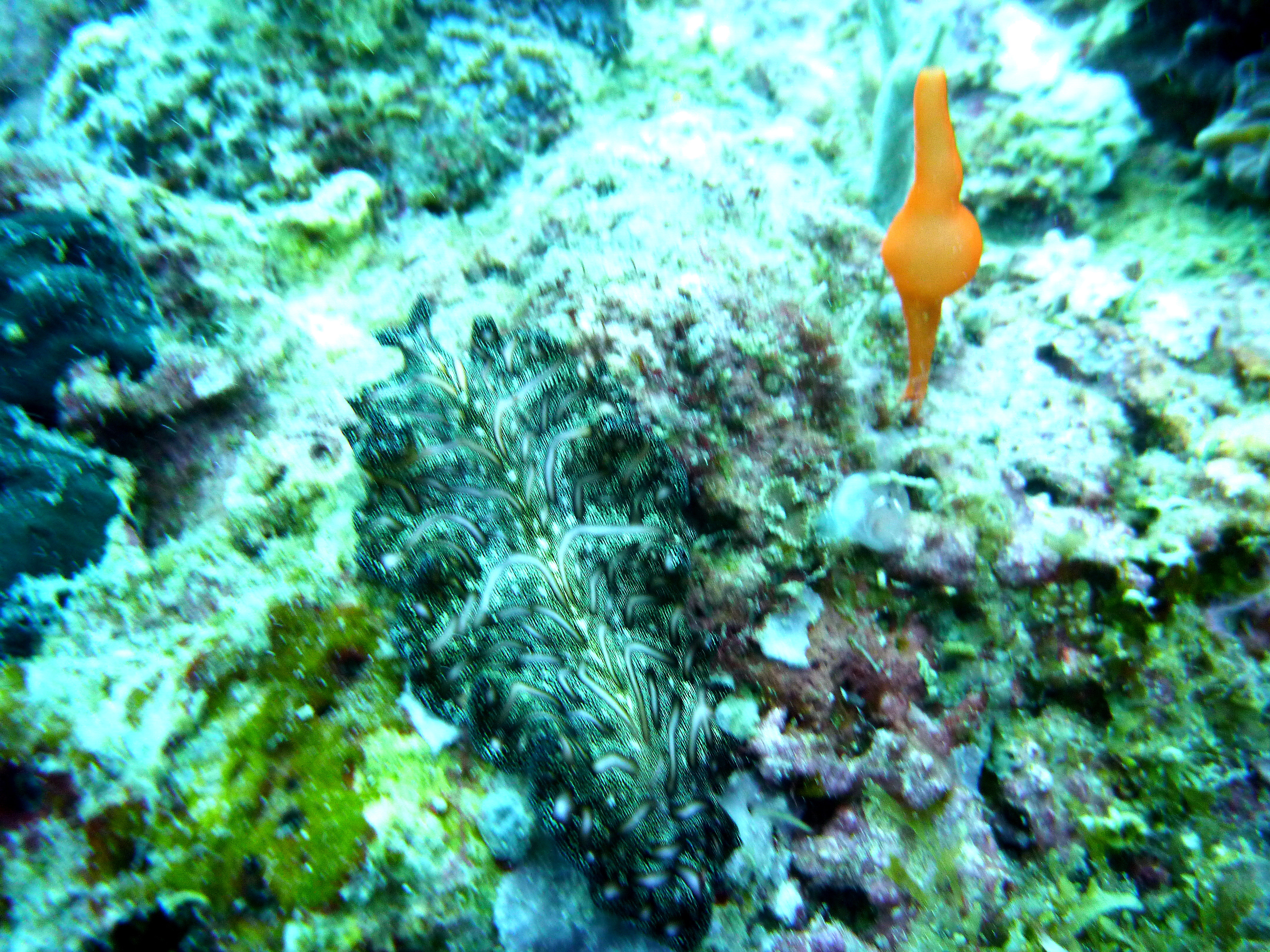
P1050431
The graceful Bedford’s Flatworm surprised us!

After an hour of surface interval back at the resort, we head for our next descent at the  Sanctuary with DM Cedric , it was a sloping sandy area and as soon as we were down, a sea moth was resting mimicking the sand’s color! It was my first sighting of the specie, but it didn’t swim, or fly – the sight of a sea Pegasus flapping its wing-like pectoral fins would be an interesting sight. We sighted also garden eels peeking on the sand but quickly disappear as we got near. There were a lot of nudis again, and swam over a wide coral area. The unspoiled marine environment was inspiring, less exposure to threats could only mean healthy marine life. Less population, less pollutants, and rare disturbance is always an advantage. We ascend after 66 minutes with my air still at 90 bars!
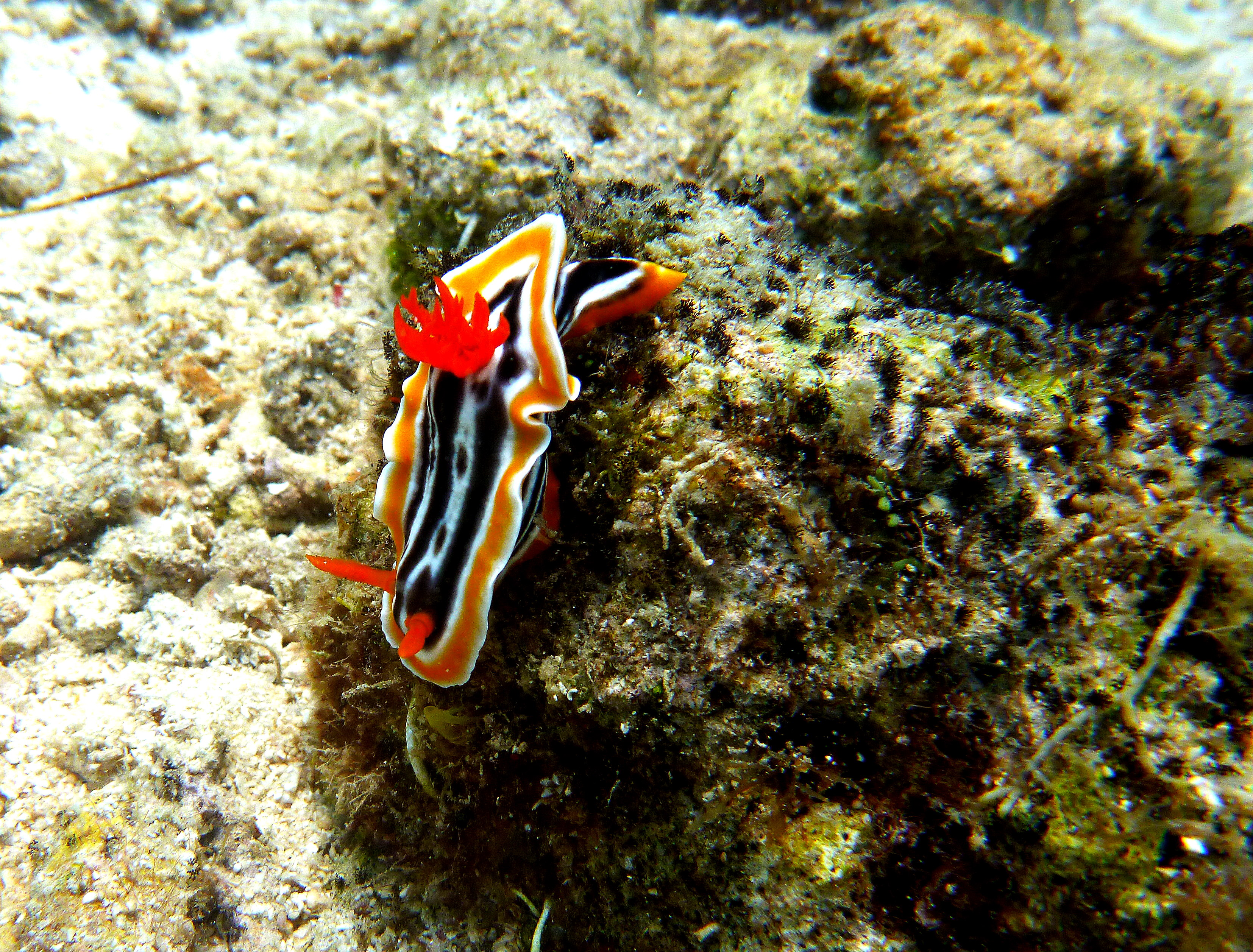
P1050409
This striped pyjama nudi gave a colorful touch among the corals

Meeting A Shaman

Until today, the island is still known for shaman and healers, and many anecdotes have been passed around. Some even have reservations visiting Siquijor for this reason. Seeing one is a welcome thought but have never expected we had the opportunity. But our guide cum driver was enthusiastic to suggest we should visit, he knew one who have healed him and provided help when once he lost his wallet. So, we made most of our time as we wait for the last trip boat for Dumaguete. It was a brief encounter but his stories were more than enough to compensate for our long wait as he went out for a patient. Perhaps, beyond what we see on him was some supernatural powers to read our appearance!  He was normal though, like us!

P1050367
The balmy sundown at Kagusuan Beach!

Coming again in Siquijor is not impossible, with the wonderful discovery we had on its depths it is another destination in Central Visayas worthy for another visit in the future!

Have you been to this island?

Snorkeling Wonders

P1050481
Sea turtles are a common sight in Apo Island!

Indeed, the Philippine waters for me is the best snorkeling arena. It holds never ending possibilities for water adventures. As an archipelago, it has long list of remarkable destination for snorkeling not to mention diving, from coast to coast and from one island to another. Just like diving I can do it whole year round without waiting for specific season, the waters just waiting to be explored. The first half of the year gave me opportunities to discover and rediscover marvelous realms allowing my body to float, relax and wonder in nature’s wild in the depths. And yes, the great depths will never exhaust its mystery, infinite as ever and it could only stir up one’s curiosity. My snorkeling expedition in the past months had fanned my increasing love and passion for the blue world.

Donsol for Whalesharks
Location: Donsol, Sorsogon

The quest for Donsol was finally realized in March, the long wait was compensated with wonderful sightings. It is however, an advance open water snorkeling – that’s how I described the rigidity of finding these gentle giants. It requires agility and speed, sharp eyes is also a must. I think the slow and inattentive would never see one, in a blink of an eye they were gone. Again, only the focus mind will experience the magic.

whaleshark2
The first whaleshark we encountered in Donsol was this big. Such adrenaline rush!

Donsol indeed is gifted by nature with rich waters that it maintained its breeding grounds for the largest fish. This once sleepy town suddenly become a flourishing destination and sought out by many, local or foreign.

Jellyfish Lagoon
Location: Bucas Grande Group, Surigao Norte

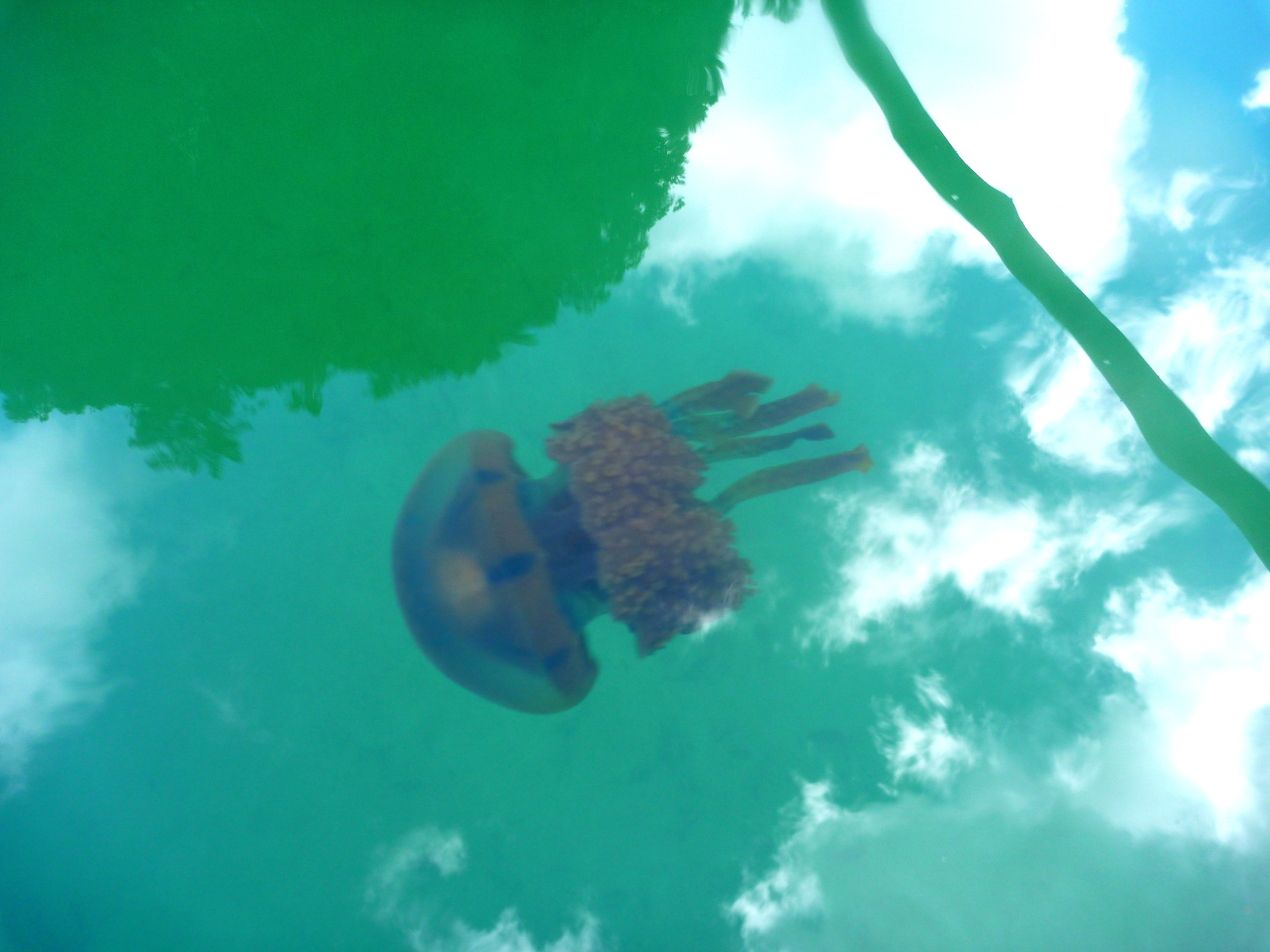
I went for a quick visit in Bucas Grande group in April to savor its homey environs and I was blessed to catch up the stingless jellyfish in Tojoman Lagoon. Although not yet in full season, their presence have warmed my heart, and added joy in my homecoming. I swam with them again silently, just floating side by side and watch them pulsating. I was wondering if ever they saw me, because they were never disturbed of my presence. My jelly friends were always there to welcome and swim with me. P1050180 Snorkeling in the emerald waters in the lagoon always highlighted my trip to the islands.

Apo Island
Location: Dauin, Negros Oriental

Perhaps, there is no other richer marine sanctuary I visited than Apo island, its shallow waters was teeming with marine life I can only find in the depths of other sites. We were lackadaisical in our dive plans in Dumaguete, we just trusted the diveshop so we left everything to them, our June dive trip was pure bliss! And it was a blessing again our dives were in Apo island, I remembered the rich encounters we had five years ago! So I had the opportunity to snorkel and explore its shores during our surface interval. It was much longer as we expected, our lunch break was more relishing after my wonderful sightings.

P1050479
The lovable sea turtle never cease to amaze me!

I got down from our dive boat, wade in the waters and swam in the sanctuary, allowing my body to float freely in the shallows.  It wasn’t long before I found many sea cucumbers scattered around in different species, size and color. Then beyond were two turtles, rummaging the corals around, eating moss and occasionally swam up for air. Such a beautiful sight! Perhaps I don’t look threatening, they were never disturbed of my presence as I watched them silently. I sighted banded sea snake also.  I can’t get enough of gliding through the waters and marveling at the corals, colorful fish and plants. There are over 650 species of fish and 400 different species of coral in the protected waters around Apo Island, which is why the island is such a popular dive spot – even included in the 100 best diving sites in the world.

Yes, it happened from north to south through the islands – in Luzon, Visayas, Mindanao! Have you gone to these sites? If you do, bring your mask & snorkel next time and discover how rich the waters right here in the Philippines arena!

NB.  Photo of whale shark in Donsol is courtesy of Angel 🙂

Sea Pegasus

P1050411
The seamoths belongs to the family of fishes, the Pegasidae, within the order Gasteroteiformes.  They are named Pegasus , like the creature from Greek mythology. Seamoths are notable for their unusual appearance, including flattened bodies, the presence of large, wing-like, pectoral fins, a long snout, and a body encased in thick, bony plates.  They could look more attractive if swimming showing off their wing-like fins, appearing like a small dragon on waters.  They are found primarily in tropical waters like the Philippines.

We had this encounter during our last dive in Siquijor, our DM briefed us on our second descent that the site is a haven of seamoths.  Indeed, as soon as we slowly sunk on the sandy slope, our first sighting was the pegasus above colored like the sand where it was resting.  It was my first encounter of the specie. I was wishing it was swimming or flying when we found it, showing its splendor as the pegasus!

Have you had an encounter with seamoths or sea dragons?

Deeper in Albay (Part II)

P1050112
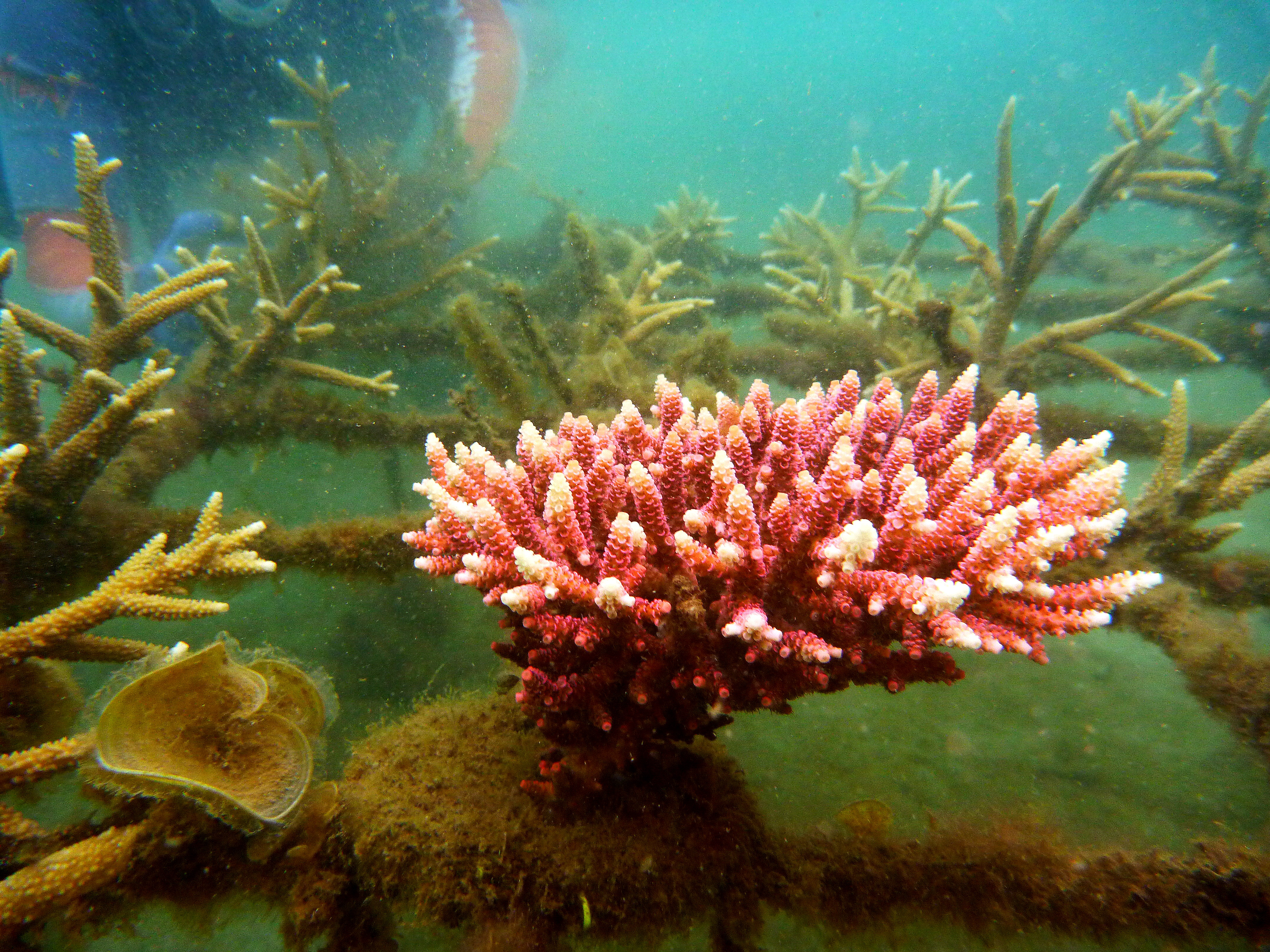
Nursery that propagates corals – pink corals, anyone?

Legaspi City Coral Nursery

Many local government units (LGUs) maintained nurseries, in agriculture parlance nurseries are where we nurture seedlings which shall later planted in its appointed time and appropriate area. It could be fruit trees seedlings, vegetable seedlings, flower and the like. In the waters, to preserve the reefs and provide shelter for the degrading marine life, many have adopted coral transplantation. Just like planting on the surface, selected seedlings are necessary to be nurtured and for this purpose that would need a coral nursery. Legaspi City is one the few local government units that installed and maintained one. It is a formidable task for the LGU alone, so in partnership with BFAR, BU, MCCF and Pacific Blue they established the facility. Last year, the brief encounter with Mr. Jin Masuda of Pacific Blue who was too optimistic on the success of the restoration efforts was too encouraging. For me, the importance of protecting and preserving marine resources can not be undermined. I just thought, this nursery is worthy for a visit!

Pacific Blue was kind enough to arrange one for me for free, the ICRM office was just beside the dive shop  and I had a good chance in meeting the sea patrol unit. Legaspi City is one of the few who are serious in the fishery law enforcement in their territorial waters which I found too interesting. I had a long surface interval discussing their activities, plans, difficulties, challenges as well as victories.

P1050133
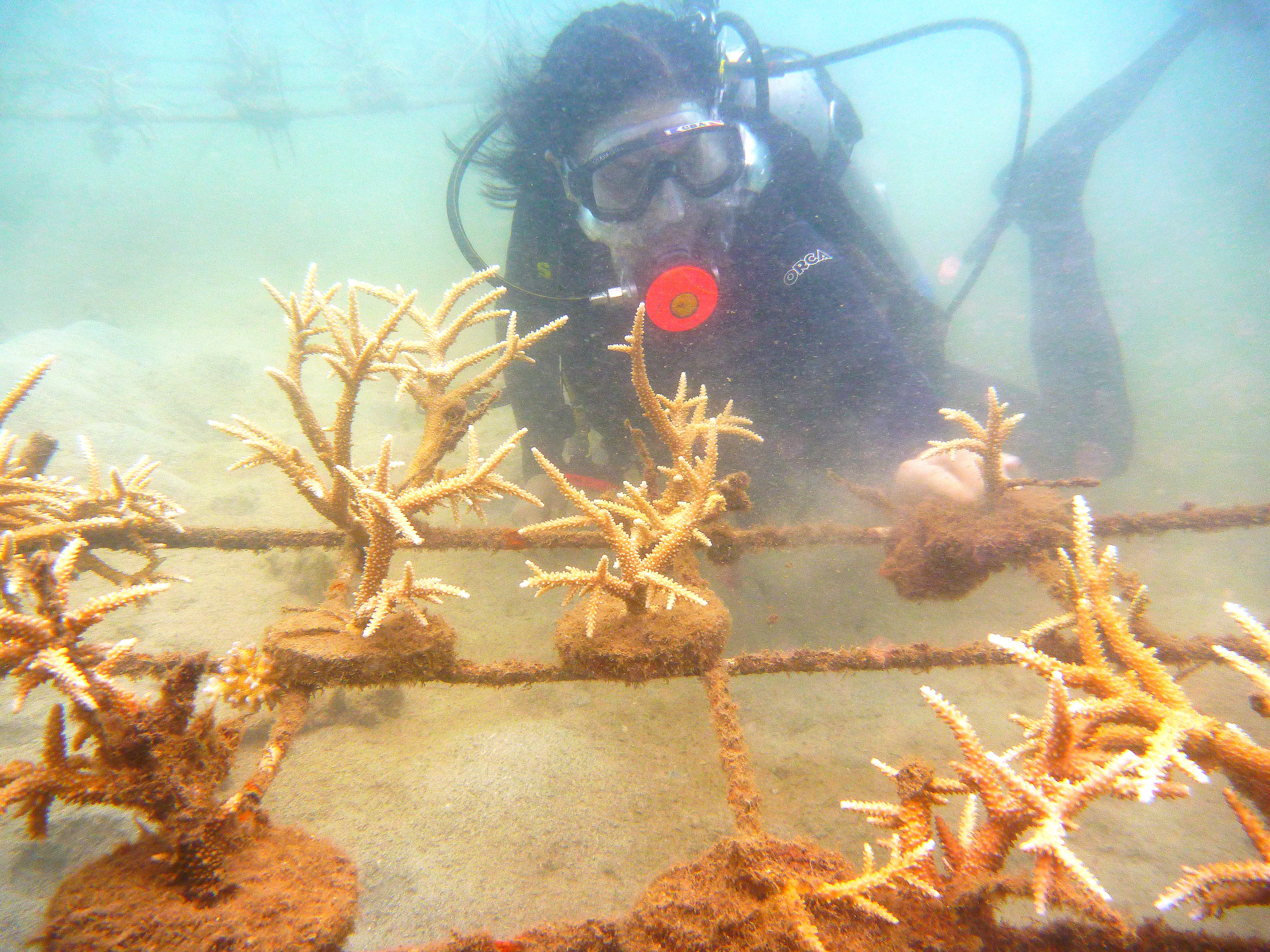
Coral seedlings are branching out!
P1050137
Juveniles claiming their home in the restoration project

We trooped to the west end of the boulevard, took the ICRM boat donated by AECID  and had my third descent for the day enjoying the afternoon warm flat waters, I was bit excited what to find in the depths. It was only at 9 meters on a sandy area, it wasn’t long when we found the crates of the seedlings. Their technology is different from the Linamon Project but all the same, the seedlings are allowed to grow first before the transplantation. The corals are sourced out in the nearby for adaptability advantages. My two companions – Ato of ICRM and Jun of Pacific Blue got instantly busy. Cleaning, arranging and inspecting the crates. They went around from end to end, later they told me they were searching for thatone missing crate which I had no idea while down there. We found it like 20 meters away from its original location. The newly transplanted corals in the area thrive well and juvenile fishes were roaming around.

After 40 minutes of going around we ascend, it wasn’t really long (I could have stayed longer I still have much air) but what a great privilege to be one of the few who witnessed such uncommon but very beneficial project for the marine world. Mr. Masuda is right, in five years Albay Gulf would be carrying in its bosom a colorful, active, rich and productive reefs. The home of Mt. Mayon is more than just its alluring surface, something is more fascinating in its depths!

NB This is dedicated for the World Ocean’s Month

AECID  – Spanish Agency for International Cooperation and Development
ICRM    – Integrated Coastal Resource Management

Sea Fan

Alcyonacea is an order of colonial cnidarians found throughout the oceans of the world, especially in the tropics like the Philippines. The name “Gorgonacea” is no longer considered valid and Alcyonacea is now the accepted name for the order. Gorgonians as they are called are also known as sea whips or sea fans and are similar to the sea pen, a soft coral. Gorgonians are closely related to coral. Individual tiny polyps form colonies that are normally erect, flattened, branching, and reminiscent of a fan. Others may be whiplike, bushy, or even encrusting. A colony can be several feet high and across but only a few inches thick. They may be brightly coloured, often purple, red, or yellow.

Last March while diving in Albay Gulf, it was surprising there were abundant sea fans in Pasig Out and Itom na Buya sites, I was quick to presume that its environment has started to regain its balance. Fan are normally feeding with planktons and particulate matters, obviously its waters now healthy enough to contain such compounds enabling the food chain of existing marine life.  The area is laden with currents, although it wasn’t strong during our dives.

Gorgonians are classified in Cnidaria alongside the orders Alcyonacea (soft corals) and Pennatulaces (sea pens). There are about 500 different species of gorgonians found in the oceans of the world, but the are particularly abundant in the shallow waters in Indo-Pacific like the Philippines.