Ghost Shrimp

P1040731

The Ghost Shrimp (also known as Glass Shrimp) body is transparent, and an orange to yellow colored spot is visible in the center of the tail. The body is segmented, and features ten sets of legs. The first four sets have tiny claws that aid the shrimp in feeding. Ghost Shrimp are relatively small invertebrates, reaching a maximum size of only 2″.

We found the critters off the depths of Pescador Island, west side claiming the sea anemone as their abode, silently crawling on the tentacles.

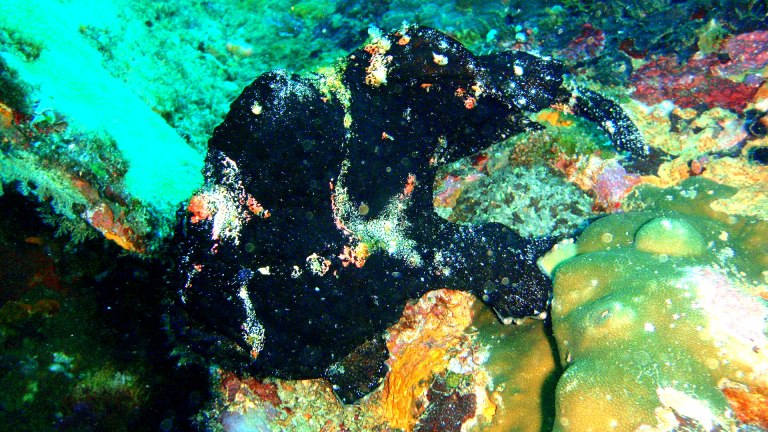
Black Frog

Back Frog

A good find in the waters of Sabang, Puerto Galera. This camouflaging frog fish was on  stone corals trying to blend with the colors. It was my first sighting of this black specie. Many species can change color; some are covered with other organisms such as algae and hydrozoa. In keeping with this camouflage, frogfishes typically move slowly, lying in wait for prey, and then striking extremely rapidly, in as little as 6 milliseconds!

Many frogfishes can change their color. The light colors are generally yellows or yellow-browns while the darker are green, black, or dark red. They usually appear with the lighter color, but the change can last anywhere from a few days to several weeks. It is unknown what triggers the change.

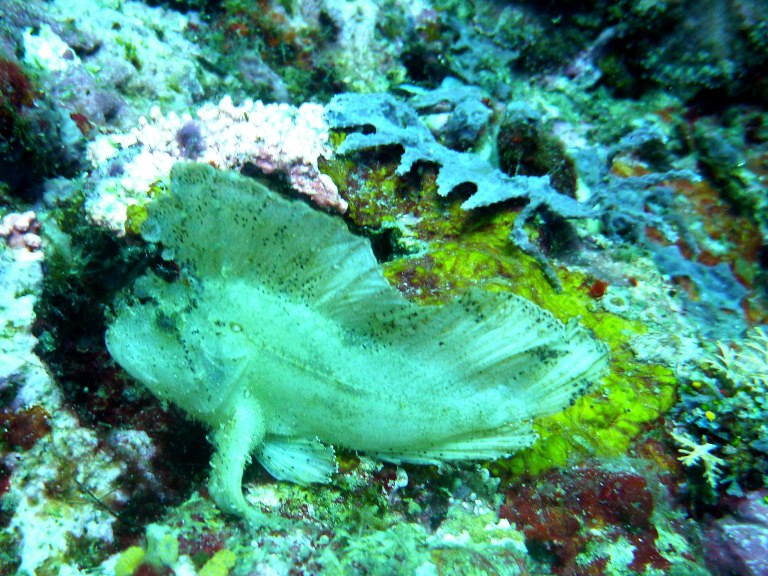
Leaf or Fish?

Leaf or Fish?

The leaf fish (Taenianotus triacanthus) resembles a dead leaf lying in the water. To enhance this camouflage it even makes gentle sideways movements in its pelvic area which make it resemble a drifting inert object. It is an ambush predator, waiting until a suitable prey, a small fish or shrimp approaches. Then it slowly moves with its pectoral fins close to the victim. When the leaf fish is close enough, the prey is sucked in by a sudden opening of its mouth. It eats victims up to half its body length but larger animals are completely ignored.

I was not expecting to meet her again at Banaug Shoal but she was there, silently taking refuge between soft corals as if swaying sideways by the current. It is just one of interesting residents in the house reef.  Simply beautiful …

Season’s Greeting from Underwater World

There are around 10,000 species of bristleworms, almost all of which live in the sea.  They live in plankton, buries in sand or mud, and also in crevices or moving around freely in rock and coral reefs.  One of the common we see underwater is Christmas tree worm, embedded in living coral and often in groups.  The crown is made up of two spiral rings of tentacles, the color is very variable: white, yellow, orange, pink, blue, dark purple, blackish and sometimes also spotted. It is sedentary and plankton feeder.

It is very timid and normally, retracts instantly in response to any suspicious shadow or wave movement.  Sometimes though, few can be generous and would stood their ground even with strangers so I got the photos above.  If you dive this month, get the chance to look for this elusive critters and be greeted for this season in the depths!

Have great dives this season!

NB. Above underwater photos were taken at Lapinig Island, Balingoan

Mystic Moray

After more than six years in diving I have adored the depths and the amazing life in it, with increasing passion I wanted to know closely the interesting creatures that contain this mysterious world. My encounters with them were all in silence, even with restraint and patience, for them bigger species (like divers) are threatening and must be avoided. There are few of them that are generous and stood their ground even with my presence, face to face encounters are rare moments which I always treasure.

Moray Eels (Muraenidae) are interesting and just one of my favorite friends, I always stop at a distance for a quick observation – round eyes, naughty grin with razor teeth, elongated body like snake, brown or deep blue countenance – what a beauty! It could just easily glide away if feeling threatened, it is always my joy to glance at it without moving, and watch in awe how it gawk at me as if wondering what kind of fish I am! Glorious, but sadly I can’t touch my moray but just gaze in wonder.

I gathered few facts about this specie, few things that I must always remember when I dive expecting encounter with them:

1. Moray eels are found in shallow tropical ocean waters throughout the world, and live in crevices around reefs and rocks.
2. While moray eels look like snakes, they are actually fish which lack scales.
3. Morays are covered by a slimy mucus that allows them to quickly slither around reefs without getting all scratched up.
4. Morays have poor eyesight, and are known to accidentally bite the fingers off of divers who feed them (so don’t).
5. Cleaner shrimp and cleaner wrasses (tiny fish) coexist with morays and eat the parasites that live on them.
6. Moray eels are one of the few species of fish that can swim backwards.
7. Morays look menacing and scary, but they are relatively docile fish that will only attack if threatened (for example by a diver reaching into a moray’s hiding spot).
8. Morays are predators that typically hunt at night using their sense of smell; their prey include fish, crustaceans, octopus and squid.
9. Morays can cause ciguatera food poisoning if eaten by humans. The symptoms include serious gastrointestinal and neurological conditions
10. To breathe, moray eels must continually open and close their mouths to move water over their gills. Scuba divers often incorrectly interpret this behavior as threatening

It is comforting to note that morays are never aggressive but just like me and my cat, they are docile and undoubtedly lovable.  And I always considered it a compliment if a moray would stop and stare back at me as if saying – we are friends!