"Now more than ever do I realize that I will never be content of a sedentary life on the surface, I will always be haunted by thoughts of being drenched elsewhere"….
Trips during the month of December especially flying is normally shunned even on official matters, I always decline politely and just delegate someone else if there is a need. My year-end dive escapades (if there’s one) were always near my base, my dive buddy perfectly understood my ground. This year (2025) however, was an exception. … Read more Year-End Diving Adventures in Anilao
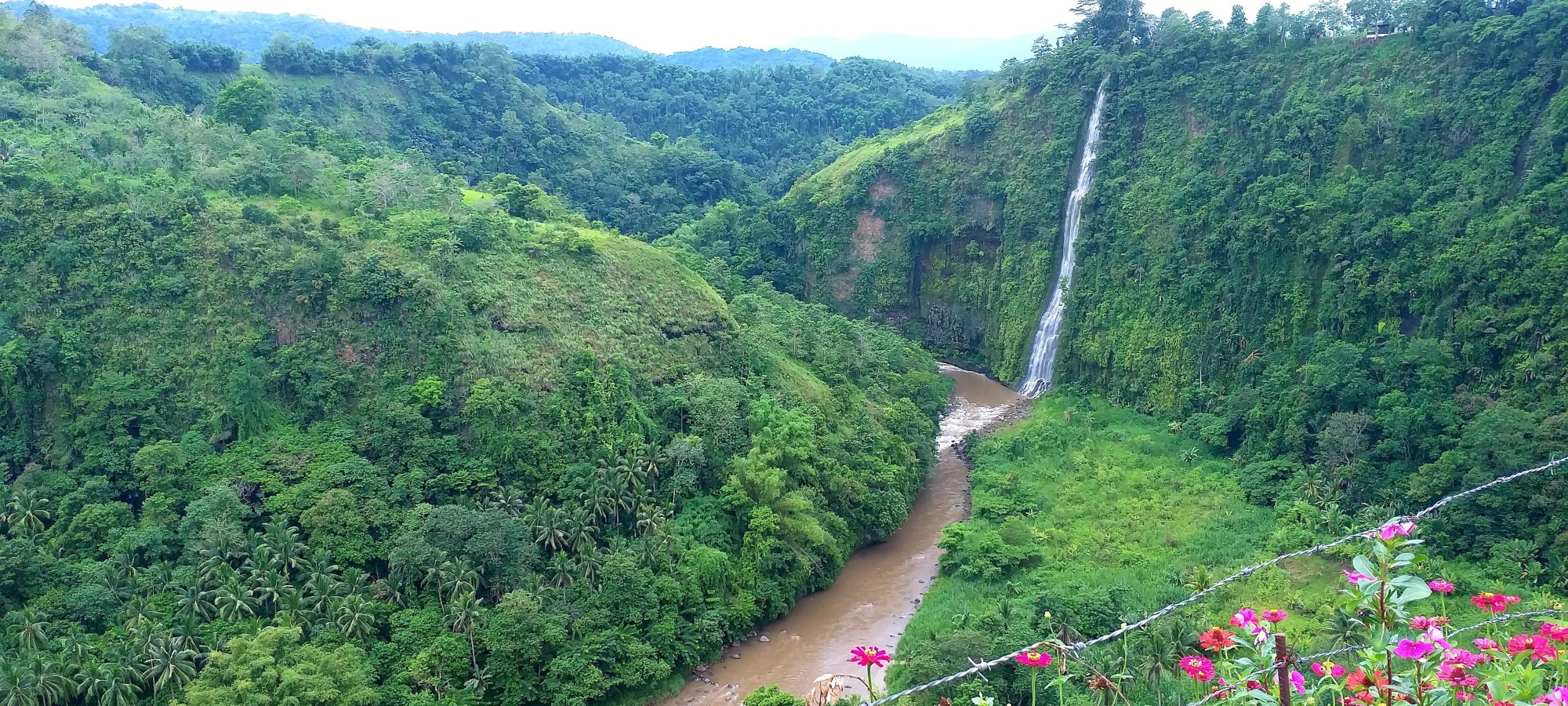
Descent to depths is always a pleasure but combine it with heights, is I would say pure indulgence and what a joy! 😊There are places close to my heart that have this perfect combination but obviously not within my reach, distant travel and careful arrangements are necessary. Truly, it’s pure bliss having this combination in … Read more Combining Heights and Depths: A Journey Through Nature
Aiming for International Women Dive Day was my original plan after having missed it in the past years but it was unfortunate the weather didn’t cooperate. The dive shop explained that visibility was not good and dives can be done the following day keeping crossed fingers and hoping it would be clearer enough for the … Read more Exploring the Depths: Birthday Dive Trip Recap
The quick get-away in Camiguin Island this summer was again another time to relax, recharge and remind myself I need to be on the road again! While I was planning for an escape to my go-to diveshop, my buddy randomly suggested for a quick dive trip wherever I want! 😊Apparently, my happy smart choice was … Read more Sustainable Diving in Camiguin: Clean-Up and Relaxation
After a wonderful sojourn and matching discoveries in Sibaltan, another diving trip was put to order in June. Yes, in summer like it used to be! For some time, I was aiming and wanted to be back in Cabilao Island but conditions were not favorable, a weekend was too short for the trip. Our instinct … Read more Diving Adventures in Moalboal: A Return to Paradise
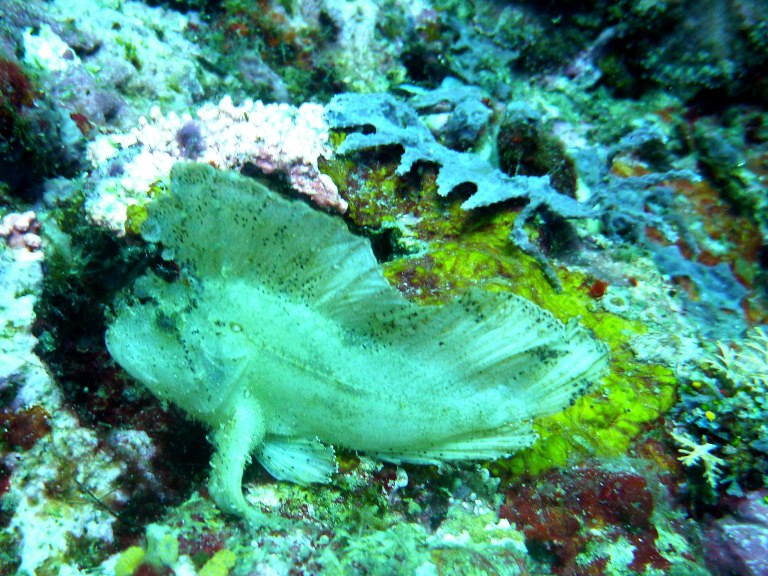
The leaf fish (Taenianotus triacanthus) resembles a dead leaf lying in the water. To enhance this camouflage it even makes gentle sideways movements in its pelvic area which make it resemble a drifting inert object. It is an ambush predator, waiting until a suitable prey, a small fish or shrimp approaches. Then it slowly moves with its pectoral fins close to the victim. When the leaf fish is close enough, the prey is sucked in by a sudden opening of its mouth. It eats victims up to half its body length but larger animals are completely ignored.
I was not expecting to meet her again at Banaug Shoal but she was there, silently taking refuge between soft corals as if swaying sideways by the current. It is just one of interesting residents in the house reef. Simply beautiful …
Wonderful sights await when exploring the depths – hammerhead sharks, ribbontail stingray, barracuda tornado, sardines run and a lot more. Classic scuba diving bad habits are no exception – from experienced divers no less! This country is replete with great dive sites and attracted foreign divers, our companions when diving Coron, El Nido, Tubbataha, Puerto Galera, Malapascua were generally of other nationalities boasting their experiences. Liveaboards also typically attract hardcore divers, on average the people on board had 300+ dives, but a few of these old salts made mistakes that even a brand new diver would consider a rookie move.
As a start for the year, I borrowed this article from www.padi.com as a reminder what to avoid and maintain good etiquette what was taught in my course when I first become a diver. Cheers to great diving in 2014!
Bad Habit #1 – Skipping the buddy check
You ask your buddy, “You ready? Yeah? Let’s go diving.” Everything seems fine until you roll off the boat and discover you forgot your fins, your buddy’s tank is loose, or something even worse.
Forgoing a buddy check takes a shortcut on safety and increases the chance of having to solve a problem in the water. You can learn more about avoiding and adapting to problems in the PADI Rescue Diver course, but the best thing to do (as we teach during the Rescue course) is prevent problems before they begin with BWRAF .
Bad Habit #2 – Shooting fish butts
There were some very expensive camera rigs on board, but an expensive setup doesn’t guarantee good photos. Especially when the photographer doesn’t know underwater photo basics, or fails to practice good marine life etiquette.
I saw one diver with a top-of-the-line camera system taking a photo straight down over a coral head. I’m no photo pro, but I learned in the Digital Underwater Photography online course that shooting straight down on your subject tends to produce flat, uninteresting images. Perhaps it was an avant-garde shot.
I watched another diver race from one critter to the next – chasing off marine life as he went. The dive guides tried to counsel this diver, but he wouldn’t listen, “This is how I always dive” was his reply. I wondered how many pictures of fish butts he had… and how he ever found a dive buddy!
Bad Habit #3 – Not wearing the right exposure protection
Every time I show up at at a tropical dive destination, other divers laugh at me for wearing a 5mil wetsuit and a beanie cap in 28C/82F water. But by wearing the exposure protection that’s right for me, I never have to cut a dive short because I’m cold.
After a few years diving regularly in California I tried the PADI Drysuit Diver specialty and wondered, “why didn’t I do this sooner?” I imagine the cafe owners on Catalina Island wondered what ever happened to that girl who asked for cups of hot water to dump down her wetsuit.
Bad Habit #4 Wearing the incorrect amount of weight
Picture a brick, the kind used in home building. Imagine carrying it around with you all the time – taking it up stairs, trudging up a hill, etc. Having extra weight on board means your body has to work harder; your breathing will be heavier and so on.
When teaching the Peak Performance Buoyancy specialty course, that brick weight is (on average) the amount I take off a diver’s weight belt. New divers often wear excess weight, and get used to carrying it around. But there’s a major downside – too much weight can lead to excess air consumption. The extra weight means the body has to work harder to push through the water, and on top of it many divers swim continuously to keep themselves buoyant. All that extra effort drains your tank faster than necessary.
Drop that brick and extend your dive time! Review your open water materials for how to do a buoyancy check, or ask your instructor about the Peak Performance Buoyancy specialty course.
Bad Habit #5 – Neglecting gear service
Woe is the diver who pays half a month’s salary to go on the dive trip of a lifetime and has an equipment problem. When maintained properly, dive gear can last for years. Ask your local dive center about the Equipment Specialist course. You’ll get to know your gear and learn how to perform basic maintenance yourself. That said: some equipment service must be performed by a professional. Use the gear locker section of your ScubaEarth profile to keep track of when your gear gets serviced.
There are around 10,000 species of bristleworms, almost all of which live in the sea. They live in plankton, buries in sand or mud, and also in crevices or moving around freely in rock and coral reefs. One of the common we see underwater is Christmas tree worm, embedded in living coral and often in groups. The crown is made up of two spiral rings of tentacles, the color is very variable: white, yellow, orange, pink, blue, dark purple, blackish and sometimes also spotted. It is sedentary and plankton feeder.
It is very timid and normally, retracts instantly in response to any suspicious shadow or wave movement. Sometimes though, few can be generous and would stood their ground even with strangers so I got the photos above. If you dive this month, get the chance to look for this elusive critters and be greeted for this season in the depths!
Have great dives this season!
NB.Above underwater photos were taken at Lapinig Island, Balingoan
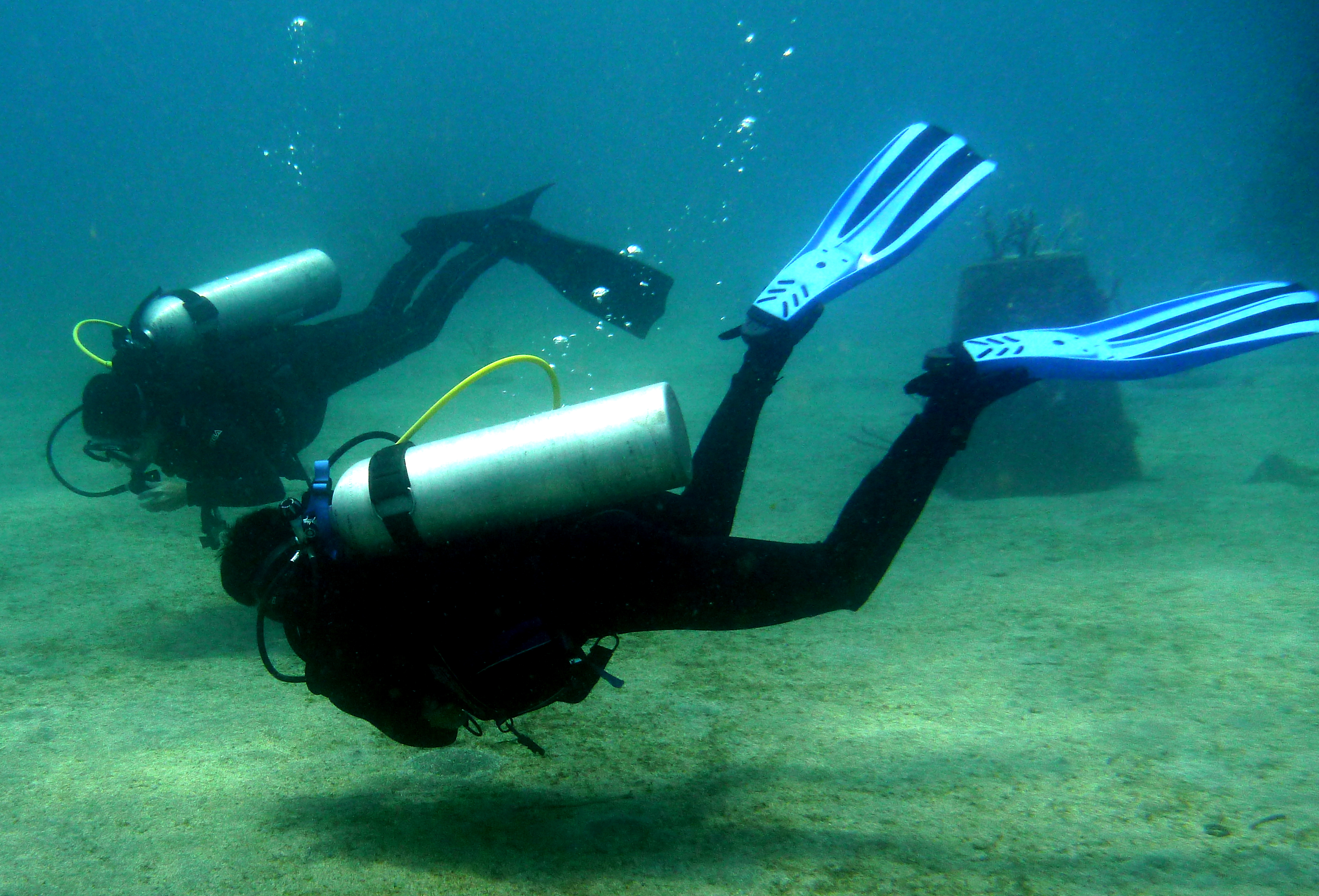
The month of September is all too important to the diving community, internationally every third Saturday is declared as coastal and underwater cleanup. For the past years marine enthusiasts and environmentalists gather together sharing resources and time and for this endeavor. They have gone a long way to protect and preserve our oceans and the amazing life that contain our vast waters.
As a diver, I have always wanted to be part of it, connected with all other in the waters to gather trash and marine debris. So last September 21 together with my favorite dive buddy, we joined my dive mentors group at Opol Marine Sanctuary. Mario had coordinated with LGU Opol, XU McKeough Research Center (MRC), local tourism office and other groups for the clean-up. It was an opportunity to see him, meet other divers and to revisit the sanctuary which we dove three years back for the same purpose.
It was a sunny Saturday and Mario had been waiting for us at the resort, AJIS resort grounds was in cheery mode when I got there. We finally left at past 9am when Angel arrived from far-off Languindingan airport, heading for Sakayan to transport us all off coast Opol waters. It was unfortunate I forgot our net trash bag, the surface seemed clean but the underwater held surprising debris. I descend finally with Angel after I surfaced shortly to change my BC as it kept inflating, making it hard for me to control my buoyancy.
Sea anemone and its resident clownfish
A giant clam – something new in the sanctuary!
Yellow brownish nudi at Opol Marine Sanctuary
cabbage corals with damsels and snthias
branching corals with chromis and damsels
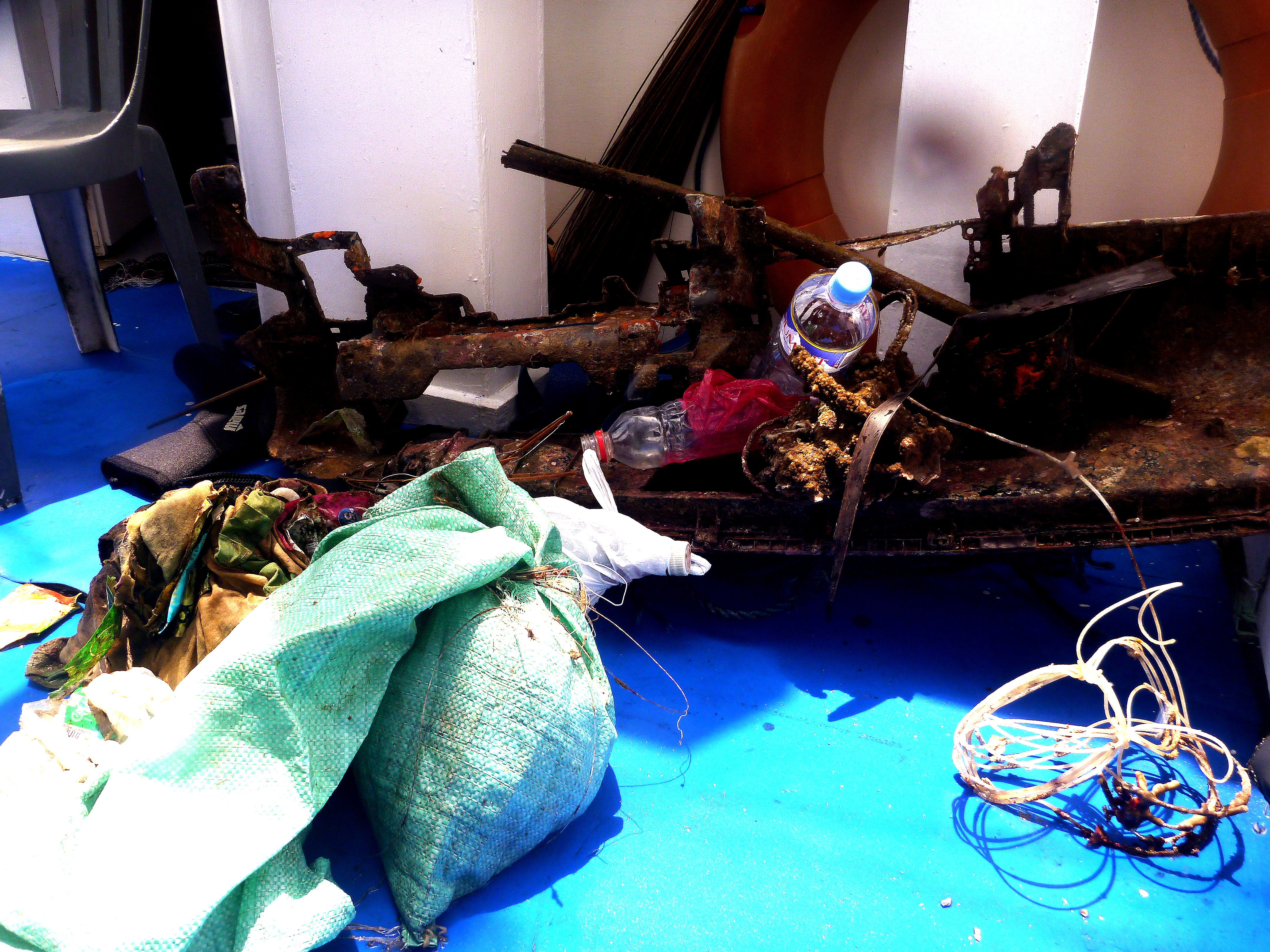
Opol is one of the town facing environmental safeguards issue, in fact it was one of the areas that suffered the devastation from Tropical Storm Sendong in 2011, small scale mining upstream made Opol river murky even without the rains. This unwanted sediments flowed into the Opol seacoast which affected the marine environment. But judging from what we saw, there has been much improvement underwater three years ago. The visibility was good and there were more tropical fishes roving the area. Healthy corals around the sanctuary are now abundant, I sighted giant clams and colorful nudis, Angel found a moray which quickly hid when I got near. Yes, we found trashes – plastic bottles, sachets, plastics, clothing and a large tire! Unfortunately, the tire was too heavy we need flotation device to carry up to surface. It was a productive dive and I was wishing for another descent – our one hour underwater was just too short for that sunny day. The water was too reviving for my dried-up gills! It was my fourth year to be part of this undertaking and I was thankful my favorite dive buddy came over for the dive clean-up here in Cagayan de Oro.
Debris we gathered from the dive cleanup!
Let us not forget that this fight is not just once but whole year round. It’s a diver’s lifestyle, a habit, a pledge to fight the ocean silent killer. We can all do it!
My passion for diving and the underwater life had given me that keen sense for the red flag with the diagonal line, it seemed I am drawn to it even in the midst of other travel agenda. I have promised myself to be productive in every trip, learn and discover especially marine issues and activities and possibility for diving trips in the future. I always believe that many places are worthy for diving, this country has 7,107 islands and literally surrounded by waters. Indeed, many interesting spots are not in the diving map but some brave souls just establish dive shops in rural areas even if scuba diving is unpopular in the locality. Recently I unexpectedly found dive operators in the least popular setting, new discoveries that sent flutter in my heart!
Surigao City
Mabua Peeble Beach is just 10 minutes away from Surigao City
We went to this popularly unique pebble beach in Mabua to fulfill my promise to the kids – my nephews and nieces, it was long overdue and have to squeeze schedules for a two-hour travel from Butuan to Mabua and another two hours for the return trip. We drove to the tip of the cove for the beach cottages, and somewhere halfway I caught sight of a cottage painted white with the dive sign, it was a surprise! I thought there was only Punta Bilar Dive Center in the city. It is operated by Dirk/Doris, a friendly couple who just started the shop few months back. Mabua Divers (www.mabuadivers.com) can be reached at 09166439982. The site is a good prospect as it is in the nearby Caraga region and can be reached by land, there’s no need to fly!
Legazpi City
Recently visited the city through a work trip, at the airport while waiting for my luggage I hastily approached the tourist info booth and asked about diving, it was again surprising as the attendant handed me a calling card. I mentally noted Pacific Blue (www.pacificblueasia.com) not sure to find or visit the shop. Later that afternoon, a friend’s friend showed us around and drove us to Embarcadero and further to Legazpi Boulevard. There tucked in between with newly constructed establishments is a lowly but with large ground space is the shop. I asked our host for a short stop to inquire which he politely obliged. A Japanese which looked like a Filipino to me, attended to my inquiries – a casual conversation about the divesites and its marine life. There were damages from dynamite fishing and currently they are working on coral transplantation to revive the coral reefs in the surrounding Albay Gulf. It was interesting to note their effort to restore the marine environment, in coordination with BFAR.
As expected diving in Misibis Bay is in dollars!
The luxurious Misibis Bay offers diving but I cringed as I inquired for the rates, the bay is still reviving from dynamite fishing damages. A sanctuary is maintained by the resort, giant clams transported from Bolinao, Pangasinan were planted and adapting well, tropical fishes which includes over-sized groupers are decorating the nearby resort waters.
Butuan City
Right in this city where I grew up, I wasn’t expecting that diving will come right at home. In my own opinion, hardly would anybody set up a dive shop in Butuan, it was unbelievable. The notable body of water in the city is the Agusan River, with its murky waters it is not feasible for diving. The decent beaches worthy for the usual weekend outings are in Nasipit and Carmen, which is more than 25 kilometers away. Most likely, diveshops will open in the coastal towns with obvious reasons. JJ Dive Center started operations just few months back this summer, with the vision that Butuanons will embrace Scuba Diving as a sport, hobby and passion.
Punta Diwata Reef is offshore of Punta Diwata Cave (Photo credits of wikipedia.org)
I found their announcement online through a diver Mexican contact and noticed that their dive spots include those located in Surigao City and Carmen, Agusan del Norte. These localities have notable marine environment and have existing partnership with government agencies for marine preservation and protection. I’m looking forward to discover and explore the mysterious depths in Caraga, and again there’s no need to fly!







 Life in the Great Beyond
You must be logged in to post a comment.