"Now more than ever do I realize that I will never be content of a sedentary life on the surface, I will always be haunted by thoughts of being drenched elsewhere"….
Enchanted River in Hinatuan, Surigao Sur is one wonder of nature that have captivated my curiosity. Beautiful and mysterious – there is something beyond that blue waters. The increasing “load” of the river due to influx of tourists and visitors have endangered its delicate state. I hope that the Local Government Unit (LGU) of Hinatuan will seriously consider the recommendations from this report. This gift of nature will surely become “a victim of its own success” if no concrete sustainability plan is in place. Kudos to Filipino Cave Divers!
The following is my official report to the Municipality of Hinatuan on Enchanted River Underwater Cave Expedition V (August 18-19, 2013):
HINATUAN ENCHANTED RIVER UNDERWATER CAVE EXPEDITION V
AUGUST 18-19
A Report by Alfonso Y. Amores, MD
Members:
Doc Amores
Jaime Lapac
Larry Williams
Rio Lapac
Introduction
In June of 2012, Expedition III was stopped dead on its track by a then unexplained blockage of the cave entrance by a pile of limestone. It now appears that this was caused by a cave-in based on further interview of the Enchanted River maintenance crew. Furthermore, review of our video footage of Expedition IV (June 20-21, 2013) reveals irregularities and cavitation of the cave ceiling right in the vicinity of the cave entrance and the forward half of Mayor’s Chamber. This expedition is intended to explore this particular area and document the possible cave in site. Additionally, a brainstorming with Mayor…
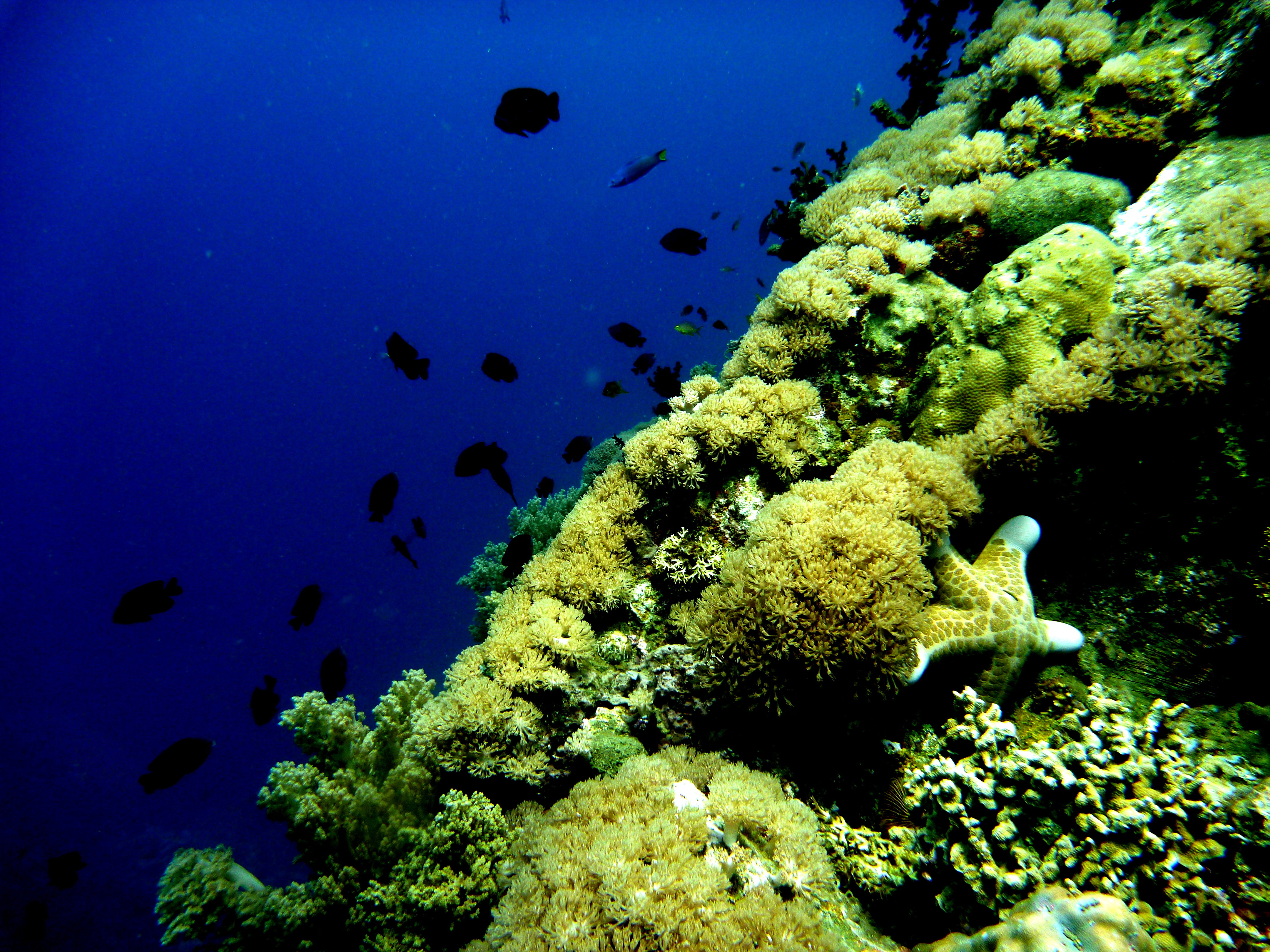
Diverse, healthy and colorful reefs for the future!
“I get excited about the concept that we can do for the ocean what’s been done for the land in terms of protecting areas of national parks.” ~Dr. Sylvia Earle~
Ecotourism is becoming fast popular due to the growing awareness and concerns on environmental issues, the advocacy to manage tourism in an ecological sustainable way. Many divers, dive operators and resorts lead in protecting marine ecosystems but as reefs attract increasing numbers of tourists and more resorts, greater controls became necessary to prevent the reefs from being damaged. Many people are also concerned on damage that can be done by divers. Keeping the areas of marine environment ecologically sustainable depends as much on divers as well as dive operators and resorts.
Divers have great responsibility in protecting marine world much that no other can defend the ecosystems than those who first love the seas and oceans. Here are few reminders for responsible divers who are keen on sustainable ecotourism management:
Master good buoyancy control, coral is killed by divers touching it while adjusting their buoyancy
Be properly weighted and have all equipment tucked in to avoid touching marine organisms
Do not use deep fin-strokes next to the reef – the surge of the water stresses delicate organisms
Do not wear gloves to avoid the temptation to hold onto live corals
Reef hooks will be used only when necessary and on dead part of the reef
Do not move marine organisms around to photograph them or hitch ride on turtles, manta rays or whale sharks – it causes considerable stress
Avoid several people crowding in underwater caverns or caves and do not stay long as diver’s exhausted air suffocates the resident creatures
Do not participate in spear-fishing for sport – selective killing of the larger fish upsets the reproductive chain
Do not collect or purchase marine souvenirs
Before booking on a resort, check the company’s environment policy
Donate to group or organization to offset the carbon emissions of flights
Every dive is a clean-up dive, your hands is not too full to pick any trash during the dive
Support every marine conservation activities and programs in your area
Divers are ambassadors of the ocean, the tiny minority who witnessed the wonders of the marine world and understand the importance to the health of planet. Divers would be more evangelical about the seas, without doubt divers had a special role in broadcasting the message that our ocean are in trouble. The health of the oceans is an indicator of the health and future of our whole world. We have great responsibility!
Reef sharks in a cavern in Gato Island, Malapascua
In celebration of Shark Week, which was originally developed to raise awareness and respect for sharks, it would be interesting to know few facts about this often misunderstood species.. Hopefully, this will gain more understanding of this amazing marine creatures.
1. Sharks move like airplanes. They create forward movement with their tails (like propellers) and water moves over their fins like wings
2. Different sharks have different etiquette for feeding. Caribbean reef sharks, for example, have a pecking order catering to large sharks 1st
3. Certain shark species (such as great white) will drown if they stop moving. They lack necessary muscles to pump water through their mouth
4. Blue sharks are piggy eaters. They’ll keep eating until they regurgitate, after which they go back to eating!
5. 20% of sharks are close to extinction because of commercial fisheries accidentally catching sharks with their hooks and nets
6. Researchers have discovered common objects (tires, gasoline tanks, and license plates) left intact inside the stomachs of tiger sharks
7. Hammerhead sharks’ oddly shaped heads, called cephalofoils, are equipped with electrical sensors, making them superior hunters
8. Sharks aren’t color blind. Divers have claimed that sharks are attracted to certain colors, such as the “yummy yellow” of some wetsuits
9. Almost 50 different shark species have light-emitting organs called photospheres. Sharks use their light for camouflage and to attract mates
10. A shark’s size relates to where it hunts: smaller sharks feed near the ocean floor, while larger sharks hunt in the middle ocean depths
11. When the USS Indianapolis was attacked by a shark during World War II, 900 sailors were stranded in the Philippine Sea near Guam for 4 days
12. While more likely to die from drowning, surfers can succumb to shark attacks because of their boards, which to great whites resemble seals
13. Shark fin soup is a delicacy in China and is served at important events like weddings and anniversaries. The dried fins resemble noodles
14. You can’t see a shark’s ears, but their inner ears can track sounds of their prey from lengths of more than 800 feet (244 meters)
15. Sharks are susceptible to the moon’s control of ocean tides. Moon phases affect sharks’ eating habits and draw them closer to shore
16. Sharks have an astounding sense of smell, so powerful that they can detect a single drop of blood in an Olympic-sized pool
17. Signs that a circling shark will attack: it will hunch its back, lower its pectoral fins (fins near its belly) and swim in zigzag motions
18. Even though sharks have razor-sharp teeth, they don’t use them for chewing prey. They are for ripping; resulting chunks are swallowed whole
19. Punching a shark in the nose or poking its eyes can help to fend it off during an attack. Most sharks don’t want to work hard for their food
20. While many of us have learned to fear sharks, they are the ones who should fear us. Humans kill 73 million sharks annually
NB. Photo courtesy of my dive buddy Angel during our dive at Gato Island
My recent stop-over at Zamboanga on our way to Bongao, Tawi-tawi gave me an opportunity to rediscover this historic city and I had my share of surprises. Since our time was limited, we just planned for a quick hop at Sta. Cruz island, the famed islet with the pink beach.
This slideshow requires JavaScript.
Angel and I was in awe, the island is more than just a glimmering white beach or pink beach for that matter, its depths is teeming with marine life. And right there in the beach front nestled are turtle eggs waiting to be hatched, about more than thirty days later! The nearby Pequeño Sta. Cruz is MPA, that explains why going to the island is forbidden. The tourism officer (who happened to be a diver) informed us later that diving is allowed in certain parts of the sanctuary – hallelujah!
Getting a dip and swim at Sta. Cruz was irresistible , I gave in and joined Angel in the refreshing waters under the cheery sun – as if it was summer! It is always an advantage to be at the beach on weekdays, the little paradise was all to ourselves!
Zamboanga – yo quiero la mar y la playa! Soon, you will be our diving destination…
The unchanging passion to protect and preserve our environment gave the urging to take action and join the force of enthusiasts for Mother Earth. We can do many things even in our own small ways to offer our time for this endeavor, we just need to be creative. I was caught up with a work meeting and weekend summer break in Siargao (pronounced as Shar-gow) Island. So on a Saturday morning while having an island hopping in General Luna, randomly I did beach clean-up in Naked Island. No other beach bummer was there, so it was all to myself as I gather every piece of trash I could find on the sand bar – sachets, wrappers, bottle caps, plastics, lids, cigarette butts, plastic cups, etc. It was a productive morning, while enjoying the quiet white beach, mild sun and surrounding waters. I gathered up a bagful of trash when I went back to our boat, after one last round of the tiny island with my friend Angel.
Later when we had our two dives in the nearby Daku Island, we randomly picked up few trash as we did rounds in the sandy slope. Literally it’s not heavy stuff but a relevant gesture in the preservation of marine world. We can make a difference in many ways, one step at a time!




 Life in the Great Beyond
You must be logged in to post a comment.